
- INTRODUCTION
What happens when someone owns the sky? Although it sounds impractical right now there was a time when a man had property rights over the sky above the land.This originated from the doctrine of “Cujus est Solum” which said that if a man owns a land he owns the sky above it. However this was at a time when aircrafts were invented, later with the invention of aircraft this doctrine lost its relevance and instead came to be applied for the “immediate reaches of the sky” above a man’s land. This however create a complexity with the invention and the prevalent usage of drones, which fly at low altitudes. This article dives into the origin of this doctrine, its relevance in English common law and India and how the introduction of drones create a difficulty.
2. DOCTRINE OF CUJUS EST SOLUM
Aircraft came into existence in the 19th century, but before that the sky was ruled by the maxim of “cujus est solum ejus usque ad colum” which stands for the meaning that whoever owns a land owns it above to the heavens and down to the depths of the earth. This maxim was documented and came into usage prevalently in the 13th century gloss by the glossator Accursius as mentioned in a note to Dig. VIII 2.1 as “cujus est solum ejus debet esse usque ad coelum” meaning whoever owns the soil ought to be able to use the sky above him. This doctrine gave rise to airspace rights ever before aircrafts were thing. Accursius is however not recognised as the inventor of this maxim but only credited for its “composite documentation”. Traces of the maxim has been found before that in ancient jewish law. There were also different views on this doctrine over time. Some believed that a man only owns a land and has no control over the sky above it, some believed he had full proprietary rights over it, while some believed it was a mere extension needed for the useful enjoyment of his property. However despite wide usage a maxim has no legal effect until it is inscribed into the provisions.
In SWETLAND V CURTIS AIRPORT, the court held that maxims were nothing more than mere “general statements of law” while Lord Esher remarked “I detest any attempt to divert law by maxims”. It was when the maxim was quoted by judges in the english common law that it gained a legal recognition.
Thus it was first primarily in Rome that the doctrine was used. Regarding its usage in Rome several jurists such as Von Jhering remarked that romans would not have accepted an impractical “abuse of logic” for a limitless ownership in space and that it was only practical that the ownership rights to space only extended to the limit required for proper enjoyment of land. William Buckland in “The main Institutions of Roman private law” further mentioned that if romans existed in modern time, they would hold that there was no upper limit for ownership and rules such as for the height of a building were mere limitations to ownership rights.
2.1 THE INTRODUCTION OF THE DOCTRINE IN ENGLISH COMMON LAW
The reception of the doctrine in England is not fully established. Abramovitch rejects the simplest explanation of the reception of the maxim from Roman law by England as a derivation from Roman customary law that passed into England through the reception of Roman law in the two countries. He offers several theories regarding the origin of the maxim. One of these is the tradition of the medieval commentators on the Roman law known as glossators, among whom the Accursian school was the most prominent. In his opinion, Accursius’s son brought Roman law to England and taught it at Oxford University during the reign of Edward I, and thus the maxim received its English version (Abramovitch, 1962).
Abramovitch also points out another theory, which is connected with the Jewish conveyancing practice in medieval England. According to this version of the doctrine’s origin, the Jews in their deeds stated that their ownership of certain things extended “from the depth of the earth to the height of the sky,” and as the historical research shows, this expression was used several decades before the formulation of the maxim, which implies there is a possibility that the phrase came from Jewish law (Abramovitch, 1962).
The maxim first appears in the case of Bury v Pope (1586). It was used by the court to characterize the right to air as one of the elements of ownership, although the doctrine did not acquire full validity in the English law system yet. According to the case, a dispute arose between the plaintiff and the defendant concerning the obstruction of air over the territory of the latter, which interfered with the free use of light by the former. Thus, the court formulated the doctrine to establish that the property owner was entitled to the full use of air over their land (Abramovitch, 1962). However, this was not enough for the doctrine to gain full recognition in England; it still remained a mere commentary.
Sir Edward Coke’s interpretation of the maxim in his Institutes of the Laws of England increased its volume and significance. Edward Coke extended the range of property ownership vertically by stating that ownership possessed by a property owner “extends even up to the heavens.” Another important figure who contributed to the maxim’s interpretation is William Blackstone. He explicitly states that “the property of land… comprehendeth all that is under and upon the earth” (Abramovitch, 1962). These two influential lawyers played a significant role in interpreting and explaining the maxim, which facilitated its further development and established its presence in the English law system, although it continued to exist only as a theory not applied in court due to several controversies.
The first practical application of the maxim dates back to the 19th century when English courts accepted a limited and qualified fulfillment of the doctrine. In Pickering v Rudd (1815), Lord Ellenborough emphasized the difference between interference with the column of air above the land and interference with the upper air in terms of airspace ownership. The latter was not subject to the absolute ownership and control of the landowner (Abramovitch, 1962). The court acknowledged the interference with privacy as a violation of the right of a property owner, but it did not follow the maxim. Another case supporting the idea of qualified airspace ownership is Corbett v Hill (1870). This case further elaborated on the interpretation of limited airspace ownership, stating that interference with property ownership in the air should be considered in relation to the land (Abramovitch, 1962). Thus, these two court decisions illustrate the attempt of English courts to accept only the limited fulfillment of the airspace ownership maxim.
The major turning point in the history of the maxim occurred in the twentieth century in Bernstein of Leigh (Baron) v Skyviews & General Ltd [1978] QB 479. Griffiths J rejected the unconditional extension of property ownership of an airman above the land because such a decision would require free access to the navigable air and limit the rights of the landowner. The judge held that a property owner could possess the airspace over their land only to the extent necessary for its use and enjoyment. Above this airspace, the owner had to give way to the free use by airplanes of other persons (Abramovitch, 1962).
2.2 RECEPTION IN INDIA
This principle was introduced to the country indirectly via the English common law. The maxim was never formally adopted in India and became part of the common law property framework.
The first example of the Court’s cautious approach comes from the case of John George Bagram v. Khettranath Karformah (1869). Abramovitch comments on this case, noting that in order to interpret the trespass statutes, the Calcutta High Court judges refused to accept that any unauthorized intrusion affects the absolute ownership (Abramovitch, 1962). Later, in more recent cases, the judiciary system demonstrated a more pragmatic attitude towards the application of this maxim. According to the ruling in John George Bagram v. Khettranath Karformah (1869), the Court did not accept that the right to the airspace automatically extends to any interference with it. Therefore, the judges stated that only unauthorized use or occupation of the airspace beyond the specified limits could be considered trespass (Abramovitch, 1962).
Another example of a cautious approach to the application of this principle is that not a single statue in India directly mentions the absolute ownership of the airspace. The Transfer of Property Act, 1882 and the Indian Easements Act, 1882 only speak of the legal relationships that exist between the owner of the land and airspace, establishing certain rules and limitations. The essence of these legislative acts boils down to protecting the property rights of the landowner in accordance with the law.
Notably, the emergence and development of aviation further contributed to the limitation of airspace ownership. To date, the Aircraft Act, 1934 remains in force, which established the framework for civil aviation, outlining the rights and responsibilities of all participants in the field. This act explicitly aims to ensure free navigation through the airspace for aircraft, effectively excluding the applicability of any other legislation.This approach is similar to the subsequent ruling in England following the Bernstein v. Skyviews case, which explicitly acknowledged the need for free navigation through the airspace.
Most recently, the right to privacy has become explicitly protected in India, which provides additional grounds for limiting the airspace ownership by landowners. In his judgment in the case of Justice K.S. Puttaswamy (Retd.) v. Union of India , the Hon’ble Chief Justice of India formally recognized the right to be let alone as a fundamental right (Puttaswamy v. Union of India, 2017). Although this ruling does not directly address the airspace ownership issue, it establishes the principle that surveillance cannot be conducted without the consent of the person in question. This consideration implicitly covers any unauthorized drone flights above the land and even the airspace above one’s home, as they constitute trespass and invasion of privacy. This approach demonstrates the Indian judiciary’s pragmatic attitude towards the application of the principle of absolute ownership.
Overall, the Indian experience with the doctrine of airspace ownership presents a rather interesting case study. On the one hand, this principle was partially adopted from the English common law. However, it was never formally established in the local legislation and was subject to a cautious interpretation by the judiciary.
3. WHERE THE DOCTRINE BREAKS DOWN : INTRODUCTION OF AIRCRAFT TO DRONES IN MODERN TIME
For centuries, the doctrine of cujus est solum ejus usque ad coelum et ad inferos served as a legal fiction by which the ownership of land could be assumed to extend downwards underground and upwards into space. However, over time, it became clearer that this was not the case, as advances in transportation necessitated court interventions in disputes over a pilot’s right to fly over private land. Courts refused to interpret the maxim strictly, as doing so would make any aircraft passenger a trespasser. Rather, by adopting the doctrine of reasonable use, judges determined that while the landowner retains rights over the air space necessary for the land to be reasonably used and enjoyed, anything beyond that belongs to the public.
The first case that demonstrated the rejection of the castle wall doctrine was Bernstein of Leigh (Baron) v Skyviews & General Ltd [1978] QB 479, in which Griffiths J ruled that ownership of land does not extend “upwards into space” but only “so far as is reasonably necessary for the enjoyment of the land.” Therefore, anything beyond that can be used by the public for navigational purposes. As such, the judgment reflects the transition from the castle wall doctrine to the doctrine of reasonable use influenced by technological advancements. Such a perspective was expanded in Anchor Brewhouse Developments Ltd v Berkley House (Docklands Developments) Ltd [1987] 38 BLR 82, with the Court holding that an interference must be substantial or detrimental in terms of impacting the use of an air space above one’s property before it can be considered a trespass.
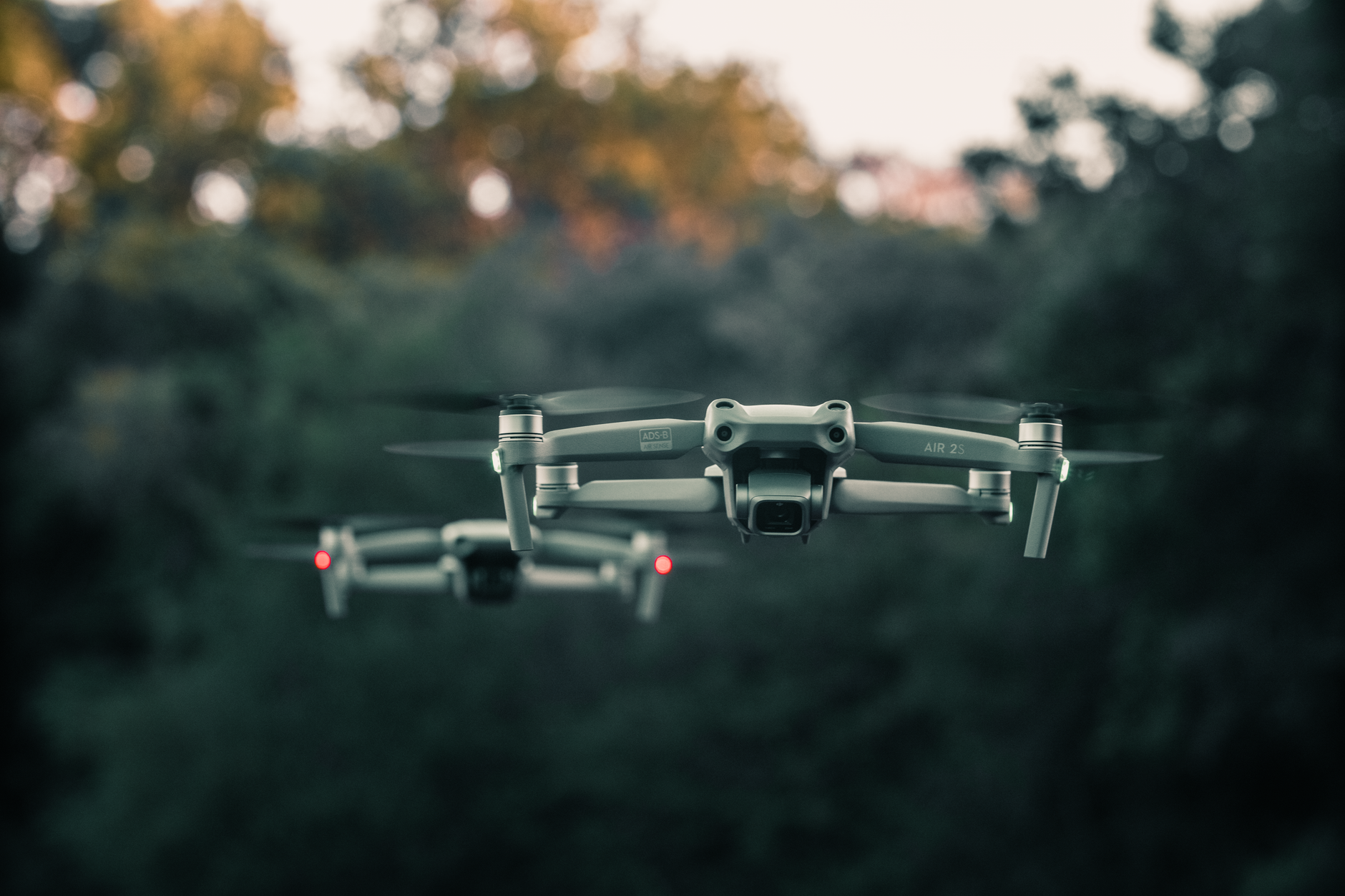
To some extent, the doctrine of reasonable use accommodates the needs of commercial aviation. However, it is less efficient at addressing the concerns of private landowners relative to “peacocks” or small unmanned aircraft that invade above their homes or gardens. Indeed, unlike commercial aircraft, drones can operate at a low altitude and invade the privacy of home residents. Moreover, they can “hover,” which means that instead of simply passing by, they hold their position several feet away from a residential building or a backyard, thus engaging in behavior substantially different from that of conventional aircraft. Thus, it is reasonable to assume that drones may soon test the common law’s ability to balance the rights of landowners and the freedoms of air travel.
Indeed, the case of United States v Causby (1946) 328 US 256 demonstrates that the castle wall doctrine was never meant to apply to aircraft but rather serves as a limitation based on practical considerations. In this case, the Court ruled that the repeated passage of military aircraft near the plaintiff’s residence causing damage to his poultry constituted a trespass. However, Justice Douglas also noted that the ancient maxim could not be completely displaced by the realities of modern aviation. As such, the Court developed the doctrine of reasonable use for the airspace equivalent to the “immediate reaches” of a property. The case highlights the practical flexibility of common law, which was adjusted to account for modern advancements while still balancing the rights of landowners and aircraft operators.
The issue of drones represents a challenge to airspace law because, in many ways, small unmanned aircraft illustrate the closest possible analogy to the castle wall doctrine. Indeed, unlike commercial aircraft, drones can operate in the “immediate reaches” of one’s property. While they cannot be considered as “peacocks” or trespassing, their proximity to residential buildings, ability to hover and observe the surroundings, and the fact that they can be programmed to circle above people’s homes and businesses illustrate their uniqueness. As such, the precedents established by the cases mentioned above do not fully address the concerns of landowners relative to drones. In his article, Cooper notes that the airspace doctrines accommodate commercial aircraft, but he also adds that “these precedents were set to accommodate traffic, not to regulate it,” meaning that drones represent an issue that the laws of trespass and nuisance were not designed to resolve.
3.1 TORTIOUS LIABILITY IN THE AGE OF DRONES
The appearance of drones revealed the inadequacy of traditional property law in relation to emerging technologies. Although the doctrine of cujus est solum ejus usque ad coelum et ad inferos was improved to accommodate commercial aircraft, it remains limited in its capacity to address the challenges posed by low-flying unmanned aircraft. Unlike planes that carry passengers through navigable airspace, drones interact with the airspace above private properties on a regular basis often hovering, circling and capturing images at a close range and height. As such, drones present the same issues that gave rise to the modification of the proprietary law doctrine. First, drones introduce trespass issues as they fly through the airspace between the earth’s surface and navigable airspace. Second, drones create a number of privacy concerns including the ability to capture images of residents from above their homes. Third, legal liability issues arising from drone operations constitute torts that require clarification under current law.
The first of these issues involves trespass which refers to unauthorized entry onto another person’s land or unlawful occupation of another’s premises. In addition to modifying the airspace doctrine, English courts recognized an inherent limitation to proprietary ownership over airspace. The case of Bernstein of Leigh (Baron) v Skyviews & General Ltd [1978] QB 479 acknowledges that a landowner’s ownership extends below the surface of the earth and above the surface but only to the extent required for ordinary possession and use of land. Similarly, the case of Anchor Brewhouse Developments Ltd v Berkley House (Docklands Developments) Ltd [1987] agrees that unauthorized occupation of another’s airspace constitutes trespass if it takes place within the reasonable airspace allocated to him. However, these cases involved navigable aircraft rather than UAVs that can operate at close ranges for extended periods of time. According to Cooper, drones negate the clear line that traditionally divided public airspace from private occupancy. As such, drones create complications in the interpretation of trespass that are not catered for in the case law. Unlike commercial aircrafts, drones operate at relatively lower altitudes making it impossible to distinguish between navigable and occupied airspace with ease.
Second, privacy concerns constitute a second issue that needs to be considered. The fact that drones can hover over private homes and capture images of the owners using high-definition cameras creates a number of privacy concerns. Although trespass doctrine traditionally addressed the unauthorized use of airspace, current drone technology can operate without touching the property under inspection thus rendering traditional property law inadequate. The ruling in Peck v United Kingdom (2003) can be used to address unauthorized drone surveillance and trespass. The European Court of Human Rights ruled that individuals have a reasonable expectation of privacy even within their own premises so as to prevent technological surveillance of their personal lives from public places. As such, drones operating from public airspace can be considered intrusive and their operators can be prevented from interacting with the scanned property. Consequently, privacy concerns posed by drones go beyond trespass issues that traditional property law addressed and can require a combination of property, privacy and technology-related law to effectively address.
4. CONSTITUTIONAL AND REGULATORY FRAMEWORK RELEVANT TO DRONES
India’s Constitution does not explicitly mention drones or drone surveillance, but its current laws offer some protection to citizens from large-scale intrusive surveillance. Article 21 of the Constitution guarantees the right to privacy, recognized in the landmark ruling of Justice K.S. Puttaswamy (Retd.) v. Union of India, (2017) 10 SCC 1. Though the ruling did not discuss drones, the constitutional rights to informational, spatial, and decisional privacy apply to unmanned surveillance. For example, drones can be used to intrude upon and monitor a private space without physical entry if they are equipped with cameras, thermal imaging equipment, or facial recognition technology. At the same time, the right to property under Article 300A permits a drone owner to occupy a property to the extent prescribed by law but does not allow for trespassing, even if the Constitution no longer explicitly recognizes property as a fundamental right.
In addition to the Constitution, India’s drone laws are primarily formed by the Aircraft Act, 1934, and Drone Rules, 2021. The Aircraft Act outlines general aviation laws, while the Drone Rules, which superseded the Unmanned Aircraft System Rules, 2021, govern specific aspects of drone use. The latter set out requirements for drone operation, certification, categorization based on weight, prohibited and restricted areas (through the Digital Sky Platform), and the responsibilities of the Directorate General of Civil Aviation concerning drones. They essentially indicate who may fly and where drones may fly but say little about aerial trespass, prolonged surveillance, compensation for property invasion or damage, or compensation for trespassing on low-altitude airspace. If an operator gathers identifiable personal data or processes it in any way, the Digital Personal Data Protection Act, 2023, comes into play.
In recent years, Indian courts have started to consider disputes over drone-related issues. However, these cases have concerned primarily regulatory or criminal law issues. In NewSpace Research and Technologies Pvt Ltd v. State of Karnataka (2025), the Karnataka High Court ruled on a dispute concerning the alleged theft of cutting-edge drone technology and sensitive UAV data from one of the public sector undertakings in the defense industry. Justice M. Nagaprasanna noted the technical complexity of the alleged offense and the challenge it posed to the criminal justice system in India. The judge also emphasized the need for enhanced cyber investigation mechanisms, given the growing number of technology-related offenses, such as drone theft. While the dispute concerned primarily the alleged misappropriation of intellectual property, the case demonstrates that Indian courts are becoming increasingly aware of the unique challenges drones present. Indeed, the Anirudh Putsala v. NewSpace Research and Technologies Pvt Ltd (2025) case also raises complex commercial and technical issues stemming from the drone industry.
In a recent dispute in Rajasthan over drones used in mining surveys, the court ruled that evidence obtained through technology-driven means could not override the principles of natural justice. Though the mining case did not concern directly drone-related trespass issues, the Rajasthan High Court ruled that administrative actions must follow due process and that drone surveys could not be used as evidence in disputes with private landowners without due notice and an opportunity to be heard. The court acknowledged implicitly the potential of drones to invade privacy without appropriate safeguards. This development indicates that India’s judiciary is becoming increasingly attuned to the unique issues surrounding drones.
However, there are currently few laws that explicitly restrict or penalize low-altitude drone surveillance, define when repeated drone flights constitute trespass or nuisance, distinguish the liability of individuals and firms involved in drone operations, offer compensation for drone-related privacy violations, or provide other remedies.
V. The Declining Relevance of the Cujus Est Solum Doctrine in the Drone Age (Approx. 300 words)
The doctrine of cujus est solum ejus usque ad coelum et ad inferos has been eclipsed by events, as it fails to provide clear propinquity for proprietary interests in airspace in the age of drones. While the courts of the twentieth century managed to interpret this doctrine narrowly enough to allow for commercial aviation, drones threaten to test even this limited understanding of ownership of airspace. Thus, the doctrine has proven largely useless in attempting to resolve conflicts surrounding the use of low-flying aircraft.
In Bernstein of Leigh (Baron) v. Skyviews & General Ltd [1978] QB 479, Griffiths J ruled that owners of land hold proprietary rights only to the airspace necessary for the “ordinary use and enjoyment” of it. While such a ruling effectively accommodated planes capable of reaching higher altitudes, it failed to consider drones as they would “invade” the airspace at low altitudes. Unlike planes that only pass through one area, drones can “hover over another” and “maneuver up and down” in an airspace considered private. Thus, differentiating between protected airspace and navigable airspace became exceedingly difficult if not impossible.
Such a ruling creates problems for property law, as property owners are justifiably concerned with trespassing and nuisance. The doctrines and laws designed to handle these issues, however, do not consider drones to be a persistent or permanent irritant to landowners. As Cooper notes, laws are designed to handle aviation, not “the perpetual low-altitude flights of drones.” The same issue has been recognized by Abramovitch who observed that the maxim was only “a statement of what the property laws happened to be in a given social and technological context” (Abramovitch, 1962).
Thus, the lack of clarity surrounding the status of low-altitude airspace fails to provide certainty to either landowners or drone users. While the former can pursue nuisance suits, the latter must operate under the threat of being trespassers on private land. The Drone Rules, 2021 and the Aircraft Act, 1934 do not provide clarification on the matter, as they do not explicitly state the limits of private airspace. Indian courts attempting to apply the doctrine of cujus est solum ejus usque ad coelum et ad inferos are thus faced with ambiguities, as both drones and drones interfere with low-altitude flights have become a ubiquitous part of modern life. The doctrine, however, has since failed to “keep pace with technology.” The rise of autonomous drones, in particular, threatens to make the doctrine a mere curiosity, as modern statutes are needed to balance technological advancements, property rights, privacy and safety.
5. Conclusion
The doctrine of cujus est solum ejus usque ad coelum et ad inferos was conceived at a time when it made sense for land ownership to extend upwards as far as it physically could. Technology, particularly aircraft and more recently drones, have since made this a moot point. Courts have been slow to curtail the extent of proprietary airspace ownership, as they recognized its economic benefits. Yet, allowing drones to continue operating at low altitudes threatens to create issues for both landowners and drone operators. Indian laws on drones currently fail to fully address these issues, as they do not explicitly state the limits of private airspace ownership. A new doctrine may thus be needed to balance the rights of landowners and drone users.
CITATIONS
Yehuda Abramovitch, ‘The Maxim Cujus Est Solum Ejus Usque Ad Coelum as Applied in Aviation’ (1962) 8 McGill Law Journal 247.
Edward Coke, The First Part of the Institutes of the Laws of England (1st edn, 1628).
William Blackstone, Commentaries on the Laws of England, vol II (Clarendon Press 1766).
John Cobb Cooper, Roman Law and the Maxim Cujus Est Solum in International Air Law (McGill University Press 1952).
Bury v Pope (1586) Cro Eliz 118.
Pickering v Rudd (1815) 4 Camp 219.
Corbett v Hill (1870) LR 9 Eq 671.
Bernstein of Leigh (Baron) v Skyviews & General Ltd [1978] QB 479.
Anchor Brewhouse Developments Ltd v Berkley House (Docklands Developments) Ltd (1987) 38 BLR 82.
United States v Causby 328 US 256 (1946).
Rylands v Fletcher (1868) LR 3 HL 330.
Boggs v Merideth, No 3:16-CV-00006-TBR (WD Ky, 31 March 2017).
Peck v United Kingdom (2003) 36 EHRR 41.
John George Bagram v Khettranath Karformah (1869) 13 Weekly Reporter 17.
Justice K.S. Puttaswamy (Retd.) v Union of India (2017) 10 SCC 1.
Kaushal Kishor v State of Uttar Pradesh (2023) 4 SCC 1.
NewSpace Research and Technologies Pvt Ltd v State of Karnataka, WP No 17837 of 2025 (Karnataka High Court, order dated 17 June 2025).
Aircraft Act 1934.
Transfer of Property Act 1882.
Indian Easements Act 1882.
Constitution of India, arts 21 and 300A.
Drone Rules 2021, Gazette of India, Extraordinary, Part II, Section 3(i), GSR 589(E), 25 August 2021.
Digital Personal Data Protection Act 2023.
Convention on International Civil Aviation (Chicago Convention) 1944.
Convention for the Unification of Certain Rules Relating to International Carriage by Air (Warsaw Convention) 1929.
Convention for the Unification of Certain Rules for International Carriage by Air (Montreal Convention) 1999.
Ministry of Civil Aviation, Drone Rules, 2021 (Government of India, 25 August 2021).
Directorate General of Civil Aviation, Digital Sky Platform https://digitalsky.dgca.gov.in (accessed 25 July 2026).
Ministry of Civil Aviation, National Counter Rogue Drone Guidelines (2024).
Author: Shivamitra

