
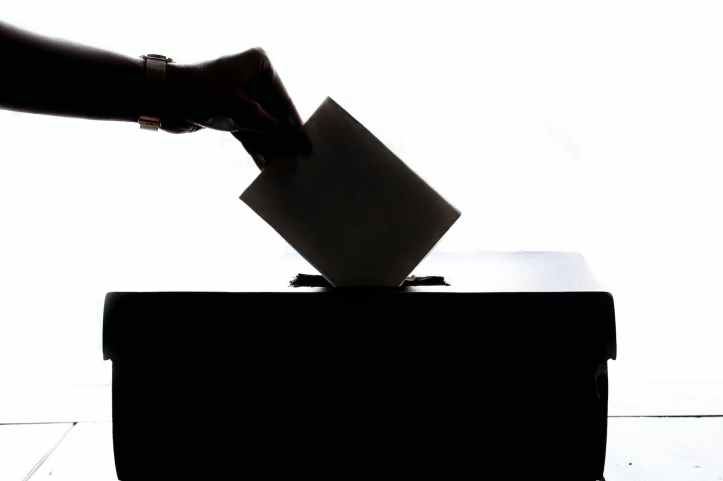
India is a country with the largest population in the world and over 900 million eligible voters. The democratic system of the country prospers with the active participation of the citizens. Over 400 elections have taken place in the Lok Sabha and State Legislative Assemblies since the independence.[1]; it also shows the commitment of the Election Commission of India to fairness and transparency. However, the nature of the election is fragmented and frequent, giving rise to a need for an efficient system. This is where the need for One Nation, One Election arises. This concept means aligning the elections of the Lok Sabha and State Assemblies. It would make it easy for the voters to vote for both government tiers on the same day in their constituencies. The present method of conducting an election is cumbersome, time- and resource-consuming. On average, the number of elections faced in India is 5 to 7 annually. A simultaneous election can be a good option for the country to save the cost and time that the present election takes. The country continuously stays in the electoral mode because of the several elections taking place each year. This largely puts a strain on the country’s budget, and it also impacts its administrative and policy choices. The One Nation, One Election concept will largely help resolve this issue, such as cost savings and improved government efficiency. The government also formed a high-level committee to review One Nation, One Election, which proposed many constitutional reforms. The research paper examines the historical background, recent developments, and the arguments given for and against the amendment.
HISTORY AND NEED OF THE CHANGE
The Election Commission of India, a self-governing body created on January 25, 1950, oversees the country’s elections. The elections in India are administered under the provisions of Article 324-329 of the Constitution. The role of the election commissioner is to conduct free and fair elections in India. The concept of simultaneous election was first proposed in 1983 by the Election Commission. The practice of simultaneous election started in 1951-52 when the first general elections to the Lok Sabha and all the State Legislative Assemblies took place, and this practice continued till 1967. The practice was disrupted because many State Assemblies were dissolved before the completion of the 5 years. And further, the Lok Sabha also dissolved prematurely in 1970. Because of this disturbance, the election to the Lok Sabha and State Assemblies started to be conducted separately, and the cycle of simultaneous election broke. [2] This frequent election placed a financial burden on the government.
India has a large electorate and diverse political parties with various regional issues, which makes the electoral system complex. Frequent elections around the country cause social and economic causes where there is an increase in the flow of black money. The main reason for the demand for simultaneous elections is the cost; in 2019, India spent almost 600 billion rupees on the Lok Sabha elections.[3] On 1 September 2023, the central government set up a committee with former president Ram Nath Kovind as chairman. The committee’s work was to examine the usefulness of the simultaneous election and determine whether it was feasible. The committee recommended electoral photo identity cards, which can be used for elections to both the Lok Sabha and State Assemblies.
A large number of security forces are deployed to conduct a free and fair election in the country, which necessitates massive mobilisation of central and state police; if the elections are aligned, then there could be a substantial reduction in the expenditure with the optimal utilisation of the resources. This frequent cycle of elections also affects the working of the government and prohibits making major policy continuity. Simultaneous elections can allow the government to focus on governance without any electoral pressure. This can also lead to the consistent implementation of policies and schemes. [4]
RECENT DEVELOPMENTS
The committee on the simultaneous elections was formed on 2nd September 2023; it was chaired by former president Ram Nath Kovind. It was created to review the public and expert feedback; it also presented findings, recommendations for the amendments, and what potential impact it can have on governance and resources. The chairman of the committee submitted a report to the President of the country, Draupadi Murmu. They recommended that after the 2024 elections, they set an appointed date and begin a new electoral cycle in 2029. On 17th December 2024, an amendment was introduced called the Constitution (One Hundred and Twenty-Ninth Amendment) Bill, 2024, and it recommended facilitating simultaneous elections for both assemblies in India. The bill aimed to amend and add some articles to the constitution to acknowledge ‘mid-term’ elections. They also proposed inserting the new article 82A, where the election commission will conduct a general election for both the state and central government simultaneously, and the term of the state legislative assembly will end with the full term of Lok Sabha. Under Article 83, It defined the ‘unexpired term’, ‘mid-term’ and ‘general elections. The unexpired term was used for Lok Sabha; they were dissolved before completing the 5-year term, and the period between dissolution and the end of the term was this unexpired term. They also proposed to invest in infrastructure such as EVMs, VVPAT machines, polling stations, and security. They gave the idea that a legal framework should be developed that will address situations like no-confidence motions, premature dissolution, or a hung parliament. A voter awareness campaign was recommended where the voters would be able to get clarity over the elections and participate with ease. They also proposed amending Article 172, where they defined the unexpired term and full term for the State Legislative Assembly. [5]
ARGUMENTS IN FAVOUR OF ONE NATION, ONE ELECTION
- The expense spent on conducting an election can be reduced significantly. About 5 to 7 elections are held every year in the country, which leads to a large amount of needle expenditure. If the elections are synchronised, then this problem can be solved, and the unnecessary expenses can be cut down.
- Whenever the Model Code of Conduct comes into force, either in Parliamentary or Assembly Elections, they go for no policy implementation for 2 to 3 months of the time. It affects the overall policy implementation and the development plans. Simultaneous elections can reduce this problem significantly as the policies will not be disrupted, and development can be continued.
- If the elections are held only once for both levels of government, then there is a possibility that voter turnout can increase as people are more likely to vote if they have to vote once every five years.
- The voters can save time and energy and utilise it properly. A voter has to cast multiple votes in a year, which can affect their work and cause improper use of time.
- Midterm elections cause problems because of the repetition of elections; the resources, workforce and time are utilised for another round. An amendment is required, and progressive legislation is the need of the hour to prevent midterm elections.
- If the clock election system is put to an end, there will be more peace and order synchronised elections that can reduce the number of public rallies, fake promises and wastage of hard-earned money. [6]
ARGUMENTS AGAINST ONE NATION, ONE ELECTION
- In a country like India, which has the largest population and the number of registered voters of 96.88 crores, conducting simultaneous elections can be very difficult. It will be very hard to mobilise many officials and police for security purposes so that the polls can be conducted smoothly and successfully.
- Conducting simultaneous elections can undermine the federal structure of the constitution, as the state and central governments have their own spheres of power and activity and are formed to address different localised issues. Separate elections reduce the likelihood of excessive centralising tendencies.
- Since India is a rural-based society, 70% of the population resides there, and simultaneous elections can test the decision-making power of the voters. They can mix up various issues and get confused when comprehending political matters. They are more likely to miscalculate because of the low level of political education and awareness.
- To align the elections, several urgent amendments have to be brought within the Constitution; for example, the state assemblies need to be synchronised with the central government election, and some articles need to be amended, like banning the second election if a no-confidence motion is passed against the government.
- Frequent elections allow voters to express their dissatisfaction with government functioning, and they can change the state government by voting out. If there is a sudden crisis, the state can suffer due to the unresponsive leadership, with no opportunity for early elections.
- Regional parties can be overshadowed by the national party as they may not be able to be in line with the level of the reputation, the reaching out capacity, the fund reserve, and the towering personality of the national party. It can have an impact on the working capacity of the regional parties and can also undermine regional aspirations. [7]
CONCLUSION
The concept of One Nation, One Election aligns the Lok Sabha elections with the State Assemblies election. It is reformative, which seeks to improve government efficiency, reduce the financial burden and maintain political stability. The idea was practised in India till 1967, but it was disrupted because of the government’s premature dissolution. This idea has gained popularity recently because of the potential it has to improve democratic practice. The idea of this reform has both its advantages and challenges, which highlights the need for careful evaluation of its feasibility and its long-term elections. The significant reduction in administrative and financial costs caused by simultaneous election is one of the most important advantages. If the elections are held frequently, the money spent on them, from the security arrangements to infrastructure and logistics, places a heavy burden on public resources. If the elections are aligned, then the government can focus efficiently on public policies, and they can plan long-term rather than focusing on the election campaign. Some of the challenges that can be faced due to the implementations are that the political power can be centralised, which can lead to diminishing the autonomy of state government and the representation of the regional political parties. Also, the voters can get confused between the national and state-level issues, which can overshadow the local issues over the national narrations. The Constitution will have to go through many amendments to achieve this reform, which is a very challenging task to achieve. In conclusion, the idea of One Nation, One Election is a big reform for a country like India because of the diversity and democratic framework, but it is a complex and multifaceted idea that requires much consensus. A small step, such as the partial synchronisation of elections as a pilot initiative, can be considered, and ultimately, if the plan works, the idea can be implemented slowly for the whole country.
[1] One Nation, One Election, available at: https://pib.gov.in/PressReleaseIframePage.aspx?PRID=2085082#:~:text=Since%20independence%2C%20over%20400%20elections,for%20a%20more%20efficient%20system. (last visited on February 24, 2025).
[2] One Nation, One Election: Streamlining India’s Electoral Factor, available at: https://www.researchgate.net/publication/388994183_ONE_NATION_ONE_ELECTION_STREAMLINING_INDIA%27S_ELECTORAL_FUTURE (last visited onFebruary 24, 2025).
[3] Dr A. Shaji George, “One Nation One Election: An Analysis of the Pros and Cons of Implementing Simultaneous Elections in India” 02 Partners Universal International Research Journal 40 (2023).
[4] Id. At 2.
[5] Dr Tapan Das, “One Nation One Election in India: Possibilities and Probable Benefits” 10 International Journal of Humanities & Social Science Studies 287 (2024).
[6] Dr Varinder Singh, “A Solution or Change: One Nation One Election” 1 St. Soldier Journal of Law and Social Science 62 (2025).
[7] Supra note 2 at 290.
Author: Shruti Shukla
 Juris Centre