
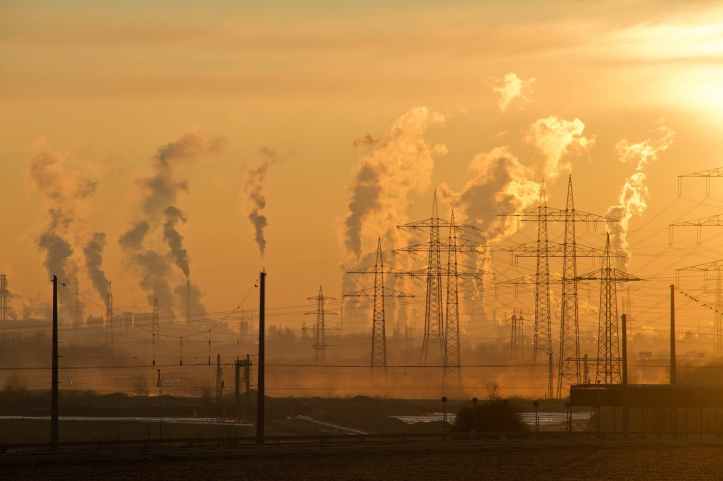
The consequences of environmental damage are not limited to individual countries; they have a far-reaching impact, deepening social and economic disparities and causing significant harm, especially to the most vulnerable groups. Additionally, this environmental harm undermines the fundamental right to life, which serves as the basis for all other human rights. While it’s difficult to pinpoint the exact extent of the damage, it is evident that we have already crossed a critical threshold. It is troubling to see that despite the ongoing, reckless exploitation of natural resources leading to irreversible harm, efforts to implement meaningful conservation strategies remain sluggish and inadequate.
Climate change is an ongoing critical challenge, necessitating immediate collective action by global economies as scientists have not only provided evidence but are continuously voicing their concerns. The foremost steps towards the goal are to enforce robust legal frameworks and effective implementation to mitigate its impact.
As the fifth largest economy1, India is pivotal in addressing climate change while accomplishing its economic objectives.
Despite having a comprehensive legal framework, meeting global climate commitments under agreements like the Paris Agreement (2015)2, the United Nations Framework Convention on Climate Change (UNFCCC)3, and the United Nations Sustainable Development Goals (SDGs)4 remains a huge hurdle for the nation.
The United Nations Framework Convention on Climate Change (UNFCCC), Article 3, emphasizes the principle of “common but differentiated responsibilities,” highlighting the need for stronger legal measures in developing nations like India to meet climate goals effectively. Similarly, the Paris Agreement, Article 4, calls for the implementation of progressively ambitious climate policies to limit global temperature rise. India, being a signatory, is committed to reducing greenhouse gas emissions through its Nationally Determined Contributions (NDCs). However, India holds a 7.4% share of global emission of CO2 emission from combustible fuel, 2022, there is an upward 182% change in trend in the period from 2000-2022 5. The Glasgow Climate Pact (COP26, 2021)6 and the Sharm el-Sheikh Implementation Plan (COP27, 2022) have urged countries, including India, to strengthen environmental laws and accelerate climate action.
A study by Harvard University (2022)on environmental governance found that legal frameworks alone are insufficient unless combined with public participation and civic sense. In India, poor waste management, rampant pollution, and lack of environmental awareness undermine sustainability efforts. Studies by Yale University’s Environmental Performance Index (EPI)8 rank India low due to ineffective enforcement of regulations and low public compliance.
This article will explore India’s environmental legislation and suggest reforms needed to combat the challenges. Drawing insights from the world’s most sustainable countries, this study suggests how India can achieve similar success by adopting best practices, enhancing public awareness, enforcing stricter penalties, and improving transparency in governance. Additionally, it explores solutions for tackling pressing environmental concerns such as air pollution, water contamination, and waste management, while also emphasizing the role of population control in ecological preservation.
- Current environmental legal regimes of India
India’s environmental legal system is a complex yet comprehensive framework founded on constitutional mandates, legislative enactments, and judicial interpretations. The Constitution of India expressly recognizes the significance of environmental protection. Article 48A, part of the Directive Principles of State Policy, instructs the State to take proactive measures to safeguard and enhance the environment and protect forests and wildlife. Article 51A(g) imposes a moral responsibility on every citizen to preserve the environment and conserve natural resources for future generations.
Various key legislation was enacted to protect India’s environment, including the Environment (Protection) Act, 1986, a comprehensive legislation empowering the central government to protect and improve the environment; the Water (Prevention and Control of Pollution) Act, 1974, which addressed water pollution; and the Air (Prevention and Control of Pollution) Act, 1981, which focused on the state’s air quality.
National Green Tribunal Act, 2010, was also enacted establishing a specialized court for environmental matters; the Wildlife (Protection) Act, 1972, safeguarding wildlife and their habitats; and the Forest (Conservation) Act, 1980, regulating the diversion of forest land for non-forest purposes. These acts, along with associated rules and notifications, form the backbone of India’s environmental regulatory regime.
Over the years, the Supreme Court and High Courts have also played an active role in interpreting environmental laws and ensuring their effective enforcement. In Subash Kumar v. State of Bihar (1991) Supreme Court recognized the right to clean air and water as part of the right to life under Article 21 of the Constitution. In another landmark case of Godavarman Thirumulpad v. Union of India (1996) the Supreme Court expanded the definition of forests beyond government-notified areas, bringing all ecologically significant forested lands under protection.
Another significant precedent was set in MC Mehta v. Union of India (1986), where the Supreme Court introduced the “absolute liability” principle, holding industries strictly accountable for environmental hazards, irrespective of negligence. This case arose from the Oleum Gas Leak incident9, reinforcing the need for stringent industrial environmental regulations.
- Limitation of current legal legislation
Despite the extensive legal framework, various critical challenges stand in the way of the successful execution and attainment of the intended environmental results. The foremost issue lies in the way these rules are enforced.
1. Gaps in Implementation and Enforcement:
● Capability Gaps: Regulatory institutions tend to fall short of sufficient resources such as a lack of qualified people, poor funding levels, low quality equipment, etc. These limits create a challenge for regulatory institutions in monitoring the maintenance of the law, investigating severe breaches, and enforcing the laws on the environment.
● Inadequate Enforcement: There is no lack of compliance by entities breaking the environmental laws because the punishment attached to such behavior does not seem to solve the issue. Filing cases and dealing with legal matters, red tape, and other administrative issues often postpone the prosecution of offenders, which in turn weakens enforcement.
● Lack of Integrity and Accountability: Misconduct within regulatory agencies, such as regulators failing to implement initiatives for enforcement of non-compliance, can foster corruption. In addition, the absence of accountability regarding decisions made may create avenues for certain interests to abuse the formulated environmental standards and policies by deregulation.
● Mainstreaming Climate Policies Inadequacies: While the background studies development in India is in progress, the climate policies integration into other relevant sectoral policies and laws is still lacking. This gap in mainstreaming policies will ultimately affect any efforts toward adequate climate change mitigation.
2. Issues with Procedures and Organization:
● Slow Methods for Obtaining Permissions: Environmental procedures for affirmative approvals about an initiative seem to take an infinite amount of time.
●Scattered Management: There is a lack of a clear environmental governance framework in India, as there is a puzzle surrounding the division of responsibilities, which creates overlaps and competing preferences among various government bodies.
● Neglecting the Focus of Prevention: There are various environmental laws and regulations put in place that seem to neglect the fact that the fundamental focus should be the obtention of pollution and not dealing with it after it is inflicted. A sustainable policy should be more far-sighted and take proactive action to combat challenges in the future.
● Deficiency of Civic Involvement: People’s involvement in environmental policy processes is still low. Affected communities are rarely consulted and their views do not carry much weight.
Furthermore, the sheer scale of the country and the complexity of environmental issues cannot be ignored. Environmental degradation and climate change disproportionately affect the vulnerable and poor communities which the statute fails to address. Additionally, environmental justice is also often limited for these communities as they lack the knowledge and the resources to seek redressal.
- World’s Most Sustainable Countries: How they achieve their goals and can strategies India can adopt
Denmark
Denmark has emerged as a global in sustainability due to its comprehensive climate policies, innovative urban planning, and strict emission control measures. The country has successfully managed to decarbonize10 its economy while maintaining economic growth, demonstrating that sustainability and prosperity can go hand in hand.
The country has several key laws, effectively implemented, ensuring compliance to achieve its goals such as Danish Environmental Protection Act (1973) is fundamental in the primary enactment that regulates pollution, waste, nature conservation, and planning for sustainable development. Climate Act (2020) is an Act adopted by the government in Denmark that legally binds the government to reduce greenhouse gas emissions by 70% by 2030 compared to 1990 levels. The government presents concrete plans for emission reductions on an annual basis, along with the incorporation of an independent scientific evaluation body11 to assess the advancement made.
Green Tax Reform legislation originated in the 1990s and made Denmark one of the earliest countries to levy a carbon tax12, reducing the dependency on fossil fuels and forcing industries to adopt renewable sources of energy. Waste Management Law (1997) aims and covers the application of the principles of a circular economy: ‘waste to energy’ combined with demolition waste management approaches that minimize waste disposal along with target high rates of recycling and extended producer responsibility (EPR)13, making manufacturers responsible for the entire lifecycle of their products. Energy Agreement (2018) contains Denmark’s visionary goal of achieving 100 percent renewable energy by 2050 with a particular emphasis on offshore wind farms, solar power, and hydrogen energy. Water Protection Legislation has stringent regulations governing the discharge of wastewater from industry and households to prevent uncontrolled pollution of waterbodies which has greatly helped in the mitigation of nitrogen and phosphorus pollutants from agriculture. Strict waste segregation laws ensure that only 4% of Denmark’s waste end up in landfills. Denmark even has pioneered waste-to-energy plants, like the Copen Hill facility, which converts waste into clean energy while also serving as a recreational space with an artificial ski slope.
Denmark’s urban sustainability and green infrastructure is setting an example for cities worldwide. The country’s capital, Copenhagen is often cited as the most sustainable city in the world. The urban design prominently incorporates green spaces with city’s infrastructure, with over 25% of the city covered in parks and green spaces. Additionally, mixed- used developments ensures that residential, commercial and recreational spaces are well integrated throughout, reducing the need for long commutes and encouraging sustainable living. The city has also well-designed bicycle infrastructure, as nearly 50% of Copenhagen’s residents commute by bicycle, thanks to over 400km of dedicated cycling lanes and traffic systems designed to prioritize cyclists. Subsequently, it has invested largely in its public transportation as electric and hybrid buses as well as efficient metro system that runs on renewable energy. Several parts of Danish cities have car free zones i.e., pedestrian only zones which reduces vehicular pollution and promoting walking.
Furthermore, Denmark’s renewable energy integration is also commendable, generating 50% of its electricity from wind turbines. The city has district heating system14, over 60% of Danish household are connected to district heating which uses waste heat from power plants to provide efficient home heating. Denmark also has one of the lowest levels of water consumption per capita in Europe due to advanced water recycling and conservation programs. The government mandates strict industrial wastewater treatment 15 before discharge, ensuring that water bodies remain clean.
Singapore
Similarly, when it comes to sustainable living India can also adopt practices used by its neighbouring countries like Singapore. Singapore has developed groundbreaking environmental practices that have helped it become one of the world’s most eco-friendly cities despite its small landmass and high population density.
Despite being a small island nation with limited natural resources, the country has established itself as a global leader in sustainability with the enactment of legislation such as The Environmental Protection and Management Act (EPMA) 1999, covering air pollution, noise control, hazardous waste, and environmental governance having key provisions like strict emission standards which industries must comply with stringent air pollution limits, environmental monitoring, and heavy penalties. Singapore was the first Southeast Asian country to introduce a carbon tax by bringing into force the Carbon Price Act, 2019 16.
The tax applies to mass pollutants on a large scale that emit more than 25,000 tonnes per year. Revenue from tax is reinstated in green projects and clean energy research. Energy Protection Act 2012 The mandate is that large energy consumers (factories, hotels, commercial buildings) adopt energy-efficient measures.
Industries are required to monitor energy efficiency, report, and improve. Renewable encourages investment in energy and manufactures retrofitting to reduce emissions. Resource Stability Act, 2019 introducing the extended manufacturer responsibility (EPR) for electronic waste, packaging, and plastic. Strict waste for industries and homes makes compulsory separate and recycling policies. Penalizes corporations that fail to follow the goals of waste deficiency. Clean Air Act and Clean Water Act these laws regulate air pollution control, vehicle emissions, and industrial discharge in water bodies. Strict punishment is imposed on illegal waste disposal and water pollution.
Various practices are also incorporated alongside statues such as Marina Barrage, a multi-purpose project that manages water supply, prevents flooding, and promotes recreational green spaces. The government has strict building codes requiring developers to include energy-efficient materials, solar panels, and water conservation features in all new buildings. The concept of ‘Garden in City’ incorporating green spaces, vertical gardens, and rooftop farms in urban spaces can also be seen throughout the country. Singapore has one of the most efficient public transport systems in the world. The country also has a high ownership vehicle tax to discourage ownership, reducing the reliance on private vehicles. The price of a car sums up by adding registration fee, open market value, additional registration fees, excise duty, enhanced vehicular emission scheme, and certificate of entitlement which makes it difficult to acquire a greater number of vehicles per person. Singapore lacks natural freshwater resources and is dependent heavily on Malaysia for water imports but to achieve water security, Singapore developed NEWater, an advanced wastewater recycling technology introduced in 2003, NEWater now meets over 40% of Singapore’s water demand, intending to reach 55% by 2060. The system works on microfiltration, Reverse Osmosis, and Ultraviolet disinfection. Microfiltration removes suspended solids and bacteria from wastewater, in reverse osmosis (RO) water passes through membranes to eliminate dissolved salts, viruses, and contaminants, and the final purification step which is ultraviolet disinfection ensures the water is safe for drinking and industrial use. Additionally, desalination plants to convert seawater into fresh water and rainwater harvesting systems is also present in major urban developments. This is the whole process is advantageous to the country as it Reduces reliance on imported water, enhancing Singapore’s water security, provides a sustainable alternative to traditional freshwater sources, used for industrial cooling and semiconductor manufacturing, reducing freshwater demand and ensures water conservation, preventing shortages in drought periods.
Finland
Finland is one of the most environmentally sustainable countries in the world, ranking high in the Environmental Performance Index (EPI). Sustainability has been achieved through strict environmental legislation, climate action policies, waste management systems, forest conservation, and renewable energy adoption. Finland’s approach focuses on ecological resilience, carbon neutrality, and a circular economy, making it a model for nations striving for sustainability.
Finland’s robust legal framework cannot be overlooked, the country has enacted laws time to time to meet its goal. Environmental Protection Act 2000, amended in 2014 governs pollution, industrial emissions, and sustainable land use. It also mandates environmental impact assessments (EIA) before approving industrial and infrastructural projects and provides for severe penalties in case of violations of environmental standards. Climate Change Act 2015, amended in 2022 applies legal obligation for carbon neutrality by 2035, thus considering Finland to be in the list of the first countries to commit to so ambitious of target. Sets up sectoral roadmaps regarding emissions, transport, energy, as well as agriculture. Introduces climate budgeting since national financial planning should strictly adhere to sustainable goals. Waste Act 2012, amended 2021 mandates a circular economy approach to waste management and requires industries to take responsibility for their waste through Extended Producer Responsibility (EPR) programs while it also bans landfilling of organic waste to reduce methane emissions. Water Act, 2011
protects Finland’s water resources by controlling industrial discharges and agricultural runoffs while ensuring water treatments and conservation schemes that protect lakes and rivers and also increase sustainable fishing methods and wetland rehabilitation. Finland’s sustainability is also a result of several practices that are driven by clean energy, waste reduction, smart urban planning, and strong citizen participation. will completely phase out coal power by 2029, favouring safer alternatives.
Finland was also one of the first countries to adopt a national circular economy17 roadmap in 2016. Finland is expected to reach carbon neutrality by 2035, one of the most ambitious targets in the world. Over 40% of Finland’s energy is generated from renewable sources-hydropower, wind, solar, and bioenergy.
Takeaway for India
India’s air quality remains a critical concern. In the year 2024, PM2.5 stand-alone concentration for the entire country averaged an increase from 53.3 µg/m³ in 2023 to a total of 54.4 µg/m³.18 Account of this number must be taken against the permissible value set by WHO of 5 µg/m³. High levels of particulate matter pose serious health risks by causing respiratory and cardiovascular diseases. In India alone, about 1.5 million deaths per year are attributed to long-term exposure to air pollution, according to a study published in The Lancet Planetary Health. The PM2.5 levels in many cities exceed WHO’s safe limit multiple times over, causing respiratory illnesses, lung infections, and even heart disease. In Delhi, the Air Quality Index (AQI) often reaches above 400, making it almost unbreathable. This isn’t just a health issue—it’s an economic disaster too. Studies show that air pollution costs India around 1.36% of its GDP annually due to healthcare expenses and loss of productivity. (World Bank, 2024). Contributing to this pollution were vehicular emissions, industrial activities, construction dust, and seasonal agricultural burning. Water pollution is another rapidly growing issue.
More than 80% of surface water in India is contaminated, making it unsafe for drinking and other uses (CPCB, 2024). Over half of all the rivers passing through India are highly polluted, with Yamuna, Ganga, and Sabarmati being amongst the most contaminated despite efforts.
The paramount reason for this is the discharge of 38,000 million Liters of untreated wastewater into rivers daily owing to an inadequate state of sewage treatment facilities19. Groundwater contamination also stands as a serious threat; according to 2024 figures, over two million people were affected by pollutants such as salinity, iron, and nitrate.20 After studying the environmental policies of Denmark, Finland and Singapore, which are rated the most sustainable, several important lessons can be drawn as to how India can strengthen its environmental laws and policies:
Carbon Taxation and Renewable Energy Adoption by Denmark fossil fuel consumption can be capped and the intake of wind and solar energy can be hastened by implementing a progressive carbon tax. India can introduce a similar tax system to reduce fossil fuel use and encourage investments in solar, wind, and hydro energy. Denmark generates nearly 50% of its electricity from wind energy, proving that a large-scale renewable shift is possible. Investing in offshore wind farms can help India harness its coastal energy potential like Denmark does.
Circular Economy and Waste Management (Finland & Singapore) implementing a circular economy model can help in enhancing recycling, waste reduction, and EPR compliance improvement. The construction of advanced waste-to-energy plants as well as Semakau Landfill engineered landfills in Singapore can help reduce landfill usage considerably. India needs better waste segregation laws and strict penalties for improper disposal. Water Conservation and River Rejuvenation (Singapore Laws) concerning industrial wastewater treatment should be made stringent in order to clean Ganges and Yamuna rivers. India can adopt the NEWater of Singapore model by increasing the recycling of wastewater for industrial as well as drinking purposes. Sustainable Urban Development & Green Infrastructure (Denmark & Finland) Electric vehicle as well as green public transport expansion can help in tackling emission issues in cities. Eco-friendly car free cities with green public spaces should be built. India must invest in expanding metro networks, making EVs more affordable, and reducing reliance on fuel-based vehicles while also focusing on sustainable urban planning which incorporates green spaces with economic growth.
Conclusion
India stands at a critical juncture where environmental degradation threatens public health, economic stability, and global climate commitments. The country’s alarming levels of air and water pollution, coupled with weak enforcement of environmental laws, underscore the immediate need for systemic reforms. Without decisive action, India risks severe ecological collapse, further public health crises, and economic losses that could hinder its global aspirations. India’s environmental crisis is not a distant threat—it is unfolding now. Unchecked pollution is accelerating climate change, leading to extreme weather events, crop failures, and water scarcity. If immediate steps are not taken, by 2050, India could face an annual GDP loss of 2.6% due to climate-related disasters as reported by IMF in 2024. India cannot afford to ignore these warnings. Every year, pollution-related diseases kill thousands, extreme weather events displace millions, and economic losses continue to mount. The longer the country waits, the harder it will be to fix these problems. Stronger laws, better enforcement, and public awareness are essential to protect India’s environment. This is no longer just about meeting global commitments—it is about ensuring a liveable future for the next generations. The choices India makes today will decide whether it becomes a leader in sustainability or a nation struggling with irreversible damage. The world is watching, and the time for action is right now.
Author: Anusha Dhaddha
 Juris Centre