
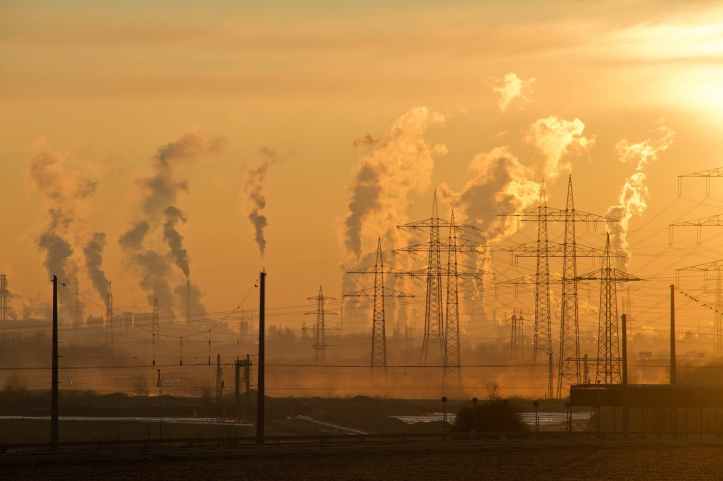
The State of Global Air Report 2024, which provides a comprehensive analysis of data for air quality and health impacts for countries around the world, has found that air pollution accounted for 8.1 million deaths globally in 2021, becoming the second leading risk factor for death, including for children under five years. According to the Report, India, along with China, with populations over one billion each together, account for 54% of the total global disease burden linked to air pollution. Not only this, nearly 50% of all ozone-related Chronic Obstructive Pulmonary Disease (COPD) were in India. With around 1,69,400 deaths, India also saw one of the largest numbers of air pollution-related deaths among children under five.[1] These numbers point to a harsh reality where human health and life are being compromised due to the lackadaisical attitude towards pollution and its effects. This environmental degradation extends far beyond human impact and inflicts severe and often irreversible damage on the Earth’s biodiversity.
This report is one of the many studies that indicate the growing need to take more proactive and robust measures to lessen the damage that pollution is causing to the environment. Environmental pollution, broadly encompassing air, water, soil, noise, plastic, and light pollution, among others, has become a major threat to both human health and global biodiversity. While natural phenomena like volcanic eruptions contribute to pollution, human activities have exacerbated the issue to extreme levels. These activities include coal combustion, agricultural use of pesticides and chemical poisons, and the discharge of industrial waste and harsh chemicals into water bodies. The extent of this impact on human and animal life is evidenced by frequent reports revealing microplastics and hazardous chemical levels in everyday consumables, as well as disturbing images of plastic and electronic waste discovered inside deceased animals. It underscores the fact that pollution is a global issue having far reaching consequences on ecosystems worldwide.
This leads us to the viable solutions that can be taken to tackle this issue. Given the rapid and widespread havoc that is being caused by pollution, the measures taken and yet to be taken need to be urgent and comprehensive. This will not be possible without adopting a multipronged approach. Governmental policies or environmental activism alone will not suffice. A combination of strict regulation enforcement, giving impetus to sustainable methods of production, investing in research and development, along with public awareness and education, and cooperation among various national and international bodies is necessary. This complex interplay of legal, social, and ecological issues reflects the country’s need to balance industrial development with environmental conservation and social justice. This is where the concept of environmental torts emerges as a powerful mechanism. Holding polluters liable for the damage they cause, along with providing adequate compensation to people who inadvertently suffer the consequences of such acts, makes it easier to foster accountability and a greater sense of responsibility. Environmental torts effectively integrate the social and legal dimensions of pollution, serving as a potent deterrent against environmentally destructive activities. This essay will examine the evolution of environmental torts in India and analyse the various factors that have strengthened the existing legal framework, and assess its limitations. By delving into the landmark cases and legislative reforms, it will trace the development of environmental jurisprudence in India. The essay will as also look into the role of judicial activism and international environmental principles, its application, and the challenges faced in the Indian context, thereby providing a holistic understanding of India’s pressing ecological concerns and the judiciary’s efforts to promote environmental justice.
Existing constitutional provisions and statutes:
Constitutional and legislative provisions regulating activities that harm the environment have undergone an evolution over the years. The Wildlife (Protection) Act of 1972[2] was one of the first and most important legislation in India in the area of environmental protection, which provides for protection to listed species of flora and fauna and allows the state and central governments to classify and declare any area as a wildlife sanctuary, national park or closed area.[3] This allowed for higher protection of ecologically sensitive areas and limited unlawful encroachments of areas boasting natural vegetation. This Act was later amended in 1991. Attention to the rippling effects of pollution and the cost of our indifference towards it was brought to our attention after the United Nations Conference on the Human Environment held in Stockholm in 1972. The Stockholm Declaration and Action Plan for the Human Environment was adopted along with several other resolutions. The National Council for Environmental Policy and Planning was set up in 1972 under the influence of this declaration. This Council later evolved into the Ministry of Environment and Forests (MoEF) in 1985. In 1976, constitutional sanction was given to the environmental sanctions raised in the Conference and through the 42nd Amendment, which incorporated them into the Directive Principles of State Policy and Fundamental Rights and Duties.[4] The Air (Prevention and Control of Pollution) Act 1981[5] and the Environment Protection Act 1986[6] were enacted in order to adopt the decisions taken at the Conference of 1972. The Environment Protection Act 1986 came in the wake of the Bhopal Gas tragedy in 1984. The Water (Prevention and Control of Pollution) Act of 1974[7] creates Centre Pollution Control Boards and State Pollution Control Boards as statutory bodies. The Energy Conservation Act of 2001[8] provides for the efficient use of energy and its conservation and established the Bureau of Energy Efficiency. The Biological Diversity Act of 2002[9] was enacted to give effect to the United Nations Convention on Biological Diversity, signed at Rio de Janeiro in 1992. The Scheduled Tribes and Other Traditional Forest Dwellers (Recognition of Forest Rights) Act, 2006[10] recognised the rights of the forest-dwelling Scheduled Tribes and other traditional forest dwellers and included the responsibilities and authority for sustainable use, conservation of biodiversity, and maintenance of ecological balance and thereby strengthening the conservation regime of the forests while ensuring livelihood and food security of the forest-dwelling Scheduled Tribes and other traditional forest dwellers. The National Green Tribunal Act of 2010[11] was established in concurrence with the United Nations Conference on the Human Environment held in Stockholm in 1972, in which India participated and is a part of the decisions taken therein as well as the United Nations Conference on Environment and Development held at Rio de Janeiro in June 1992. It also provides for the establishment of a National Green Tribunal for the effective and expeditious disposal of cases relating to environmental protection and conservation of forests and other natural resources. The Compensatory Afforestation Fund Act of 2016[12] was enacted following the Supreme Court judgment in the case of T.N. Godavarman Thirumulpad vs. Union of India[13] for the collection, management, and administration of funds collected under compensatory afforestation. Numerous notifications, rules, and regulations have been issued to implement these statutes and to establish specialised policies. India is also party to numerous other international conventions and obligations, which it gives effect to under the powers granted to the Parliament by Article 253 of the Constitution.
Historical context and landmark cases:
S. 268 (Public Nuisance), S. 269 (Negligent Act likely to spread infection of disease dangerous to life), S. 270 (Malignant act likely to spread infection of disease dangerous to life), S. 277 (Fouling water of public spring or reservoir), S. 278 (Making atmosphere noxious to health), S. 284 (Negligent conduct with respect to poisonous substance), S. 290 (Public Nuisance in cases not otherwise provided for) are sections enumerated in the Indian Penal Code, 1860 which can be applied to situations where pollution occurs. For example, S. 278 punishes any person who vitiates the atmosphere in any place to make it noxious to the health of persons in general dwellings, carrying business in the neighborhood, or passing along a public way. Any person who engages in an activity that results in pollution and thereby adversely affects the health of people residing in that area can be punished under this section. However, this section only imposes criminal liability and does not address the issue of making good the damage through compensation to the victims. In this context, the importance of evoking tort laws can be understood. By imposing strict liability and substantial monetary penalties, tort law can create a strong deterrent against environmental violations.
In what is undoubtedly one of the worst industrial disasters in the world, thousands of innocent people lost their lives, and lakhs of people were harmed in the Bhopal Gas Tragedy of 1984. Methyl isocyanate (MIC) – a highly toxic gas had escaped from the plant. An estimated 3,50,000 people were exposed. Immediate effects, and those over the following month, included the deaths of approximately 5,000 people, most attributable to the direct respiratory effects of inhalation. Over the next three years, health studies of survivors confirmed residual, obstructive airway disease, though its nature was poorly characterized.[14] Closely succeeding the tragedy at Bhopal was the Oleum Gas leak accident of 1985. While hearing claims arising from this incident, the court considered the fact that this was the second case of a large-scale leakage of deadly gas in India within a period of one year. The rule of strict liability, which was evolved in the case of Rylands v Fletcher, if applied here, would have proved to be futile, as those to be held liable would have escaped liability by pleading some exception to the rule. Hence, the Supreme Court took a bold decision and held that it was not bound to follow the Strict liability rule and evolved the rule of ‘Absolute Liability’. It expressly declared that the new rule was not subject to any of the exceptions applicable to the rule of Strict Liability.[15] It is explicitly stated in the judgment, “We would therefore hold that where an enterprise is engaged in a hazardous or inherently dangerous activity and harm results to anyone on account of an accident in the operation of such hazardous or inherently dangerous activity resulting, for example, in the escape of toxic gas, the enterprise is strictly and absolutely liable to compensate all those who are affected by the accident and such liability is not subject to any of the exceptions which operate vis-a-vis the tortious principle of strict liability under the rule in Rylands v. Fletcher. We would also like to point out that the measure of compensation in the kind of cases referred to in the preceding paragraph must be co-related to the magnitude and capacity of the enterprise because such compensation must have a different effect. The larger and more prosperous the enterprise, the greater the amount of compensation payable by it for the harm caused on account of an accident in the carrying on of the hazardous or inherently dangerous activity by the enterprise.”[16]
Despite these legal proceedings and their lauded outcomes, it is disappointing that hundreds of survivors of the Bhopal gas tragedy continue to protest, demanding increased compensation. Union Carbide Corporation (hereinafter referred to as ‘the Corporation’), which owned the plant, settled with the Union Government that $470 million would be paid as damages. This settlement was disputed by the victims, who appealed in the Supreme Court. The court, however, upheld the settlement and ordered the Corporation to fund a hospital for the victims. [17] It was not until 2010 that eight former Indian employees of the Corporation were convicted of ‘death by negligence.’ However, the main accused, former chairman of the company, Warren Anderson, evaded arrest and died a free man in the United States in 2014.[18] In 2010, the Union Government filed a curative petition in the Hon’ble Supreme Court of India seeking additional funds from the Corporations’ successor firms for extending higher compensation to the victims of the tragedy, which was dismissed by the Court in 2023 as it found that the amount of settlement sought was in surplus of the actual requirement.[19] Dow Chemical Company, the successor of the Corporation, has denied its liability to pay compensation to the victims as it purchased the Corporation 17 years later.
This points to the disconnect between legal resolutions and the impact that it has on the real world, particularly in environmental cases. Even when the evolution of Strict liability is a commendable step taken by the apex court, several problems still persist when it comes to enforcing this rule. Should a comparable incident occur again, how does one address and account for the long-term consequences that victims face? How does the rule of absolute liability address the protracted effects on human health, the persistence of environmental degradation decades after the accident, and the socio-economic effects it has? There are serious difficulties concerning cross-border corporate liability, adding another layer of complexity. In cases of changing company ownership, like the Oleum Gas leak tragedy, how can compensation be ensured for victims of environmental harm? These are all important questions that need to be addressed, considering the fact India’s industrial landscape is heavily driven by international investments. Industrial development has to go hand in hand with the need to protect India’s serious environmental concerns since damages caused by industrial accidents are more often than not long-lasting and irreversible.
Public Interest Litigations and judicial activism:
Public Interest Litigations (PILs) have played an enormous role in advancing the cause of environmental protection. Particularly in cases where innocent citizens suffer the consequences of environmental negligence and violation, PILs have been pivotal in addressing the gaps between statutory provisions and their enforcement. Courts have taken it on to themselves to negate the gap between statutes and its enforcement. PILs are a powerful tool in the hands of citizens, enabling them to fight for their rights. When substantial questions of law are raised it allows the judiciary to bring interpretations that are necessary to mitigate problems of the day according to the existing conditions.
In the case of Indian Council for Enviro-Legal Action v. Union of India and Ors[20], the Hon’ble Court has stated – “The primary effort of the court, while dealing with the environmental-related issues, is to see that the enforcement agencies, whether it be the State or any other authority, take effective steps for the enforcement of the laws. The courts, in a way, act as the guardian of the people’s fundamental rights, but in regard to many technical matters, the courts may not be fully equipped.” There are several important cases in this regard. The Supreme Court evolved and applied the ‘Polluter pays principle’ in the case of the Indian Council for Enviro-Legal Action v. Union of India[21]. In the case of Vellore Citizens Welfare Forum v. Union of India[22], the Supreme Court upheld the ‘Precautionary Principle’ and ruled that the ‘Polluter pays Principle’ and ‘Precautionary Principle’ are salient principles of ‘Sustainable Development’ as culled out from the Brundtland Report and other international documents, and that these principles are an inalienable part of the environmental law of India.
Public Interest Litigation and judicial intervention have evolved not only principles and doctrines but have allowed for the enlargement of the scope of Fundamental rights enumerated in the Constitution of India. Declaring a right as a Fundamental right makes it binding on the state and provides it constitutional protection. Even when making laws, it restricts the state from making laws that abrogate the rights and hence acts as a guideline for policy making. It also empowers marginalised communities and provides them with legal recourse. Access to a pollution-free environment and quality and healthy life is now a sacrosanct part of Article 21, which guarantees the Right to Life. In the case of Subhash Kumar v. State of Bihar[23] it was held by the Supreme Court that the Right to Life includes the right to pollution-free water and air for the full enjoyment of life. It also stated that if anything endangers or impairs that quality of life in derogation of laws, a citizen has the right to have recourse to Article 32 for removing the pollution of water or air, which may be detrimental to the quality of life. The right to a decent environment was held to be a part of the Right to life in the case of Shantistar Builders v. Narayan Khimalal Totame.[24] The Supreme Court, in the case of Rural Litigation and Entitlement Kendra v. State of U.P, [25] while acknowledging that the order to close down lime stone quarries would lead to these corporations being thrown out of business, held that it was a price that has to be paid for protecting and safeguarding the right of the people to live in a healthy environment with minimal disturbance of ecological balance and without avoidable hazard to them and to their cattle, homes, and agricultural land and undue affectation of air, water, and environment. In another major win to climate change and environmental activists in India, the Supreme Court observed in a judgment released in April 2024 that the right against adverse effects of climate change as a distinct fundamental right. It stated that – “It is yet to be articulated that the people have a right against the adverse effects of climate change. This is perhaps because this right and the right to a clean environment are two sides of the same coin. As the havoc caused by climate change increases year by year, it becomes necessary to articulate this as a distinct right. It is recognised by Articles 14 (right to equality) and 21 (right to life),”[26]
Conclusion:
Environmental tort law in India has grown to address the balance between industry and nature by recognizing the critical interplay between industrial development, ecological preservation, and public health. As legal systems adapt to address complex environmental challenges, the transition from traditional liability principles to more stringent standards demonstrates an increasing commitment to environmental justice. Public interest litigation has emerged as a powerful tool in advancing environmental protection, often bridging gaps between legislation and enforcement. However, significant hurdles remain, particularly in addressing long-term environmental degradation and ensuring adequate compensation for affected parties. The global nature of environmental issues necessitates a revaluation of cross-border corporate accountability. As nations strive for economic growth, the legal framework must evolve to balance development with robust environmental safeguards. Ultimately, the efficacy of environmental torts will depend on their ability to foster accountability, drive preventive measures, and ensure comprehensive remediation of environmental harm.
[1] Health Effects Institute, State of Global Air (2024) https://www.stateofglobalair.org/resources/report/state-global-air-report-2024
[2] The Wildlife (Protection) Act, 1972, No. 53, Acts of Parliament, 1972
[3] Ministry of Environment, Forestry and Climate Change, The Legal and Regulatory Framework for Environmental Protection in India, available at THE LEGAL AND REGULATORY FRAMEWORK FOR ENVIRONMENTAL PROTECTION IN INDIA (moef.gov.in) (last visited on 19th July 2024)
[4] Id.
[5] Air (Prevention and Control of Pollution) Act, 1981, No. 14, Acts of Parliament, 1981
[6] Environment Protection Act, 1986, No. 29, Acts of Parliament, 1986
[7] Water (Prevention and Control of Pollution) Act, 1974, No. 6, Acts of Parliament, 1974
[8] The Energy Conservation Act, 2001, No. 52, Acts of Parliament, 2001
[9] The Biological Diversity Act, 2002, No. 18, Act of Parliament, 2003
[10] Scheduled Tribes and Other Traditional Forest Dwellers (Recognition of Forest Rights) Act, 2006, No. 2, Act of Parliament, 2007
[11] National Green Tribunal Act, 2010, No, 19, Act of Parliament, 2010
[12] Compensatory Afforestation Fund Act, 2016, No. 38, Act of Parliament, 2016
[13] T.N. Godavarman Thirumulpad (98) v. Union of India, (2006) 5 SCC 28
[14] Cullian P., Case Study of the Bhopal Incident, 1, ENVIRONMENTAL TOXICOLOGY AND HUMAN HEALTH, https://www.eolss.net/Sample-Chapters/C09/E4-12-02-04.pdf
[15] R K BANGIA, THE LAW OF TORTS 414 (2010)
[16] M. C. Mehta v. Union of India, AIR 1987 SC 1086
[17] Alys Francis, Why are Bhopal survivors still fighting for compensation?, BBC (2nd Dec, 2014), https://www.bbc.com/news/world-asia-india-30205140
[18] Devika Bhattacharya, Bhopal gas tragedy, the deadliest industrial disaster in history, India Today (14th March, 2023) https://www.indiatoday.in/india/story/bhopal-gas-tragedy-1984-verdict-deadliest-industrial-disaster-how-it-happened-deaths-compensation-2346264-2023-03-14
[19] Khadija Khan, Bhopal Gas Tragedy: Why the Supreme Court dismissed Centre’s curative petition for more compensation, INDIAN EXPRESS (14th March 2023) https://indianexpress.com/article/explained/bhopal-gas-tragedy-supreme-court-curative-petition-explained-8495978/
[20] Indian Council for Enviro-Legal Action v. Union of India and Ors., 1996 SCC 5 281
[21] Indian Council for Enviro-Legal Action v. Union of India, (1996) 3 SCC 212
[22] Vellore Citizen’s Welfare Forum v. Union of India, (1996) 5 SCC 647.
[23] Subhash Kumar v. State of Bihar, (1991) 1 SCC 598
[24] Shantistar Builders v. Narayan Khimalal Totame, (1990) 1 SCC 520
[25] Rural Litigation and Entitlement Kendra v. State of U.P., (1985) 2 SCC 431
[26] The Hindu, Right against climate change a distinct fundamental and human right, SC judgment (8th April, 2024) https://www.thehindu.com/news/national/right-against-climate-change-a-distinct-fundamental-and-human-right-sc-judgment/article68041693.ece
Author: Haripriya
 Juris Centre