
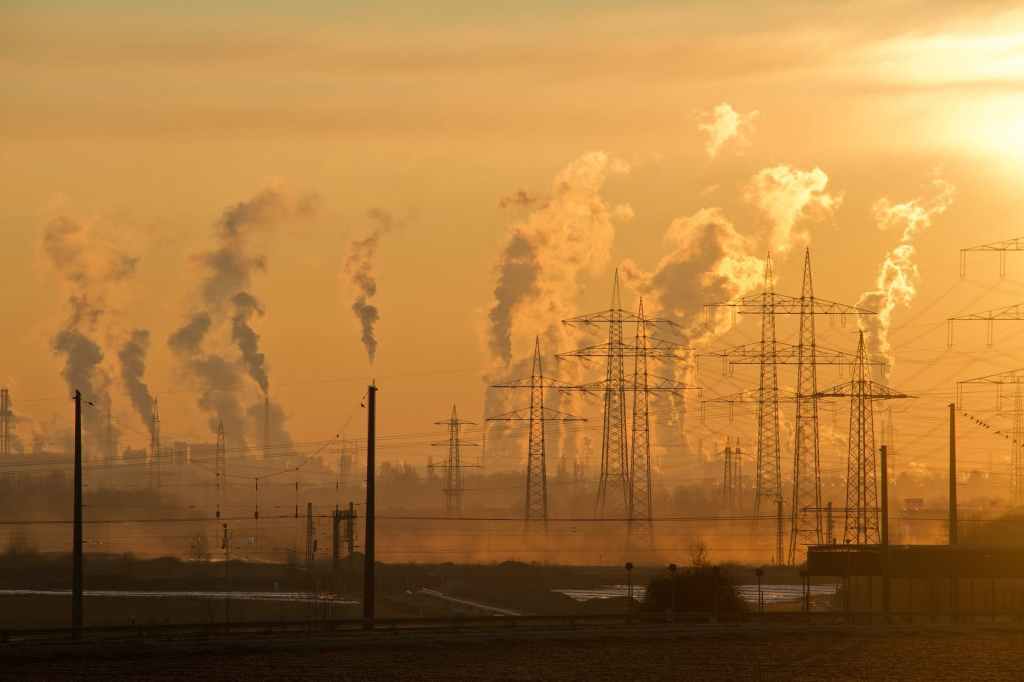
According to Reuters, India reported over 40,000 suspected cases of heatstroke and 100 deaths from heat-related causes in summer 2024.[1] Amid these heatstrokes, a significant judgment is delivered by the Supreme Court of India. A bench led by the Chief Justice of India recognized a new fundamental right under Article 21. While deciding on the matter of M. K. Ranjitsinh and others vs Union of India, the SC recognized that the people of India possess a fundamental right against the adverse effects of climate change. [2]
Long-term changes in temperature and weather patterns are referred to as climate change.[3] The effects of climate change are rising temperatures, more severe storms, increased drought, famine, warming and rising oceans, and loss of species; these further create poverty and displacement.[4] The rate of global warming presently is higher than it has ever been. Warmer temperatures over time are changing weather patterns and disrupting the usual balance of nature. This poses many risks to human beings and all other life forms on Earth.
Superseding China, India has become the most populous country, which makes it particularly vulnerable to climate change.[5] From devastating floods and record-breaking heat waves to rising sea levels and intensifying wildfires, the effect of climate change is very overt in India. A plethora of legislation already exists to protect the environment, like the Water Protection Act, Environment Protection Act, Energy Conservation Act, etc. Even after decades of active operation of these acts, SC felt the need for intervention in these matters time and again.
In an earlier judgment of Virender Gaur vs the State of Haryana, 1995, SC recognized the right to a clean environment.[6] Besides the existence of the right to a clean environment as a fundamental right, the SC reasoned behind the recognition of the new right is the increased havoc caused by climate change in recent times. Hence, the court felt it necessary to articulate this as a distinct right now. The court pointed out the missing “umbrella legislation” for climate change. SC believed that the reason behind this is the interrelation between the environment and climate change. It called them two sides of the same coin. The recognition is led by the intention of bringing climate change to the forefront, but is it the prudent way to do so?
What has changed after the recognition?
The right against adverse effects of climate change was earlier a widely recognized human right. Besides the fact that the court gave it a status of fundamental right now, the judgment is silent about what precisely this right is and how it will function in practicality. This limits the utility of the right. However, since the right is now a fundamental right, it will provide certain privileges to citizens regarding the effect of climate change. It will give voice to the right-based climate petitions filed with courts. Despite official policies, rules, and regulations acknowledging the negative consequences of climate change and attempting to mitigate them, no single piece of legislation in India extensively deals with climate change and related issues.
In the absence of any legislation, most petitions against climate change met disappointment. One such case is of Ridhima Pandey. In 2017, a petition was filed by a 9-year-old girl against climate change. The suit was a well-researched petition on the realities of the operation of existing environmental law and the reasons for their failure in fighting against climate change. However, in 2019, the NGT rejected the concerns and disposed of the petition in a brief 2-page order.[7] Since people at this time onwards possess a fundamental right, the climate change PILs will find a place now. This will incentivize Indian climate advocacy.
Being a fundamental right now, any person can file a writ directly in higher courts for violation of this right. For example, we have witnessed several cases of infringement of the right to a clean environment against the government for not protecting the environment. In certain instances, the courts have also enforced the right against private individuals too. In one of the cases, the court ordered a cement company to bear the medical expenses of all the people who caught asthma because of the air pollution created by the company.[8] Similar occurrences can be predicted in the case of this new right as well. However, the silence of judgment on the functionality of the right will continue to haunt its applicability. To actually give the citizens a right against the adverse effects of climate change, either the court needs to clarify the stand in upcoming judgments or the legislature should come up with a new law explicitly dealing with climate change and related issues. The latter one is a more plausible solution.
Do existing laws already cover the right?
There is a considerable overlap among poor environment, pollution, and climate change. The major causes of all of them are the same, like the burning of fossil fuels, deforestation, etc. By tackling pollution, especially air pollution, we can solve the issue of climate change.[9] India currently has plenty of legislation to cover almost every aspect of the environment to provide a clean environment and combat climate change. To prevent and control pollution of water, air, and environment, we have the Water (Prevention and Control of Pollution) Act, 1974, the Air (Prevention and Control of Pollution) Act, 1981, and the Environment (Protection) Act, 1986 respectively. Besides that, we also have the Wildlife Protection Act, the Energy Conservation Act, and separate courts, i.e., National Green Tribunals, for the speedy disposal of environment-related suits associated with these acts.
Along with that, the government is also working on a fair amount of national and international projects to minimize pollution and provide a cleaner environment, such as the National Solar Mission and the National Mission of Green India. In fact, the case of Ranjit Sinha was brought before the court when the government’s attempt to fulfil its international commitment under the Paris Agreement came into conflict with the lives of two endangered species, the Great Indian Bustard and the Lesser Florican.[10]
Apart from the legislature, the Constitution also covers the matter of climate change. Article 48A holds the state responsible for protecting, improving, and safeguarding the environment, forests, and wildlife.[11] Meanwhile, article 51A stipulates the same duty for citizens of India.[12] The Supreme Court itself, in its earlier decisions, recognized that climate change poses a significant threat to the environment,[13] and any threat to a clean environment amounts to a violation of Article 21.[14] Therefore, even if climate change is not explicitly mentioned, the Constitution and all the other legislations are already dealing with the issue and are focused on mitigating the causes of climate change.
Why does the Court consider it as a distinct right?
While discussing the existing stand on climate change in Indian law, the Court observed that the government policies, rules, and regulations recognize and seek to tackle the adverse effects of climate change. However, there is a missing umbrella legislation to mitigate the issue and attendant concerns. The Court discussed several cases pertaining to the right to a clean environment and pointed out that the need for it to be recognized as a separate right stem from the greater devastation that climate change has brought in recent years. Climate change is not yet recognized as a separate right because this right and the right to a clean environment are two sides of the same coin, said the Court.[15] Therefore, the major reason for the Court to make it a separate right was to bring attention to the legislature on this issue, which is getting out of hand now.
This approach is not new; the Supreme Court has used it earlier to recognize something as a right to bring attention. In the 2014 case of the National Legal Services Authority v. Union of India, the Supreme Court recognized the right to self-identify one’s gender. As a result, the government bought an act on the rights of transgender persons in the year 2019 in the form of Transgender Persons (Protection of Rights) Act 2019. Another notable case is Vishakha Singh v. State of Rajasthan, in which the Court issued guidelines on sexual harassment of women in the workplace, which ultimately led to the creation of The Sexual Harassment of Women at Workplace (Prevention, Prohibition, and Redressal) Act, 2013.[16] Also, the principle of “polluter pays” laid down by SC in the M.C Mehta case was incorporated in the Environment Protection Act of 1986.[17]
Is Bringing legislation an ultimate way out?
As the major emphasis here is the absence of legislation, the court too considered the absence as a key reason for neglect on the issue of climate change and therefore provided the option of it being a fundamental right of the people; it indicates that the fundamental presumption here is bringing a legislation which particularly deals with the effect of climate change and related concern will solve the problem. But the question is, will it actually help? We have already discussed that the amount of legislation to protect the environment is manifold in India. Regardless, the graph of the problem of environment and climate change is persistently rising. The reasons are multifarious.
- Callous approach toward existing regulations and policies
Even though the government has taken several initiatives to tackle climate change, none of them has been implemented effectively. For instance, if we talk about the Forest Conservation Act (FCA), 1980, as per Section 2 of the Act, the Central Government’s prior approval is mandatory for any State Government to “de-reserve” a reserved forest or any portion thereof, or permit the diversion of forestland for any non-forest purpose.[18] In addition, the Forest Rights Act (FRA) of 2006 also lays down certain prerequisites. Despite that, around 5,92,867 hectares of forest were diverted during the period from 1980 to 2007, and nearly 3,05,945 hectares (which is more than half of the earlier figure) of forest land have been approved for non-forest use under the FCA diverted in the next 15 years without complying fully with FRA.[19] Furthermore, in 2023, the government introduced the Forest Conservation Amendment Act, which modifies the definition of forests to exclude protection for 28% of India’s forest area.[20] This attitude of not complying with existing rules is also extended to other environment-related laws. Similar non-compliance can be witnessed vastly in granting clearance to projects in ecologically fragile zones, licenses to power plants not meeting the emission standards, etc. This shows the lack of real will on the part of the government towards climate change. Here, it is clearly evident that the development takes precedence over the environment.
- Manipulation of the Measures by the government itself
The government itself finds loopholes to manipulate the environmental laws. For example, under the FCA, every time forest land is diverted to non-forest use, an amount is taken up for compensatory afforestation. According to government reports, 19,260 hectares of forest were added between 2005 and 2022 (in high contrast with the area under deforestation of 3,05,945 hectares). In reality, experts have pointed out that the plantation is commercial, like rubber and coffee.[21] Also, cases of clearing down old forests to plant new ones are reported too. The State Forest Department of Government in Orissa removed over 50 acres of old trees from natural forests under the pretence of the Green India Mission to plant new trees for benefits.[22]
- Poor understanding of environment and climate change among state instrumentalities
The above-mentioned Odisha case shows a lack of understanding of the natural biodiversity and climate change by government bodies. There is a need for greater environmental literacy so that government officials can dispose of their responsibilities effectively. In another instance of Kaluves Lakes Karnataka, in 2012, the Karnataka HC directed the lake’s protection, rehabilitation and management in socially inclusive and ecologically appropriate ways. Instead of decontaminating, the government bodies render the rejuvenation work as more of civil work, ignoring the ecological balance, which further contaminated the lake, so the lake needs another rejuvenation work, which continues to be pending to date. Experts called the act as a blatant misuse of funds. [23]
At another point, the government formed a committee to prepare a plan against climate change. A high-level advisory group on climate change was constituted in 2007 and named the Prime Minister’s Council on Climate Change. The group released its National Action Plan on Climate Change (NAPCC) in 2008. Despite the group being formed to tackle climate change, its NAPCC identifies development as its primary objective and addresses climate change as a “co-benefit.” It also reported that designing a strategy to exclusively respond to climate change is undesirable. [24]
- Abysmal Public Engagement
In a survey of the Yale program on climate change communication, 85% of the Indian samples said they are already experiencing the adverse effects of climate change, and 90% expressed their worry about global warming.[25] Despite the individual steps by citizens to mitigate climate change, it is still in the dark. There is little data on the environmental literacy of Indians. However, cities like Bengaluru show comparatively less environmental literacy (3.5%) than areas closer to the environment, such as Uttara Kannada (45%).[26] The awareness about the environment and climate change is quite low, and people do not recognise it as a personal loss.
India is a signatory to and has ratified the Paris Agreement, which requires the State parties to implement measures to improve public participation and public access to information. The agreement recognises them as crucial tools. Despite the fact that there is not much public engagement in environmental matters, even under the Environment Impact Assessment (EIA) 2006, Every project included in Schedule I must go through the screening, scoping, public consultation, and appraisal processes.[27] However, the public is consulted extremely late in the process, right before the proponent is ready to submit the completed EIA report for approval to the review committee. This indicates that the public’s worries and issues are not taken into account by the EIA research. Even if community members bring up specific complaints during the public hearing process, they are unable to examine the final EIA report and have no way of knowing if those issues are truly addressed.[28] Furthermore, the government has drafted new EIA rules which exempt a greater number of projects from public consultation.
Conclusion: What is the necessity of the time?
From the aforementioned discussion, we can conclude that several reasons are responsible for the failure of existing environmental legislation like low environment literacy, ignorant government bodies, absence of political zeal in government and missing feel of environmental loss as personal loss. The most primary and concerning cause is the lack of political will of government. Therefore, bringing up new legislation will not help if government itself is engaged in finding loopholes in laws. The effort of the court to recognise the right against the adverse effects of climate change is plausible. However, since manifold reasons exist for the failure of numerous environmental legislations and rights, the need of the hour is much more than forming laws. The effect of climate change is blatantly visible now; the record-breaking frequency of heat waves is also making it apparent at the individual level.
There should be a multifaceted approach to solving the climate change issue. The primary need is to work on ground level i.e., to increase environmental awareness and literacy among people. Increased literacy will help people understand the gravity of the climate change. Even though climate change has been in parties’ manifestos for years, it has never been a considerable factor for voters while selecting candidates. Areas with more fragile ecosystems are more concerned about climate change, but it is insufficiently pressurising governments. There is a pressing need for great, uniform environmental literacy nationwide.
So far, it has shown to be deeply erroneous to rely only on the government to protect the environment. Therefore, people should be encouraged to take steps at an individual level, too. The government must stop prioritising development at the cost of the environment. The government bodies should be more cognizant of their role and responsibilities. The existing environmental laws are quite sufficient to tackle the problem if implemented in true spirit. The government should make sincere attempts to implement these laws in totality. Adding more water to the sea by forming another legislation is certainly not the need of the hour.
[1] Shivam Patel and Tora Aggarwal, India reports over 40,000 suspected heatstroke cases over summer, REUTERS (June 25, 2024, 9:15 PM), https://www.reuters.com/world/india/unrelenting-heatwave-kills-five-indian-capital-2024-06-19/#:~:text=NEW%20DELHI%2FGUWAHATI%2C%20June%2019,from%20heavy%20rain%2C%20authorities%20said.
[2] M. K. Ranjitsinha v. Union of India, 2024 SCC OnLine SC 570.
[3] What is Climate Change?, UNITED NATIONS (June 21, 2024, 8:10 AM), https://www.un.org/en/climatechange/what-is-climate-change.
[4] Causes and Effects of Climate Change, UNITED NATIONS, (June 21, 2024, 9:50 PM), https://www.un.org/en/climatechange/science/causes-effects-climate-change.
[5] ANI, India vulnerable to climate change due to heavy population: Former UNEP Executive Director Erik Solheim, THE HINDU (June 24, 2024, 3:43 PM), https://www.thehindu.com/news/national/india-vulnerable-to-climate-change-due-to-heavy-population-unep-executive-director-erik-solheim/article66957051.ece.
[6] Virender Gaur and Ors. v. State of Haryana and Ors., (1995) 2 SCC 577.
[7] Parul Kumar and Abhayraj Naik, India’s New Constitutional Climate Right, VERFASSUNGS BLOG ( June 2, 2024, 6:28 PM), https://verfassungsblog.de/indias-new-constitutional-climate-right/#:~:text=A%20three%2Djudge%20bench%20of,to%20equality)%20of%20the%20Indian
[8] Gujarat Ambuja Cements Limited v. Chavi Raj Singh and Others, (2005) 4 SCC 214.
[9] Air pollution and climate change: two sides of the same coin, UNEP ( June 22, 2024, 12:05 PM), https://www.unep.org/news-and-stories/story/air-pollution-and-climate-change-two-sides-same-coin.
[10] M. K. Ranjitsinha v. Union of India, 2024 SCC OnLine SC 570.
[11] INDIA CONST. art, 48A, amended by The Constitution (Forty Second Amendment) Act, 1976.
[12] INDIA CONST. art 51A amended by The Constitution (Forty Second Amendment) Act, 1976.
[13] Bombay Dyeing & Manufacturing Co. LTD v. Bombay Environmental Action Group and others, (2005) 5 SCC 61.
[14] ANI, supra note 4.
[15] Gujarat Ambuja Cements Limited v. Chavi Raj Singh and Others, (2005) 4 SCC 214.
[16] Mamta Devi, The Role Of Judicial Activism In Shaping Constitutional Law Of India, 10 IJMR. 387, 388 (2024), https://eprajournals.com/IJMR/article/12409/download.
[17] Environment Protection Act, 1986, No. 29, Act of Parliament, 1986 (India).
[18] Forest (Conservation) Act, 1980, § 2, No. 69, Act of Parliament, 1980 (India).
[19] C. R. Bijoy, [Commentary] Unravelling forest conservation, MONGABAY-INDIA (June 23, 2024, 9:29 AM), https://india.mongabay.com/2024/04/commentary-unravelling-forest-conservation-the-battle-over-the-forest/?print&=1.
[20] Vaishnavi Rathore, A decade under Modi: Environmental protections diluted, Cheetah project falters, SCROLL.IN (23 June, 12:57 PM), https://scroll.in/article/1063068/a-decade-under-modi-environmental-protections-diluted-cheetah-project-falters.
[21] Id.
[22] Jayashree Nandi, How Odisha is cutting old forests for new, TIMES OF INDIA ( June 24, 2024, 9:09 PM), https://timesofindia.indiatimes.com/home/sunday-times/how-odisha-is-cutting-old-forests-for-new/articleshow/54633844.cms
[23] Bengaluru’s environmental literacy rate is 3.5%; in Uttar Kannada & Shivamogga it is 45%: Expert, INDIAN EXPRESS (JUNE 24, 2024), https://indianexpress.com/article/cities/bangalore/bengalurus-environmental-literacy-rate-is-3-5-in-uttar-kannada-shivamogga-it-is-45-expert-7926444/.
[24] Harshal T. Pandve, India’s National Action Plan on Climate Change, IJOEM (June 25, 2024, 4:45 PM), https://www.ncbi.nlm.nih.gov/pmc/articles/PMC2822162/
[25] 85% Indians say climate change affecting them: Survey, THE HINDU, ( June 24, 8:45 PM), https://www.thehindu.com/sci-tech/energy-and-environment/85-indians-say-climate-change-affecting-them-survey/article68186778.ece.
[26] Supra note 22.
[27] Environment Impact Assessment Notification, 2006 (India).
[28] Environmental Clearance – The Process, CENTRE FOR SCIENCE AND ENVIRONMENT (June 25, 2024, 9:36 AM), https://cseindia.org/environmental-clearance—the-process-403#:~:text=Public%20consultation%20happens%20at%20a,and%20issues%20important%20to%20public.
Author: Shahin
 Juris Centre