
“Children are the living messages we send to a time we will no see”
– John F. Kennedy.
Social media is a double-edged sword because it’s a very potential tool for both the positive and negative. However, over the 5 years, there has been growing concern about the negative effect that social media has on the behavior and development of young people, particularly in India. According to some studies, social media can act as a stimulus for delinquency among juveniles. In this article we will explore the meaning and range of juvenile delinquency in India and its legal framework, how social media shapes the mindset, values, and relationships between peers in adolescents, exposing them to such vices as harmful content, cyberbullying and online predators, Recent landmark judgment and studies in related to this, the solutions to preventing and dealing with juvenile.
The article is expected to give a comprehensive insight into juvenile delinquency in India vis-à-vis its linkages with social media so that it could be used as a basis for further research or other action and assist in fostering safe social media use by Indian youth at large.
# What is Juvenile Delinquency?
Juvenile delinquency is a situation in which a juvenile who is not an adult commit or tries to commit any offence in the eyes of law. But initially we need to understand “who is juvenile?” According to Rule 4 of United Nations Standard Minimum Rules for the Administration
of Juvenile Justice, in those legal systems recognizing the concept of the age of criminal
responsibility for juveniles, the beginning of that age shall not be fixed at too low an age
level, bearing in mind the facts of emotional, mental and intellectual maturity[2]. In India, according to the Juvenile Justice (Care and Protection of Children) Act of 2015, a juvenile is a person who has not completed 18 years of age [3]. One question arises, are all below the age of 18 years called Juvenile? Not at all, because according to Section 83 of the Indian Penal Code, any offense committed by a child less than seven years of age is not an offense, and even, it is not an offense if committed by a child under twelve years of age provided, he/she does not understand the nature and consequences of the act and not attained enough mental maturity [4]. This multifaceted problem is influenced by a range of factors, including family dysfunction, poverty, peer pressure, substance abuse, social media addiction, and mental health disorders. The Act aims to provide a comprehensive framework for the care, protection, and rehabilitation of children in conflict with the law and children in need of care and protection.
# Patterns of social media among juvenile
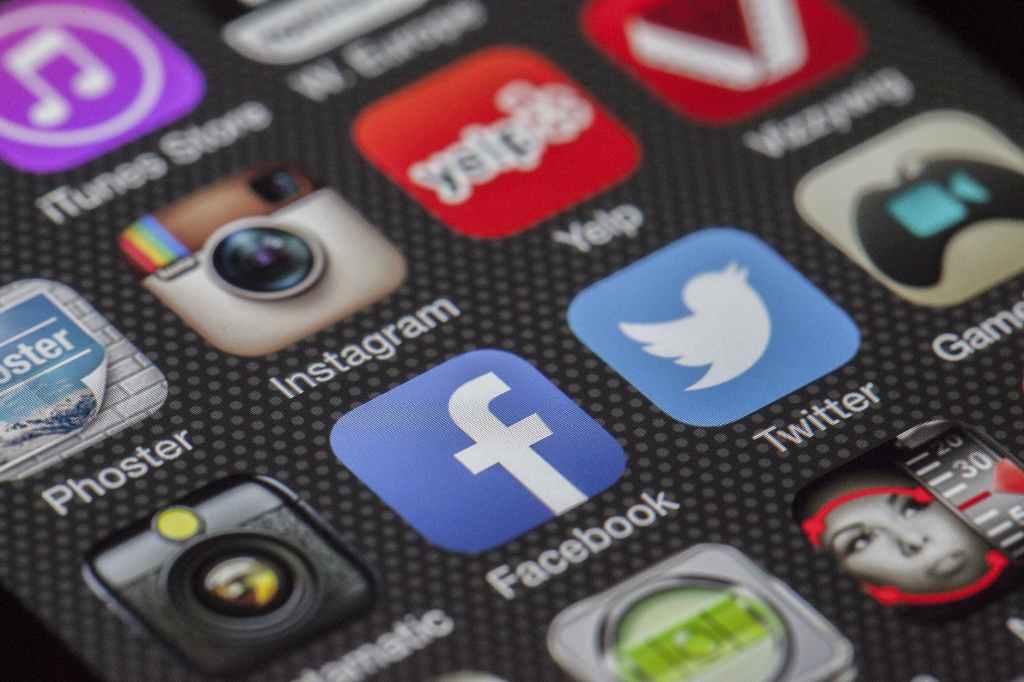
Excessive use of social media is equivalent to addiction to drugs, smoking, and alcohol. Including platforms, like Facebook, Twitter, and Instagram can lead to social media addiction and a negative impact on an individual’s mental and social well-being, especially among juveniles. According to the data, the majority Indian non-adult population comprising 85% have access to smartphones, their screen time is more than 5 hours a day and 80% of them use social media[5], social media work as an abettor for juvenile, hence these are some of the consequences of being addicted;
• When juveniles are hooked on media, social media can be a distraction keeping students from doing their homework and other school tasks. According to a study, by Rathinabalan et al. (2017) being addicted to media is linked to academic performance among young people in India[6].
• Excessive use of social media can lead to feelings of loneliness and isolation by reducing real-life interactions. It can also set standards and comparisons, making people feel bad about themselves and their lives. Mishra and Biswal (2018) discovered that social media addiction is associated with increased loneliness among teenagers[7].
• Exposure to cyberbullying or negative online experiences can also harm well-being. A study by Sharma et al. (2014) revealed a connection between social media addiction and higher levels of depression and anxiety, in Indian adolescents[8].
• The social media condemnation can cause aggressive and uncontrolled attitudes, not only in social networks but also in real life as well. Using social media people can not only form and attend but also form and arrange gatherings of criminal groups or movements. A survey by Pranjape (2022) showed that in India, social media addiction goes hand in hand with the growth of juvenile crime among teenagers[9].
• Media outlets that air violent sexual content may lead to false ideas of real crimes and safety. Nearly 30% of non-adult social media users watch sensitive content including pornography Nonetheless, the virtual sexual violence experienced by young people was the cause of a misperception on young people’s part as it affected their understanding of violent crime and their feelings of safety in Uttar Pradesh: 19-year-old watches porn, then rapes his minor sister, later strangulates her to death to avoid getting exposed [10].
# Why is social media so addictive?
There are three main reasons behind the addiction which are:
• Ease of access: These platforms are easy to use, what do you have to do? Just keep meaningless scrolling, consequently, it gives you speedy rewards.
• Speedy rewards: likes, comments, attention of people, and excessive entertainment.
• Algorithm of social media: It is based on the similarity of content; it promotes those content that you subconsciously want to watch.
Social media addiction and juvenile delinquency are very much connected, and they support each other in a very pressure way, and they can lead to serious problems and difficulties both for society and the legal system. Adolescent offenders like juvenile delinquency can quickly become a vicious cycle for individuals and society which can lead to incarceration, unemployment, substance abuse, and recidivism. As per juveniles were arrested in India for various offenses including robbery, culpable homicide not amounting to murder, rape, and rioting, etc[11].
# Other but Major causes of Juvenile Delinquency
Family dysfunction where the child does not have any emotional, financial, or moral support from the parents or guardians and, instead, he or she experiences poor parenting, neglect, abuse, and conflict in the family. Consequently, the child finds support on social media, hence, becomes a slave of social media and a criminal after not satisfying his online friends.
Peer pressure is defined as the influence and pressure exerted by friends or peers, which leads to compliance, imitation, and competitiveness. Children’s beliefs, opinions, and actions can be impacted by peer pressure, which can result in variation, taking risks, and experimenting. Children may be persuaded by their peers to join or create groups that partake in violent, thievery, and other criminal behaviors. According to a 2017 study by Rathinabalan et al., peer pressure plays a big role in adolescent criminality in India4.
Poverty may diminish the children’s ambitions and future potential as they strive to overcome the psychological scars of poverty such as frustration, resentment, and rebellion. Members of impoverished families sometimes find themselves in undesirable locations, including the slums, bad drugs, and gangs. According to Mishra (2022), poverty is the biggest reason for juvenile delinquency in India5.
The notion of substance abuse is tied to the people consuming psychoactive substances, for example, alcohol, cigarettes, and drugs, because of their addiction, impairment, and withdrawal at the same time. The consequences of child drug use might translate into the affected child’s overall health – physical, mental, and emotional — leading to depression, also aggression, and impulsivity. Moreover, addiction is one of the major sources of criminal activities like violence, robbery, and trafficking. Shoba Pranjape (2022) has conducted research that stated the issue of substance abuse was the major cause of juvenile delinquency in India7.
Psychological disorders are characterized by aberrations that obstruct the mood, cognitive processes, and also behavior (conduct disorder, depression, anxiety, and ADHD, for instance). Children with mental disorders might lose their empathy and, therefore end up being very cruel, violent, or even drop their way of living. Research done by Sharma et al. (2014) proved that a mental health diagnosis was the most contributing factor to juvenile delinquency in India6. There may be psychological disorders that further make them criminals, these are;
• Psychopathy: Psychopathy is a personality disorder where individuals lack emotion; they cannot accept remorse and guilt, while imposing antisocial and manipulative behavior, as well as a lot of impulsivities. Several scholars have contended that social media might lead to the development of many psychological traits using the publicity of narcissism, self-flaunting, lying, and taking advantage of others. The study of Fox and Rooney (2015) shows a positive link between the use of social networking platforms and psychopathy, particularly among boys[12].
• Paranoia: Paranoia is a mental disorder which the medical specialists agree with as an irrational and persistent distrust and suspicion and the fear of others, diagnostically it can also be accompanied by delusions and hallucinations. As a few scholars propose, many navigating the web of social media may also experience the worsening of their paranoid thoughts through the toxification of the internet by misinformation, conspiracy theories, cyberbullying, and the surveillance of their online activities. Besides these, social media could also lead to a distance from the real world and could enhance anxiety and insecurity in the users. An article by Freeman and his colleagues (2017) suggests that pro-social media use is a factor that adds to paranoia, especially among the youth[13].
• Depression: Depression is a mental disorder that is described as a long-lasting state of low mood, diminished interest, and fewer activities, and it is usually accompanied by the kinds of ideas that make one want to kill himself/herself. Many scientists find that social media may not just cause, but also worsen depression because it can trigger social comparison, envy, loneliness, and dissatisfaction. Meanwhile, social media can act as a very powerful sleep distractor and can also destroy your offline relationships as well as cause a lot of stress and give you negative emotions. Research by Primack et al. (2017) demonstrates the connection between social media use and depression among adolescents; the use of this media becomes much more sensitive[14].
Thus, it is also worth noting that social media consumption is not the unique determinant of mental health problems and that other factors like genetics, environment, personalities, and traumatic experiences play an extremely important role as well as it can be decisive factors in this matter. Also, online audiences do not necessarily suffer from these disorders because some of them obtain the benefits of online relationships, discussions, updates, and entertainment. Thereby, somebody learns and becomes aware of it to use the media appropriately and in moderation.
# Case laws
• Jarnail Singh v. State of Haryana[15]: The incident revolves around a juvenile who was arrested and charged with multiple counts, including rape, murder, and posting nude photos of a young girl on a social networking site. In this respect, the Supreme Court (SC) maintained that the juvenile deserved the remedy of the Juvenile Justice Act, of 2000, and the trial court must hear the case as expeditiously as possible.
• Salil Bali v. Union of India[16]: The question was whether the Juvenile Justice Act, 2000, was constitutional in its issue of equal treatment of all the juveniles below the age of eighteen, who may have committed offenses with varying degrees and gravity. On the other hand, the Supreme Court rejected the petition and confirmed the law stating that it was supported by both the presumption of innocence and the best interests of the child.
• Anuj Kumar v. State of U.P.¹⁷ :This case involved a juvenile who was accused of creating a fake Instagram account of a girl and sending vulgar messages and threats to her and her friends. The court held that the juvenile was guilty of cyberstalking and harassment and sentenced him to two years of imprisonment and a fine of Rs. 5,000.
• Pratap Singh v. State of Jharkhand & Anr.[18]: It is the case that a child offender’s age and the Juvenile Justice Act, 2000, were at the center of their discussions. It was ruled by the Supreme Court that the fact a person is a juvenile on the same date the offense took place and not the date when the magistrate took cognizance, is considered. Moreover, the court highlighted that a juvenile can be subsequently claimed even after the final judgment was made.
• Dr.Subramanian Swamy & Ors.v.Raju Thr. Member Juvenile Justice Board & Anr.[19]: This landmark case questioned the constitutionality of the Juvenile Justice Act (JJA), 2000, one year after Nirbhaya was gang-raped, and one of her attackers was a juvenile. The Supreme Court affirmed the enactment and the petition to reduce the age of juvenility from 18 to 16 years fell flat. The court also noted the Act being beneficial legislation and smart barriers (such as delay in claiming juvenility) would not impair a person claiming to be under the watchful eye of the Act.
• Sampurna Behura v. Union of India & Ors.[20]: This was a public interest litigation that however contains a petition for the application of the Juvenile Justice Act 2015 and the Protection of Children from Sexual Offenses Act 2012. The Supreme Court issued certain directions to the Central and State Governments for performing its obligations effectively and making sure that the children are protected from sexual assault and exploitation. Awareness and sensitization programs were also flagged for the stakeholders and the public in addition to the above.
# Preventive Measures
The situation is more critical so what should we do to solve these challenges? How can parents, statutory authorities, NGOs, and teachers contribute to deal with this problem? Here are some solutions which are;
• Educating children and youth on the appropriate and ethical usage of social media, and the risks and consequences of engaging in illicit or deviant behavior on social media or even offline. This can best be achieved by parents, teachers, counselors, or any other trusted persons who provide the necessary guidance and support.
• Submitting online activities and discussions of the children and adolescents to control and set effective limits and boundaries for their social media use. Such may restrain children from being exposed to risky, unsuitable, peer pressure, and even to online bullies and predators. Parents or guardians can implement parental control features, inspect browsing history, or talk with their children about what they encounter online.
• Encouraging the children to show their talents in sports, hobbies, arts, or other fun activities that can help them grow and develop as individuals with great skills, interests, and self-esteem. This way, they can learn how to resist negative influences, have a sense of purpose and the feeling of belonging, and be more successful in building up their healthy social and emotional development.
• Imposing an age limit on the use of social media platforms, as suggested by Karnataka High Court[21] [22] . It could also be used to shield children from exposure to harmful or indecent content, cyberbullying, peer pressure, or online predators.
• Regulating the content and activities of social media platforms as specified in the Information Technology (Intermediary Guidelines and Digital Media Ethics Code) Rules 2021. This can be conducive to the provision of transparency, accountability, and user’s rights, as well as to combating or countering misinformation, fake news, hate speech, or incitement to violence.
• Education of the children and their parents or guardians regarding the responsible and ethical use of social media and the potential risks and consequences of participating in deviant or criminal behavior online or offline. This may be achieved by working with schools, NGOs, and other partners who can give young users useful direction.
• Implementing the effective and constructive use of social media, including learning, creativity, communication, and community betterment. Such can be done through creating awareness ads, incentives, or platforms where the accomplishments and talents of the youth can be displayed and be participatory in meaningful and beneficial activities.
• Rehabilitation centers are replacements of jails for juvenile delinquents in which juveniles delinquents are kept before reintegrating into society and these centers are registered under the government agency. The process includes;
– Vocational training
– Psychotherapy
– Continuing education
– Conscious them of social values
– Economical ability to support themselves
– Physical and mental workout[23].
Juvenile Justice Board (JJB) is the competent authority to deal with children in conflict with law which consist of three members. The Chairperson of the Board should be a First-Class Judicial Magistrate and two honorary social workers out of whom at least one should be a woman[24].
# Conclusions
Social media can affect juvenile behavior and development in more negative ways. However, some Internet services and publications may increase the risk of crime among young people. This is a serious issue that affects individuals, families, and society. It is therefore important to address and reduce the causes of juvenile delinquency by providing support and resources to young offenders, parents, teachers, counselors, and the legal system have an important role to play in this, Children should be helped to use social media responsibly and overcome its negative effects.”
Author Vansh Dhania
 Juris Centre