
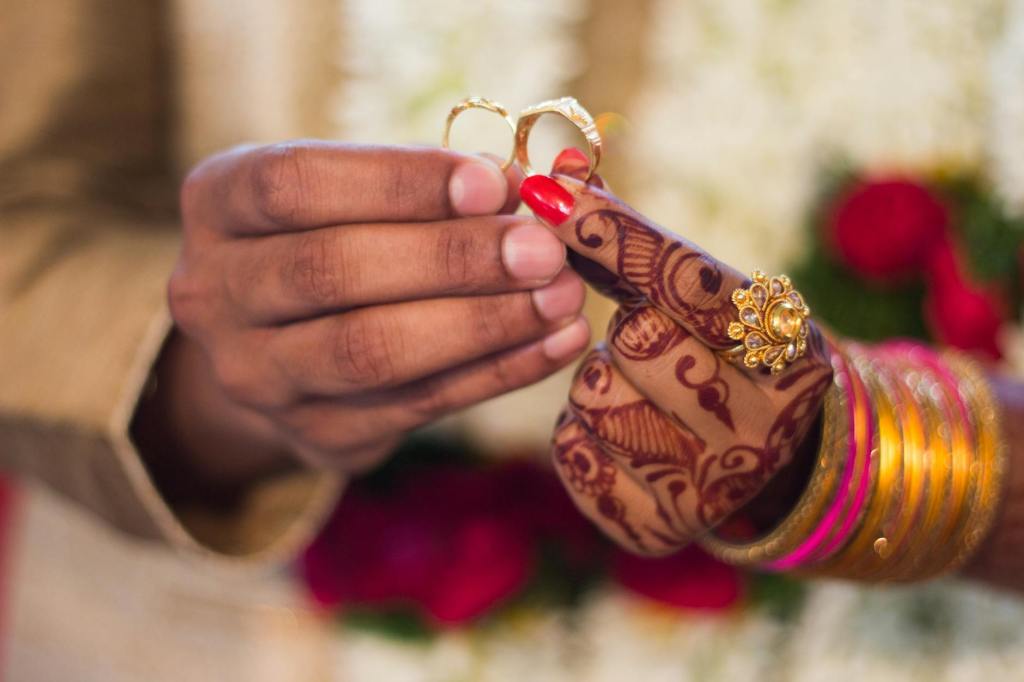
The word SAPINDA came from the word PINDA which means a ball of rice offered at a sraddha ceremony to deceased ancestors. According to Hindu law, when two persons offer PINDA to the same ancestor it is known as SAPINDA relation. SAPINDA relations are that relation that is connected with the same blood.
Definition under Indian law- Hindu marriage act 1955[1]
Under section 3 sub clause (f)
- “Sapinda relationship” with reference to any person extends as far as the third generation (inclusive) in the line of ascent through the mother, and the fifth (inclusive) in the line of ascent through the father, the line being traced upwards in each case from the person concerned, who is to be counted as the first generation;
- (ii) two persons are said to be “sapindas” of each other if one is a lineal ascendant of the other within the limits of sapinda relationship, or if they have a common lineal ascendant who is within the limits of sapinda relationship with reference to each of them;
Gotra system: deep study for non-acceptability of marriage within the same family having same ancestors.
Gotra is a type of a lineage system within an Indian Caste that restricts intermarriage under a descent from a common ancestor.
Brahmins have a lineage called gotra and it prohibits prohibits marriage in the same gotra.
Application of HMA 1955:
(1) This Act applies— (a) to any person who is a Hindu by religion in any of its forms or developments, including a Vira Shaiva, a Lingayat or a follower of the Brahmo, Prarthana or Arya Samaj, (b) to any person who is a Buddhist, Jaina or Sikh by religion, and (c) to any other person domiciled in the territories to which this Act extends who is not a Muslim, Christian, Parsi or Jew by religion, unless it is proved that any such person would not have been governed by the Hindu law or by any custom or usage as part of that law in respect of any of the matters dealt with herein if this Act had not been passed.
Explanation.—The following persons are Hindus, Buddhists, Jaina’s or Sikhs by religion, as the case may be:— (a) any child, legitimate or illegitimate, both of whose parents are Hindus, Buddhists, Jaina’s or Sikhs by religion; (b) any child, legitimate or illegitimate, one of whose parents is a Hindu, Buddhist, Jaina or Sikh by religion and who is brought up as a member of the tribe, community, group or family to which such parent belongs or belonged; and (c) any person who is a convert or re-convert to the Hindu, Buddhist, Jaina or Sikh religion.
(2) Notwithstanding anything contained in sub-section (1), nothing contained in this Act shall apply to the members of any Scheduled tribe within the meaning of clause (25) of article 366 of the Constitution unless the Central Government, by notification in the Official Gazette, otherwise directs.
(3) The expression “Hindu” in any portion of this Act shall be construed as if it included a person who, though not a Hindu by religion, is, nevertheless, a person to whom this Act applies by virtue of the provisions contained in this section
Legitimacy of children of void and voidable marriages
(1) Notwithstanding that a marriage is null and void under section 11, any child of such marriage who would have been legitimate if the marriage had been valid, shall be legitimate, whether such child is born before or after the commencement of the Marriage Laws (Amendment) Act, 1976 (68 of 1976), and whether or not a decree of nullity is granted in respect of that marriage under this Act and whether or not the marriage is held to be void otherwise than on a petition under this Act.
(2) Where a decree of nullity is granted in respect of a voidable marriage under section 12, any child begotten or conceived before the decree is made, who would have been the legitimate child of the parties to the marriage if at the date of the decree it had been dissolved instead of being annulled, shall be deemed to be their legitimate child notwithstanding the decree of nullity.
(3) Nothing contained in sub-section (1) or sub-section (2) shall be construed as conferring upon any child of a marriage which is null and void or which is annulled by a decree of nullity under section 12, any rights in or to the property of any person, other than the parents, in any case where, but for the passing of this Act, such child would have been incapable of possessing or acquiring any such rights by reason of his not being the legitimate child of his parents
Ancient relevance of Consanguinity/inbreeding:
Consanguinity involves both social and genetic dimensions. Socially, it means marrying blood relatives, such as cousins or siblings, while genetically, it refers to unions between closely related individuals, often termed inbreeding.
- Approximately 15-20% of the world’s population practices consanguinity, with higher prevalence in regions like Asia and West Africa.
- Some ancient human civilizations, including the Egyptians and Incas, are believed to have practiced consanguinity.
- Genetic evidence suggests that King Tutankhamun of Egypt was born to parents who were blood relatives.
- India has more than 4,000 endogamous groups where people marry within the same caste/tribe or group, making it a fertile ground for consanguinity studies.
- It was found that consanguinity has increased mortality rates and the prevalence of recessive genetic disease in populations where it is practiced.
Laws against sapinda marriages:[2]
Provisions under Hindu marriage act 1955:
Section 5
(g) “degrees of prohibited relationship”-two persons are said to be within the “degrees of prohibited relationship”
(i) if one is a lineal ascendant of the other; or
(ii) if one was the wife or husband of a lineal ascendant or descendant of the other; or
(iii) if one was the wife of the brother or of the father’s or mother’s brother or of the grandfather’s or grandmother’s brother of the other; or
iv) if the two are brother and sister, uncle and niece, aunt and nephew, or children of brother and sister or of two brothers or of two sisters;
Explanation. —For the purposes of clauses (f) and (g), relationship includes— (i) relationship by half or uterine blood as well as by full blood; (ii) illegitimate blood relationship as well as legitimate; (iii) relationship by adoption as well as by blood;
Section 11: with reference to clause 4 and 5 of section 5
International status of incestuous relationship
USA: illegal in all states except Rhode Island
UK: illegal
New Zealand: illegal
France: legal
China: legal
Ukraine: legal etc;
Various countries of the world have different view on incestuous relationship and the legality/non legality status behind it, various countries have exception to incestuous relationships where relationship is between same sex otherwise punishable, example: Germany, Ireland, Switzerland etc.
Medical research on the incestuous off springs:
Incest is harmful in many ways, including genetically. When two closely related people have sex, and the female becomes pregnant, there is an increased risk of recessive gene disorders.
The reason involves how genes are passed from parent to child. Children receive one copy of a gene from each parent. Usually, the genes for the formation of things like autoimmune systems are inherited from each parent, with the harmful genetic material being overridden the dominant material. The result is a healthy individual who harbours a recessive genetic mistake.
When related individuals get pregnant, they decrease genetic variations, and the recessive gene they have may combine to become dominant in their child, causing many types of congenital disabilities.
Below finds a list of some of the birth defects caused by incest. Please note that not all the variations cause severe problems for the children of incest, but many do.
Lower IQ Scores. Inbreeding can negatively affect the child’s intellectual abilities, even in some cases causing developmental disorders.
Cystic Fibrosis. Cystic fibrosis is a severe disease that affects the cells that produce mucus, sweat, and digestive juices. The disorder causes these fluids to become thick and sticky, plugging up tubes, ducts, and passageways.
Premature Birth. Children of incest are in danger of premature birth and being underweight and undersized. Viable babies of incestuous couples are also likely to have physical deformities.
Cleft Palate. A cleft palate is a common congenital disability that genetic abnormalities in both parents can cause. Children with cleft palates have difficulties speaking and feeding.
Heart Conditions. The birth of a baby with a deformed or other malfunctioning heart is one consequence of incest. Unfortunately, if they survive, these children will have shorter lives filled with endless cardiac problems.
Neonatal Mortality. The recessive genes inherited by the children of close relatives sometimes lead to a baby not living past gestation or dying soon after birth.
Not all genetic changes caused by incest are lethal, but many causes lifelong problems that could have been avoided.
Judgements on sapinda marriages by Indian courts:
- Shakuntala devi vs Amar Nath, 1981[3]
Judgement: decree of divorce was not awarded to the husband on the pretext of sapinda as no relevant evidence supporting the same was not put forward to the judges.
- Neetu Grover vs union of India, 2024[4]
Judgement: Court therefore, finds no merit in the challenge to Section 5(v) of the HMA Act in the present writ petition
Section 5(v) of the HMA Act
5. Conditions for a Hindu marriage. —
A marriage may be solemnized between any two Hindus, if the following conditions are fulfilled, namely: — (i) neither party has a spouse living at the time of the marriage;
(ii) at the time of the marriage, neither party— (a) is incapable of giving a valid consent to it in consequence of unsoundness of mind; or
(b) though capable of giving a valid consent, has been suffering from mental disorder of such a kind or to such an extent as to be unfit for marriage and the procreation of children; or
(c) has been subject to recurrent attacks of insanity.
(iii) the bridegroom has completed the age of 21[twenty-one years] and the bride, the age of 18 [eighteen years] at the time of the marriage;
(iv) the parties are not within the degrees of prohibited relationship unless the custom or usage governing each of them permits of a marriage between the two;
(v) the parties are not sapindas of each other, unless the custom or usage governing each of them permits of a marriage between the two.
National family health survey 2019-21 report[5]
The latest NFHS-5 conducted between 2019-2021, shows that Tamil Nadu has the highest number of consanguineous marriages at 28% with Karnataka close behind at 27%. The national average is 11% but the South Indian states of Tamil Nadu, Karnataka, and Andhra Pradesh exceed that mark by 1.5 times.
The reasons behind such practice are:
- Earlier, marrying someone beyond a certain river or area was considered to be impacting their reputation
- The wealth of the family remains the same family.
- Girls are safe as families have known each other for years.
- Families do not need to pay a large dowry in the marriage.
Conclusion
Sapinda marriages as per our legislation is unconstitutional and is prohibited under Indian laws as under Hindu marriage act, 1955. These laws are in accordance to article 14 of Indian constitution, and are made with the view that all the individuals have the right to choose their partner of choice.
The restriction of sapinda marriages is given in the context that inter-related marriages with blood relatives leads to forceful marriages and to avoid these forceful marriages the act was formed to provide the liberty and security in the context dealing with act of marriage.
Therefore, we can say that sapinda marriages not only leads to unhealthy relationship and may also lead to unhealthy off-springs too thus leads to unhealthy genetic mutation which may affect the resistance against the diseases and effect the human race altogether.
[1] Hindu Marriage Act, 1955 (Act 25 of 1955).
[2] Hindu Marriage Act, 1955 (Act 25 of 1955)
[3] Shakuntala Devi vs Amar Nath, (1981)AIR 1982 PUNJAB AND HARYANA.
[4] Neetu Grover vs Union of India, (2024)DELHI HIGH COURT W.P.(C) 910/2024.
[5] “Sanika Athavale” , Times Of India, May 14, 2022, available at https://timesofindia.indiatimes.com/city/bengaluru/nfhs-ktaka-2nd-in-marriages-among-blood-relatives-tn-first/articleshow/91527513.cms (last visited on 20 Feb, 2024)
Author: Sachin Kumar Mahla from Panjab University, Chandigarh
 Juris Centre