
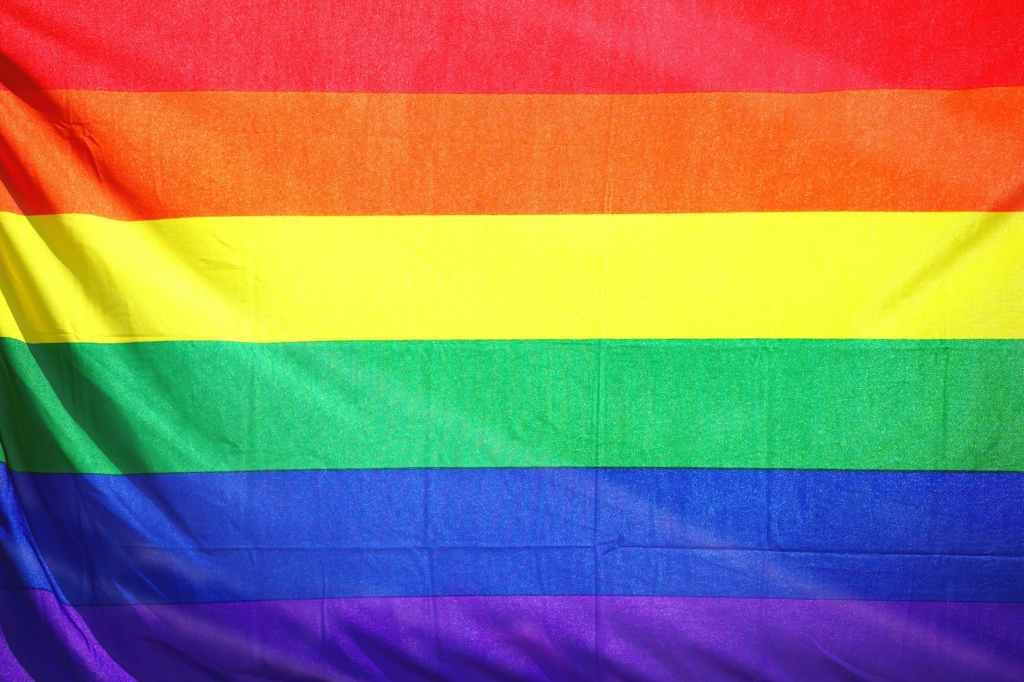
“Legal recognition of non-heterosexual unions is a step towards marriage equality. Non-heterosexual unions are entitled to protection under the Constitution. Non-heterosexual and heterosexual unions must be seen as both sides of the same coin.”[1]
INTRODUCTION:
For many centuries and decades, marriage is considered to be a culturally or religiously significant institution. It may be seen as fulfilling a moral or spiritual duty, as prescribed by cultural or religious beliefs. Marriage is one of the most ancient, important, universal and indispensable social institution which has been in existence since the inception of human civilization. According to Hoebel “Marriage is the complex of social norms that define and control the relations of a mated pairs to each other their kinsmen, their offspring and their society at large”. Further if we look into the definition provided by Harry M. Johnson, he states marriage has “a stable relationship in which a man and women are socially permitted without loss of standing in the community, to have children” and according to Majumdar D.N. and T.N. Madan -“It involves the social sanctions generally in the form of civil or religious ceremony authorizing two persons of opposite sexes to engage in sexual and other consequent and correlated socio-economic relations with one another.”.[2] From these definition it depicts that the primary function of marriage is getting a social acceptance to expand and cherish one’s gene by procreation. Nevertheless, the real issue is whether this primitive conception of marriage can be still applied in the contemporary modern era which is making itself evolved into the social trends of westernization and formation of LGBTQ community and increasing number of same-sex marriages. Arguments based on the definition of marriage, tradition, and religion fit in the same general category because each is basically self-contained: Should marriage remain exclusively heterosexual because that simply is what marriage is, because that is what marriage has always been or because the major religious traditions have always understood marriage to be between a man and a woman. These are not consequentialist arguments about what will happen if same-sex individuals are allowed to marry rather they are rooted in a particular understanding of how things have always been and how things are now.
Legal legislations for marriage in India:
According to Section 5 of the Hindu Marriage Act, 1955 which deals with the conditions for marriage under which the provision states that “A marriage maybe solemnized between any two Hindu if the condition specified under its clauses are fulfilled namely (I ) neither party has a spouse living at the time of the marriage (II) there must a valid consent by both the individual to the marriage (III ) the bridegroom has completed the age of twenty one and the bride , the age of eighteen years at the time of the marriage and the other two clauses deals with prohibited degree of relationship unless the custom or usage permits them and the parties must not be sapindas to each other.
Special Marriage Act (SMA), 1954 which is a secular legislation designed to facilitate inter-caste and inter-faith marriages, under Section 4 which pertains to conditions relating to solemnization of special marriages where one of the conditions mentioned under sub-clause (c) states that the male has to be completed the age of twenty-one years and the female the age of eighteen years. After reading the provision in ordinary prudence sense we can get that the provision implies that the marriage is constituted between a man and woman only, and exactly why this particular provision was being questioned in the case Supriyo Chakraborty V. Union of India[3] where the petitioners argued that Section 4(c) of the Act recognizes marriage only between a ‘male’ and a ‘female’. This discriminates against same-sex couples by denying them matrimonial benefits such as adoption, surrogacy, employment and retirement benefits.
When people claim the right to marry, their sex or sexuality is not intrinsic to that right, although social prejudice makes it appear so. Because of the definitional ambiguity of the categories ‘man’ and ‘woman’ governments that attempt to limit marriage to unions between a man and a woman always fail to outlaw at least some same-sex marriages. In addition to the definitional argument, the belief that exclusively heterosexual marriage is firmly rooted in tradition and religion seems to resonate powerfully with the majority of the Indian public.
Meaning of gender versus sexuality
Is there a clear definition of a man and a woman, or how does one is being classified to which gender one belongs to and what attributes does make one a male and one a female. “There is no absolute concept of man or absolute concept of woman at all. Biological definition is not what your genitals are. It’s far more complex, that is the point. Even when the SM Act says man or a woman, the very notion of a man or woman is not absolute based on what genitals you have.”[4] To understand that we first have to get a notion about what does a gender mean and how it is different from sexuality. Gender refers to the socially and culturally constructed roles, behaviors, activities, and expectations that a particular society considers appropriate for men and women. It is not necessarily tied to one’s biological sex but is rather a complex interplay of biology, identity, and societal norms. Gender includes roles, expressions, and identities that go beyond the binary concept of male and female. Some people identify with the gender they were assigned at birth (cisgender), while others may not (transgender). Whereas Sexuality encompasses a person’s sexual orientation, desires, attractions, and behaviors. Sexual orientation refers to the emotional, romantic, or sexual attraction that an individual has toward people of the same and/or opposite sex. Common categories of sexual orientation include heterosexual, homosexual, bisexual, and pansexual and commonly known term “LGBTQ” which stands for Lesbian, Gay, Bisexual, Transgender, and Queer (or Questioning). It is an umbrella term that encompasses a diverse range of sexual orientations, gender identities, and expressions. It is important to note that sexual orientation is distinct from gender identity; someone’s gender identity does not determine their sexual orientation.
Exploring the historical paradigms and Cultural transformation
If one goes back to history of India, the reference of homo-sexuality finds place in the records. The culture and attitude rather of a well-arranged group of eunuchs (Hijra) is always traceable in our history and even in present day it is continued in the Indian society, on the other hand the attitude and concept of homosexuality is not a very serious issue in western countries. It is to be noted that most of the developed countries in Europe the act and behavior of homosexuality have been legalized. South Africa is the first country in the world who legalized the act of homosexuality in the year 1994. Thereafter, countries like Holland, New Zealand, Spain, France, and Canada etc. have legalized it. In 1996 in U.S.A. the Supreme Court ordered that the State is not empowered to legislate law to discriminate the person on the ground of homosexual behavior. As a result, the rights of lesbians and gays are now protected.[5] Cultural transformation involves challenging deeply ingrained traditional norms and hetero-normative expectations surrounding marriage. Same-sex couples challenging and redefining gender roles within the context of marriage contribute to a broader cultural shift. Cultural transformations towards same-sex marriage represent a profound shift in societal attitudes, norms, and perceptions regarding relationships and marriage. The visibility of same-sex couples in various cultural spaces, including media, literature, and public events, has played a pivotal role in changing the perceptions. Positive portrayals in movies, TV shows, and literature have humanized same-sex relationships, fostering a psychological shift within an individual. Legal recognition of same-sex marriage reflects and reinforces cultural changes. When governments acknowledge and support these unions, it signals societal acceptance. Policy changes that grant equal rights and benefits to same-sex couples contribute to changing cultural attitudes. This transformation is a dynamic process that reflects evolving values, increased awareness, and a growing acceptance of diverse expressions of love and commitment.
Legal Perspective
Decriminalization of Section 377 of IPC – The landmark case that had a substantial impact on LGBTQ rights in India was Navtej Singh Johar v. Union of India[6] in 2018, the Supreme Court of India decriminalized consensual same-sex relations by striking down Section 377 of the Indian Penal Code. The court held that the criminalization of homosexuality violated the fundamental rights to equality, privacy, and dignity. While this case was a significant step forward in recognizing LGBTQ rights, but it specifically addressed the decriminalization of same-sex relationships rather than the legalization of same-sex marriage.
Constitutional Provisions – For same-sex couples who desire marriage, the Constitution’s grand promise of “the equal protection of the laws”[7] has been their greatest hope. But the promise of equal protection has proven to be complex terrain, especially as applied to the highly emotional issue of same-sex marriage. The public, the litigating attorneys, and especially the courts themselves have struggled to make sense of what legal equality really means for same-sex couples. Although our intuitive understanding of equal protection might be that the same legal standards must apply to everybody, the reality is quite different; courts apply the equal protection clause differently, depending upon whose rights are allegedly being violated and which rights are at issue.[8] In the K.S. Puttaswamy case[9], the Apex Court held that right to privacy is a part of Article 21 of the Indian constitution which states that no person shall be deprived of his life and personal liberty expect according to the procedure established by law . In Navtej Singh Johar’s case the Supreme Court of India held that existence of Section 377 violates Right to Privacy and hence it is unconstitutional; the judgment was made in consonance with the Puttaswamy’s case. Despite the progress made in decriminalizing same-sex relationships, challenges persist on the path to marriage equality. Societal attitudes, rooted in cultural and traditional norms, often pose barriers to broader acceptance. Discrimination and stigma against LGBTQ individuals can affect their ability to openly express their identities and seek legal recognition for their relationships.
Way forward
Homosexuality is not a disease or disorder. It is just another expression of human sexuality.[10] While considering legalizing the concept of same-sex marriage one set of individuals who have been proffered for the exclusion of same-sex marriage from the right to marry argue that the right to marry is a predicate of the right to procreate and raise children in a traditional family setting and the ability to have children is at the core of marriage. Marriage is by definition dual-gendered. In defence the set of individuals who are against this notion argue that the right of same-sex people should not be infringed as every citizen is guaranteed with fundamental right to express, have the right to live with dignity further the absence of legal recognition for same-sex marriages has been a point of contention, prompting discussions about the need for further reforms in the legal system to align with principles of equality and non-discrimination. Both gender and sexuality are complex and multifaceted aspects of human identity, and they can vary widely among individuals. Understanding and respecting the diversity within these aspects is crucial for promoting inclusivity and fostering a more tolerant and accepting society.
There is no argument here that it is irrational to define marriage as between a man and a woman only. It is merely an argument that it is irrational to continue to define marriage as exclusively heterosexual simply because marriage is currently defined as exclusively heterosexual. Marriage is not a static concept rather it changes and evolves as and in accordance with the society’s change. Marriage equality in India is a multifaceted issue that intersects with legal, societal, and cultural dimensions. While progress has been made, there is still work to be done to achieve full recognition and acceptance of same-sex marriages. The ongoing efforts of activists, the resilience of the LGBTQ community, and the evolving legal landscape collectively shape the narrative of marriage equality in India. As the nation grapples with these issues, there lies the hope for a future where love and commitment are celebrated without regard to gender or sexual orientation.
[1] Quoted by Hon’ble Justice Kaul in the SC verdict of Supriyo Chakraborty V. Union of India which the bench ruled in a 3:2 against civil unions for non-heterosexual couples.
[2] Dr.S.R. Myneni Sociology (pg.233) [Allahabad Law Agency, Faridabad, second edition 2006]
[3] Supriyo Chakraborty V. Union of India W.P.(C) No. 1011/2022; Diary No. 36593/2022
[4] The times of India article on https://timesofindia.indiatimes.com/india/theres-no-absolute-concept-of-man-or-woman-says-cji-chandrachud/articleshow/99597591.cms
[5] Dr.S.C. Tripathi, legal language, legal writing & General English (pg.530) (Central law publications, Allahabad, 6th edition 2022)
[6] AIR 2018 SC 4321; W.P. (Crl.) No. 76 of 2018 D. No. 14961/2016
[7] Article 14 of Constitution of India,1950
[8] Evan Gerstman, Same-sex marriage and the constitution- The fundamental right to marry (pg.67) (the Press Syndicate of the University of Cambridge, Press 2004)
[9] Justice K.S. Puttaswamy v. Union of India W. P. (Civil) No 494 of 2012; (2017) 10 SCC 1; AIR 2017 SC 4161
[10] Naz Foundation v. Govt. of NCT of Delhi (2009)
Author: R. Shanmugapriya
 Juris Centre