
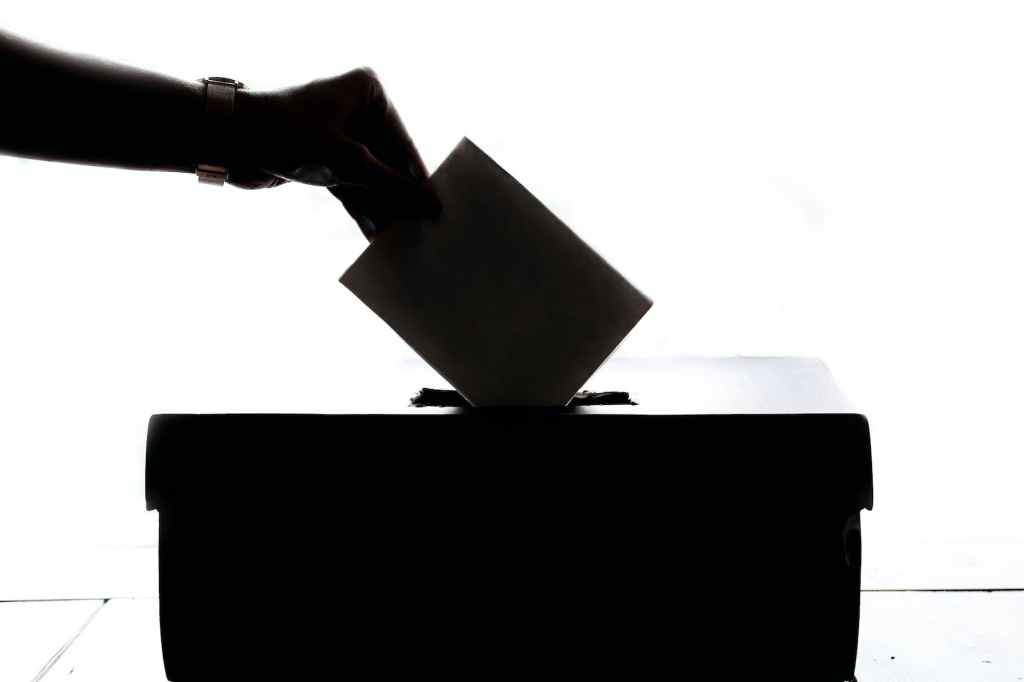
The Indian Parliament recently passed the Nari Shakti Vandan Adhiniyam in September 2023. This move has received widespread appreciation nationally and internationally. It is being considered a milestone in the direction of improving women’s representation in politics. [1]Susan Ferguson, UN Women’s India Country Representative, stated that achieving a critical mass of 30 percent representation of women in Parliament was known to yield positive outcomes for women’s empowerment. Providing reservations to women will indeed improve their participation. It is popularly believed that when the number of women representatives increases, they begin to influence policy decisions and call for policies that benefit women at large. However, another section of people argue that reservation doesn’t necessarily achieve this goal. There are reasons for this argument, which will be discussed further.
The[2] history of the Women’s Reservation Bill began in the constituent assembly. Out of the 389 members in the assembly, only 15 were women. Even among these, there were women who opposed the idea of reservation for women. [3]Renuka Ray was one such member who expressed the concern that reservations may reduce the consideration of women for general seats. She also stated that ever since the start of the independence movement, women had been against special treatment and stood for equal rights. She had also pointed out that the representatives of India’s women had made it clear, through the All-India Women’s Conference that they were against reservation of seats for women. She also said that reservations for women should be done away with in its entirety as women considered it to be “an impediment to their growth and an insult to their very intelligence and capacity.” Due to these strong oppositions, reservations for women were completely let go by the constituent assembly, and this is often referred to as the “Gentleman’s Agreement.” This was based on the belief that the system would automatically bring in women representatives as time progressed.
In 1949, a demand arose to replace outgoing female representatives with women only, as men had been replacing some outgoing women in the provisional parliament. However, this demand did not gain ground. In 1996, Sushma Swaraj pointed out the lack of representation of women in Parliament, highlighting that only 6.5% of the members of Parliament were women. By this time, people had come to the realization that the “Gentleman’s Agreement” had failed. The 81st Constitutional Amendment Bill sought to reserve one-third of the seats for women in the Lok Sabha. There was a debate on this Bill in Parliament, with some members even questioning its ability to bring in enough capable women. Certain members like [4]Kumari Uma Bharati had also raised the issue of reservation for women of backward classes.
Even though discussions on the Bill were carried out, it was not passed, and it lapsed in 1996, 1998, 2003, and 2014. The Bill was finally passed in 2023, twenty-seven years after it was first introduced. It[5] was passed by the Lok Sabha on September 20, 2023, and by the Rajya Sabha on September 21, 2023. The Bill was passed with near unanimity and received assent from the President on 28th September 2023.
II Contents and Implementation of the Act
Different[6] sections of the One hundred and sixth Constitution Amendment Act like Section 2, 3, 4 talk about providing reservation to women in India. There exist provisions to provide reservation to women in the Legislative assemblies of all states in India and also in the Legislative Assembly of the NCT of Delhi. Reservations shall also be provided to women in the House of People, i.e., the Lok Sabha, according to Section 3 of the Act. The Act also contains a provision to provide reservation to women belonging to Scheduled Castes and Scheduled Tribes. Out of the total number of seats reserved for the people belonging to the Scheduled Castes and Scheduled Tribes, one-third are to be reserved for the women belonging to the Scheduled Castes and Scheduled Tribes. According to Section 5 of the Act, the reservations for women shall commence only after a census is carried out and Delimitation is undertaken for this purpose. The Act also states that the reservation will cease to have effect on the expiration of a period of fifteen years from the commencement of the reservation. The Act also contains a provision for the rotation of seats that are reserved for women. Even though this Act has been passed, for it to be implemented, the census and the delimitation need to be completed.
Congress leader [7]Dr. Jaya Thakur has filed a petition in the Supreme Court seeking the immediate implementation of women’s reservation. However, [8]the bench of the Supreme Court hearing the Petition expressed its disinclination towards striking down the clause, stating that it was not within the purview of the powers of the court to legislate. Many opposition party members, such as Mayawati, have also criticized the Act, claiming that it won’t be implemented for years as there is no clarity on when the next census shall be held. Many have argued that it is merely a political stunt of the Government ahead of the Lok Sabha Elections.
III DRAWBACKS
Women are not a [9]homogenous community like a caste group. They come from different socio-cultural backgrounds. Critics argue that this makes it hard for reservations to provide the desired representation to women. Another argument against providing reservation for women is that it questions the merit of women. From the debates in the constituent assembly to the debates in contemporary times, it has been argued that women do not need reservations to be on an equal footing with men. It is feared that if women are given reservations, their abilities will be frowned upon. Reservation is still considered as special treatment by many. Many argue that it goes against the equality principle enshrined under Article 14 of the Indian Constitution. However, positive discrimination is not against the principle of equality, and the state may bring about laws to ensure that a particular community that is not represented can be represented in the government.
Another [10]criticism of the Act is that it does not talk about reserving seats in the Rajya Sabha or the upper house of the Parliament. Even though the number of women in Rajya Sabha is substantially lower than that in Lok Sabha, this would lead to a lack of representation of women in the upper house, which could prove detrimental to the very objective of providing reservation. The goal of giving reservations to women is to give them a voice so that their representatives can adequately bring about positive changes in the legislation for their benefit. It has also been argued that when women are provided reservation, there will emerge proxy woman candidates who are mere puppets in the hands of their husbands or other male family members. In such cases, it is usually this male member who makes important decisions. There have been instances in Panchayats wherein the elected women representatives sit at home while their husbands do all the work and make decisions on their behalf. This also defeats the purpose of reservations.
In states like [11]Haryana, where 50% reservation for women is provided, many times, the husbands of the women representatives handle all the official matters. Sometimes, people even make their eighty-year-old mothers proxy candidates to be able to stay in power. [12]In 2015, when elections to the local self-government bodies were being held in Manjeri Municipality and Kuravambalam panchayat, women candidates contesting in the elections did not have their pictures in the campaigning posters but rather were addressed in the name of their husbands and the leader of the political parties. This is a striking example of how women have been used as proxy candidates. This cannot be equated to the representation of women at all, thus making us rethink whether reservations are indeed enough.
Further, taking note of the Patriarchal social structure of Indian society, it is important to note that the decisions of women representatives are not always their own as they may be influenced by the male members of their family. This is particularly true for rural areas of India. Reservation is provided to women, assuming that they can better represent issues concerning women; however, a survey conducted showed that 70 percent of women representatives had little interest in taking up issues that were causing problems for women, such as domestic violence, alcoholism, etc. simply because it irked men in their constituency. All these arguments can question the effectiveness of reservations in achieving its objective.
IV POSITIVE ASPECTS AND IMPORTANCE
Even today, only 14 percent of women members are present in the House of People. This is a pure underrepresentation of 50 percent of the vote bank and the population of India. The system of election has not been able to bring in a substantial number of female representatives to the legislature, even after decades of independence. In such a scenario, reservations do, in fact, provide a guarantee that women representatives will step into the Lok Sabha and State Legislative assemblies. The percentage increase in female representatives in the Lok Sabha is merely 10 percent in more than 70 years. This makes reservation look like the only solution to increase female representation in the legislature. This would increase the percentage of women to 33 percent, which will ensure that their voices are not unheard. This will also make it substantially easier to pass laws for the benefit of women. Even though a million arguments may exist against the Act, the fact that it will ensure the empowerment of women in politics cannot be disregarded.
This step will also give [13]political parties incentive to include more women and become gender inclusive. India’s number of women is very low compared to international standards. The [14]International Parliament Union (Parline) publishes data on the monthly ranking of women in National Parliaments; according to their data, India is currently ranked 143rd out of 185 countries. Providing reservations to women in the Parliament will help India’s standing on an International front. The Nari Shakti Vandan Adhiniyam will prove to be an important milestone in empowering women and providing equality to them.
V CONCLUSION
It is evident that the Women’s Reservation Bill has had a long and complex history in India. The Bill began its journey 27 years ago and was finally passed in the 106th Constitutional Amendment Act as the Nari Shakti Vandan Adhiniyam. The need and importance of reservation have been highlighted and stem from the very fact that even today, there are only 14 percent women in the law-making body of India. This is a very disproportionate representation of women, taking into consideration that they constitute half the population of India. The passing of this Act is the first step towards achieving the objective of ensuring women’s representation. Even though the Act has been passed by the Parliament, it still awaits implementation. There are several concerns regarding the delayed implementation of the Act. Even after it gets implemented, it will not by itself bring about change and empowerment of women. It is important that the female candidates elected through reservations have the required political will to work towards reforming the system and bringing about positive changes for the benefit of women in this country.
A body should be constituted to keep a check on whether the decisions of female representatives are influenced by male family members. The concept of Sarpanch-Pati must be frowned upon, and men who engage in the official matters of constituencies from which their female family members have been elected must be penalized. This will keep a check on proxy candidates and make sure that women are truly represented. The Nari Shakti Vandan Adhiniyam also has certain drawbacks, like the non-reservation of seats in the upper house of the Parliament and the clause that mandates census before its implementation. The Act, even though far from perfect, is an important milestone towards women’s empowerment in India and will solve the consistent underrepresentation of women in the political spectrum.
The Act will also improve India’s global standing with respect to representing and empowering women. The Act has received immense support from all around the world. This Act has materialized after years and marks the beginning of political inclusivity on the national front. In conclusion, the effectiveness and impact of the Act will ultimately depend on its effective and timely implementation.
[1] India passes law to reserve seats for women legislators, UN Women, available at: https://www.unwomen.org/en/news-stories/feature-story/2023/10/india-passes-law-to-reserve-seats-for-women-legislators#:~:text=On%2021%20September%2C%20Indian%20legislators,the%20Women’s%20Reservation%20Bill%2C%202023 (last visited on January 11, 2024).
[2] Krithiha V. and Sushovan Patnaik, “The Women’s Reservation Bill Has a Long History of Arguments and Stakes”, Supreme Court Observer, September 25, 2023, available at: https://www.scobserver.in/journal/the-womens-reservation-bill-has-a-long-history-of-arguments-and-stakes/ (last visited on January 11, 2024).
[3] Constituent Assembly Debates on July 18, 1947, available at: https://www.constitutionofindia.net/debates/18-jul-1947/ (last visited on January 11, 2024).
[4] Constituent Assembly Debates on September 12, 1996 available at: https://eparlib.nic.in/bitstream/123456789/2053/1/lsd_11_II_12_09_1996.pdf (last visited on January 13, 2024).
[5] President Grants Assent To Constitution Amendment Providing Women Reservation In Lok Sabha & Assemblies, Live Law, available at : https://www.livelaw.in/top-stories/president-grants-assent-to-women-reservation-bill-239003?infinitescroll=1 (last visited on January 13, 2024).
[6] The Constitution (One Hundred and Sixth Amendment) Act, 2023, ss. 2, 3, 4, 5.
[7] Congress Leader Moves Supreme Court Seeking Implementation of Women’s Reservation Bill Before 2024 General Elections, Live Law, available at : https://www.livelaw.in/top-stories/plea-in-supreme-court-seeking-implementation-of-womens-reservation-bill-before-2024-general-elections-240228 (last visited on January 23, 2024).
[8] Difficult For Court To Order Immediate Implementation Of Women’s Reservation, Says Supreme Court, Live Law, available at : https://www.livelaw.in/top-stories/supreme-court-womens-reservation-bill-2024-general-elections-241534 (last visited on January 23, 2024).
[9] On reservation for women in politics, The Hindu, available at : https://www.thehindu.com/news/national/explained-on-reservation-for-women-in-politics/article66624358.ece (last visited on January 23, 2024).
[10]Rajeev Dhavan, “Reservations for Women: The Way Forward” 20 National Law School of India Review 37, 38 (2008).
[11] Women Sarpanch, but husband wears the pants, The Times of India, available at : https://m.timesofindia.com/india/woman-sarpanch-but-husband-wears-the-pants/articleshow/102688580.cms (last visited on January 24, 2024).
[12] Navaneeth M S, “Reservations for Women in Kerala’s Local Self-government Institutions : A Mere Tokenism?”, SSRN, 4-5, (2020).
[13] Why India’s Women’s Reservation Bill is a Majic Step Forward, Time Magazine, available at : https://time.com/6316383/india-womens-reservation-bill/ (last visited on January 25, 2024).
[14] IPU Parline, “Monthly Ranking of Women in National Parliaments” (2023).
Author: Abha Ajikumar
 Juris Centre