
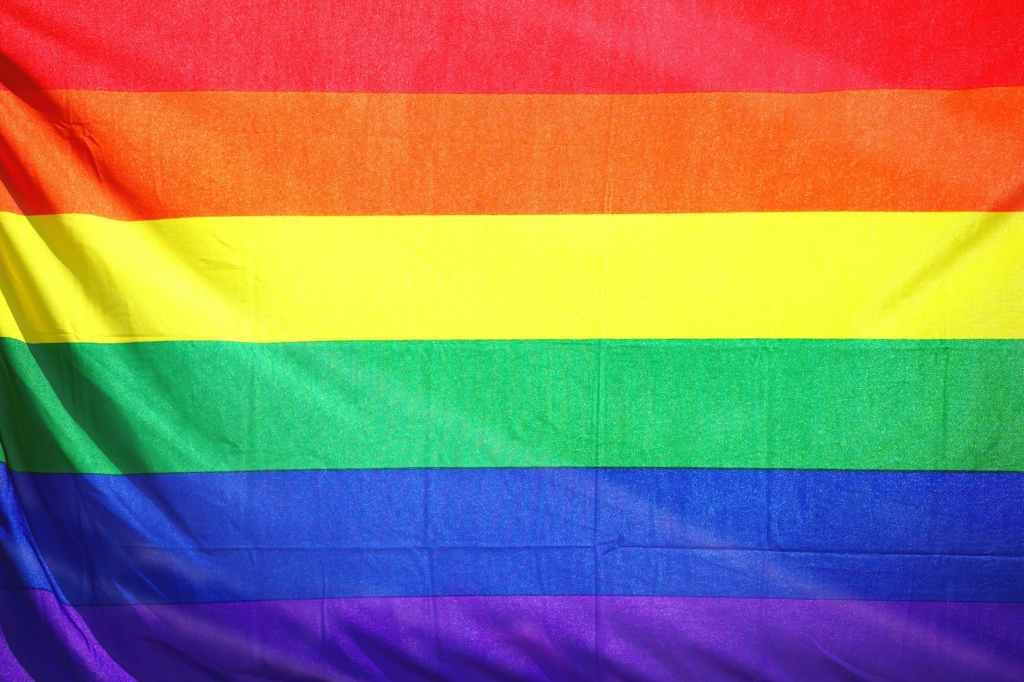
“Sex is what you are born with, Gender is what you recognize, and Sexuality is what you discover[1]”. The LGBTQ+ community, particularly in India, is severely marginalized due to the stigma associated with their sexual orientation or gender identity[2]. Gender identity, refers to an individual’s self-identification as a man, woman, transgender or other identified category[3]. Sexual orientation refers to an individual’s enduring physical, romantic and/or emotional attraction to another person[4]. Sexual orientation includes transgender, homo-sexuals, bysexuals, heterosexuals, asexual etc. Each person’s self-defined sexual orientation and gender identity is integral to their personality and is one of the most basic aspects of self-determination, dignity and freedom.[5] The LGBTQ+ movement has gained momentum in recent decades, with the Supreme Court of India currently deliberating on marriage equality in 2023. The Indian Judiciary, through Naz[6], NALSA[7], and Navtej[8], and Supriya Chakraborty [9]has significantly transformed the LGBTQ+ rights landscape in India, prompting the Legislature to prioritize greater recognition.[10]
LGBTQIA+ is an abbreviation for lesbian, gay, bisexual, transgender, queer or questioning, intersex, asexual, and more. These terms are used to describe a person’s sexual orientation or gender identity[11]. Definition of lesbian, gay, bisexual, transgender, queer or questioning, intersex, asexual are:
- LESBIAN [12]– A woman whose enduring physical, romantic, and/or emotional attraction is to other women. Some lesbians may prefer to identify as gay or as gay women.
- GAY[13] – The adjective refers to individuals who have long-lasting physical, romantic, and emotional connections to people of the same sex, sometimes referred to as lesbian.
- BISEXUAL[14] – Bisexual individuals form enduring physical, romantic, and emotional attraction to genders, regardless of specific sexual experiences, and may experience this attraction in various ways throughout their lifetime.
- TRANSGENDER[15] – Transgender individuals have gender identities and expressions that differ from birth sex. They may use terms like transgender or nonbinary. Some undergo hormones or surgery to align their bodies, but identity is not based on physical appearance or medical procedures.
- QUEER[16] – Queer is an adjective used by LGBTQIA+ individuals with nonbinary, gender-fluid, or gender nonconforming identities, despite being once considered a pejorative term.
- INTERSEX[17] – Intersex refers to individuals with innate sex characteristics outside traditional gender roles, such as genitals, reproductive organs, and chromosomes, assigned at birth— either male or female —by medical providers and parents, and Not all intersex folks identify as being part of the LGBTQIA+ community.
- ASEXUAL[18] – The adjective “ace” refers to individuals who lack sexual attraction, including demisexual, graysexual, and aromantics, who may experience some attraction but lack a strong desire to form romantic relationship.
HISTORY
The term “LGBTQ” encompasses diverse sexual identities and gender expressions, reflecting the growing recognition and inclusion of these identities in society. The acronym LGBTQ, the L was, originally derived from ancient Greek poet Sappho, was first used to describe same-gender passion in her works. That phrase was first used in the seventeenth century to refer to same-gender relationships. But the modern use emerged in 1890, appearing in an English-language medical dictionary and various psychology and sexuality books. It became more and more well-liked throughout time, and women who proudly and covertly adored other women embraced it.[19]
Karl Heinrich Ulrichs, a 19th-century German lawyer and writer, coined the term “Urning” in 1862 to describe “men attracted to men”. “We Urnings constitute a special class of human gender,” he wrote. “We are our own gender, a third sex.” Edmund White states that by 1980, “gay” became the most popular term for men attracted to men, as it does not explicitly refer to sexual activity. The term was used to describe both men who love men and those who exhibit same-gender preference or gender divergence[20]. But Austro-Hungarian journalist Karoly Maria Kertbeny coined the term bisexual; “Bisexual” refers to individuals who are attracted to both men and women[21].
The term “transgender” emerged in the 1960s, popularized by transfeminine activists like Virginia Prince, and replaced other terms that mocked trans people. It became widespread in the 2000s as part of the LGBT rights movement.[22]
The term “LGBTQ+” is often associated with modernity and urban elitism, but Indian history and myths provide a different perspective. Dr. Devdutta Pattanaik reveals ancient India had over fifty words for non-heterosexual gender and sexualities, found in Veda, Itihasa, Purana, Kama-shastra, Natya-shastra, Ayurveda, Jain Agamas, and Buddhist Pitakas.[23]
The TG Community, including Hijras, eunuchs, Kothis, Aravanis, Jogappas, and Shiv-Shakthis, has a significant historical presence in Hindu mythology and religious texts, with the concept of tritiya prakrti. Lord Rama, in the epic Ramayana, was leaving for the forest upon being banished from the kingdom for 14 years, turns around to his followers and asks all the ‘men and women’ to return to the city. Among his followers, the hijras alone do not feel bound by this direction and decide to stay with him. Impressed with their devotion, Rama sanctions them the power to confer blessings on people on auspicious occasions like childbirth and marriage, and also at inaugural functions which, it is believed set the stage for the custom of badhai in which hijras sing, dance and confer blessings. Aravan, son of Arjuna and Nagakanya, was to spend the last night of his life in matrimony. Krishna assumes the form of a beautiful woman called Mohini and marries him. The Hijras of Tamil Nadu consider Aravan their progenitor and call themselves Aravanis[24].
UNITED NATIONS AND OTHER HUMAN RIGHTS BODIES – ON GENDER IDENTITY AND SEXUAL ORIENTATION
Article 6 of the Universal Declaration of Human Rights, 1948[25] and Article 16 of the International Covenant on Civil and Political Rights, 1966 (ICCPR)[26] recognize that every human being has the inherent right to live and this right shall be protected by law and that no one shall be arbitrarily denied of that right. Everyone shall have a right to recognition, everywhere as a person before the law. Article 17 of the ICCPR[27] states that no one shall be subjected to arbitrary or unlawful interference with his privacy, family, home or correspondence, nor to unlawful attacks on his honour and reputation and that everyone has the right to protection of law against such interference or attacks.
The International Commission of Jurists and the International Service for Human Rights collaborated to create international legal principles for addressing human rights violations based on sexual orientation and gender identity. The Yogyakarta Principles, adopted in a meeting at Gadjah Mada University in Yogyakarta, Indonesia from 6 to 9 November, 2006, address various human rights standards and their application to sexual orientation and gender identity issues[28].
- YOGYAKARTA PRINCIPLES[29]:THE RIGHT TO THE UNIVERSAL ENJOYMENT OF HUMAN RIGHTS All human beings are born free and equal in dignity and rights. Human beings of all sexual orientations and gender identities are entitled to the full enjoyment of all human rights. States shall:
A. Embody the principles of the universality, interrelatedness, interdependence and indivisibility of all human rights in their national constitutions or other appropriate legislation and ensure the practical realisation of the universal enjoyment of all human rights;
B. Amend any legislation, including criminal law, to ensure its consistency with the universal enjoyment of all human rights;
C. Undertake programmes of education and awareness to promote and enhance the full enjoyment of all human rights by all persons, irrespective of sexual orientation or gender identity;
D. Integrate within State policy and decision-making a pluralistic approach that recognises and affirms the interrelatedness and indivisibility of all aspects of human identity including sexual orientation and gender identity.
- THE RIGHTS TO EQUALITY AND NON-DISCRIMINATION Everyone is entitled to enjoy all human rights without discrimination on the basis of sexual orientation or gender identity. Everyone is entitled to equality before the law and the equal protection of the law without any such discrimination whether or not the enjoyment of another human right is also affected. The law shall prohibit any such discrimination and guarantee to all persons equal and effective protection against any such discrimination. Discrimination on the basis of sexual orientation or gender identity includes any distinction, exclusion, restriction or preference based on sexual orientation or gender identity which has the purpose or effect of nullifying or impairing equality before the law or the equal protection of the law, or the recognition, enjoyment or exercise, on an equal basis, of all human rights and fundamental freedoms. Discrimination based on sexual orientation or gender identity may be, and commonly is, compounded by discrimination on other grounds including gender, race, age, religion, disability, health and economic status. States shall:
A. Embody the principles of equality and non-discrimination on the basis of sexual orientation and gender identity in their national constitutions or other appropriate legislation, if not yet incorporated therein, including by means of amendment and interpretation, and ensure the effective realisation of these principles;
B. Repeal criminal and other legal provisions that prohibit or are, in effect, employed to prohibit consensual sexual activity among people of the same sex who are over the age of consent, and ensure that an equal age of consent applies to both same-sex and different- sex sexual activity;
C. Adopt appropriate legislative and other measures to prohibit and eliminate discrimination in the public and private spheres on the basis of sexual orientation and gender identity;
D. Take appropriate measures to secure adequate advancement of persons of diverse sexual orientations and gender identities as may be necessary to ensure such groups or individuals equal enjoyment or exercise of human rights. Such measures shall not be deemed to be discriminatory;
E. In all their responses to discrimination on the basis of sexual orientation or gender identity, take account of the manner in which such discrimination may intersect with other forms of discrimination;
F. Take all appropriate action, including programmes of education and training, with a view to achieving the elimination of prejudicial or discriminatory attitudes or behaviours which are related to the idea of the inferiority or the superiority of any sexual orientation or gender identity or gender expression.
- THE RIGHT TO RECOGNITION BEFORE THE LAW Everyone has the right to recognition everywhere as a person before the law. Persons of diverse sexual orientations and gender identities shall enjoy legal capacity in all aspects of life. Each person’s self- defined sexual orientation and gender identity is integral to their personality and is one of the most basic aspects of self- determination, dignity and freedom. No one shall be forced to undergo medical procedures, including sex reassignment surgery, sterilisation or hormonal therapy, as a requirement for legal recognition of their gender identity. No status, such as marriage or parenthood, may be invoked as such to prevent the legal recognition of a person’s gender identity. No one shall be subjected to pressure to conceal, suppress or deny their sexual orientation or gender identity. States shall:
A. Ensure that all persons are accorded legal capacity in civil matters, without discrimination on the basis of sexual orientation or gender identity, and the opportunity to exercise that capacity, including equal rights to conclude contracts, and to administer, own, acquire (including through inheritance), manage, enjoy and dispose of property; B. Take all necessary legislative, administrative and other measures to fully respect and legally recognise each person’s self-defined gender identity;
C. Take all necessary legislative, administrative and other measures to ensure that procedures exist whereby all State-issued identity papers which indicate a person’s gender/sex — including birth certificates, passports, electoral records and other documents — reflect the person’s profound self-defined gender identity;
D. Ensure that such procedures are efficient, fair and non- discriminatory, and respect the dignity and privacy of the person concerned;
E. Ensure that changes to identity documents will be recognised in all contexts where the identification or disaggregation of persons by gender is required by law or policy; F. Undertake targeted programmes to provide social support for all persons experiencing gender transitioning or reassignment.
- THE RIGHT TO LIFE Everyone has the right to life. No one shall be arbitrarily deprived of life, including by reference to considerations of sexual orientation or gender identity. The death penalty shall not be imposed on any person on the basis of consensual sexual activity among persons who are over the age of consent or on the basis of sexual orientation or gender identity. States shall:
A. Repeal all forms of crime that have the purpose or effect of prohibiting consensual sexual activity among persons of the same sex who are over the age of consent and, until such provisions are repealed, never impose the death penalty on any person convicted under them;
B. Remit sentences of death and release all those currently awaiting execution for crimes relating to consensual sexual activity among persons who are over the age of consent;
C. Cease any State-sponsored or State-condoned attacks on the lives of persons based on sexual orientation or gender identity, and ensure that all such attacks, whether by government officials or by any individual or group, are vigorously investigated, and that, where appropriate evidence is found, those responsible are prosecuted, tried and duly punished.
- THE RIGHT TO PRIVACY Everyone, regardless of sexual orientation or gender identity, is entitled to the enjoyment of privacy without arbitrary or unlawful interference, including with regard to their family, home or correspondence as well as to protection from unlawful attacks on their honour and reputation. The right to privacy ordinarily includes the choice to disclose or not to disclose information relating to one’s sexual orientation or gender identity, as well as decisions and choices regarding both one’s own body and consensual sexual and other relations with others. States shall:
A. Take all necessary legislative, administrative and other measures to ensure the right of each person, regardless of sexual orientation or gender identity, to enjoy the private sphere, intimate decisions, and human relations, including consensual sexual activity among persons who are over the age of consent, without arbitrary interference;
B. Repeal all laws that criminalise consensual sexual activity among persons of the same sex who are over the age of consent, and ensure that an equal age of consent applies to both same-sex and different- sex sexual activity;
C. Ensure that criminal and other legal provisions of general application are not applied to de facto criminalise consensual sexual activity among persons of the same sex who are over the age of consent;
D. Repeal any law that prohibits or criminalises the expression of gender identity, including through dress, speech or mannerisms, or that denies to individuals the opportunity to change their bodies as a means of expressing their gender identity;
E. Release all those held on remand or on the basis of a criminal conviction, if their detention is related to consensual sexual activity among persons who are over the age of consent, or is related to gender identity;
F. Ensure the right of all persons ordinarily to choose when, to whom and how to disclose information pertaining to their sexual orientation or gender identity, and protect all persons from arbitrary or unwanted disclosure, or threat of disclosure of such information by others
- THE RIGHT TO FREEDOM OF OPINION AND EXPRESSION Everyone has the right to freedom of opinion and expression, regardless of sexual orientation or gender identity. This includes the expression of identity or personhood through speech, deportment, dress, bodily characteristics, choice of name, or any other means, as well as the freedom to seek, receive and impart information and ideas of all kinds, including with regard to human rights, sexual orientation and gender identity, through any medium and regardless of frontiers. States shall:
A. Take all necessary legislative, administrative and other measures to ensure full enjoyment of freedom of opinion and expression, while respecting the rights and freedoms of others, without discrimination on the basis of sexual orientation or gender identity, including the receipt and imparting of information and ideas concerning sexual orientation and gender identity, as well as related advocacy for legal rights, publication of materials, broadcasting, organisation of or participation in conferences, and dissemination of and access to safer-sex information;
B. Ensure that the outputs and the organisation of media that is State-regulated is pluralistic and non-discriminatory in respect of issues of sexual orientation and gender identity and that the personnel recruitment and promotion policies of such organisations are non-discriminatory on the basis of sexual orientation or gender identity;
C. Take all necessary legislative, administrative and other measures to ensure the full enjoyment of the right to express identity or personhood, including through speech, deportment, dress, bodily characteristics, choice of name or any other means;
D. Ensure that notions of public order, public morality, public health and public security are not employed to restrict, in a discriminatory manner, any exercise of freedom of opinion and expression that affirms diverse sexual orientations or gender identities;
E. Ensure that the exercise of freedom of opinion and expression does not violate the rights and freedoms of persons of diverse sexual orientations and gender identities;
F. Ensure that all persons, regardless of sexual orientation or gender identity, enjoy equal access to information and ideas, as well as to participation in public debate.
THE JUDICIARY’S ROLE IN RECOGNISING AND UPHOLDING LGBTQIA+ RIGHTS IN A COMPLEX SOCIETY
- NAZ FOUNDATION v. GOVERNMENT OF NCT OF DELHI [30]
Facts:- Naz Foundation, a non governmental Organisation (NGO) as a Public Interest Litigation to challenge the constitutional validity of Section 377 of the Indian Penal Code, 1860 (IPC), which criminally penalizes what is described as “unnatural offences”, to the extent the said provision criminalises consensual sexual acts between adults in private. The challenge is founded on the plea that Section 377 IPC, on account of it covering sexual acts between consenting adults in private infringes the fundamental rights guaranteed under Articles 14, 15, 19 & 21 of the Constitution of India. In 2001, HIV anticipation labourers in Lucknow were arrested for appropriating condoms to gay men, claiming they were plotting to commit an offense and allegedly denying consensual sex. The Delhi High Court initially denied the petitioner’s right to file a Public Interest Litigation, but the Supreme Court later granted the petitioner’s request. Judgement:- The Court declare that “Section 377 IPC, insofar it criminalises consensual sexual acts of adults in private, is violative of Articles 21, 14 and 15 of the Constitution. The provisions of Section 377 IPC will continue to govern non-consensual penile non-vaginal sex and penile non-vaginal sex involving minors. By ‘adult’ we mean everyone who is 18 years of age and above. A person below 18 would be presumed not to be able to consent to a sexual act.”[31]
But On appeal, a two-Judge Bench of this Court in Suresh Kumar Koushal v. Naz Foundation[32] reversed the judgment of the High Court of Delhi. Those who indulge in carnal intercourse in the ordinary course and those who indulge in carnal intercourse against the order of nature constitute different classes and the people falling in the later category cannot claim that Section 377 suffers from the vice of arbitrariness and irrational classification. What Section 377 does is merely to define the particular offence and prescribe punishment for the same which can be awarded if in the trial conducted in accordance with the provisions of the Code of Criminal Procedure and other statutes of the same family the person is found guilty. Therefore, the High Court was not right in declaring Section 377 IPC ultra vires Articles 14 and 15 of the Constitution. While reading down Section 377 IPC, the Division Bench of the High Court overlooked that a miniscule fraction of the country’s population constitutes lesbians, gays, bisexuals or transgenders and in last more than 150 years less than 200 persons have been prosecuted (as per the reported orders) for committing offence under Section 377 IPC and this cannot be made sound basis for declaring that section ultra vires the provisions of Articles 14, 15 and 21 of the Constitution.
- NATIONAL LEGAL SERVICES AUTHORITY v. UNION OF INDIA[33] Facts:- The National Legal Services Authority, Poojaya Mata Nasib Kaur Ji Women Welfare Society, and Laxmi Narayan Tripathy filed a petition to recognize Transgender as a third gender in the law, aiming to provide free legal aid to disadvantaged and unprivileged sections of society. The petitions were filed to challenge the non-recognition of transgender individuals as separate sexual and gender identities, as it violates fundamental human rights protected by the Indian Constitution and international human rights documents. The petitions were filed to challenge the non-recognition of transgender individuals as separate sexual and gender identities, as it violates fundamental human rights protected by the Indian Constitution and international human rights documents.[34]
Judgement:- “ The court held that Hijras, Eunuchs, apart from binary gender, be treated as “third gender” for the purpose of safeguarding their rights under Part III of our Constitution and the laws made by the Parliament and the State Legislature. Transgender persons’ right to decide their self-identified gender is also upheld and the Centre and State Governments are directed to grant legal recognition of their gender identity such as male, female or as third gender. The Centre and the State Governments are directed take steps to treat them as socially and educationally backward classes of citizens and extend all kinds of reservation in cases of admission in educational institutions and for public appointments. Centre and State Governments are directed to operate separate HIV Sero-survellance Centres since Hijras/ Transgenders face several sexual health issues.”
- NAVTEJ SINGH JOHAR v. UNION OF INDIA MINISTRY OF LAW[35] Facts:- In 2016, LGBT community members, Navtej Singh Johar, Ritu Dalmia, Ayesha Kapur, Aman Nath and Sunil Mehra filed a Writ Petition in the Supreme Court, requesting recognition of sexuality, autonomy, and right to choice of sexual partner to be a part of the right to life guaranteed under Article 21 of the Constitution of India, and declaring Section 377 of the Indian Penal Code unconstitutional. The petitioner argued that sexual orientation, whether homosexual or bisexual, is natural and reflects consent between partners, not a physical or mental illness. Making it a criminal offense would violate privacy, a constitutional right. The petitioner argues Section 377 violates Article 14 of the Constitution, as carnal intercourse against the order of nature is not defined in Section 377 or the Indian Penal Code, and requires equal protection for LGBT community rights. [36]
Judgement:- The court ruled that section 377 criminalizes voluntary sexual relationships between the same gender, violating fundamental rights guaranteed by Articles 14, 19, and 21 of the Constitution. The LGBT community, as a minority in India, is entitled to these rights.
Justice Indu Malhotra:- “History owes an apology to the members of this community and their families, for the delay in providing redressal for the ignominy and ostracism that they have suffered through the centuries. The members of this community were compelled to live a life full of fear of reprisal and persecution. This was on account of the ignorance of the majority to recognise that homosexuality is a completely natural condition, part of a range of human sexuality. The mis-application of this provision denied them the Fundamental Right to equality guaranteed by Article 14. It infringed the Fundamental Right to non-discrimination under Article 15, and the Fundamental Right to live a life of dignity and privacy guaranteed by Article.[37]”
- SUPRIYO CHAKRABORTY V. UNION OF INDIA[38]
Facts[39]:- In November 2022, Indian same-sex couples Supriyo Chakraborty and Abhay Dang filed writ petitions in the Supreme Court challenging the constitutionality of the section 4(c) Special Marriage Act, 1954, which restricts marriage to males and females. Petitioners challenge Section 4(c) of the act and a plea that has been associated with various other petitions challenging different personal laws on similar grounds, including the Hindu Marriage Act, 1955, and the Foreign Marriage Act, 1969, claiming it discriminates against same-sex couples, depriving them of essential matrimonial benefits like adoption, surrogacy, and employment. The argument is that non-recognition of same-sex marriage violates fundamental rights, using landmark judgments like NALSA vs. Union of India (2014) and Navtej Singh Johar (2018), The legislation acknowledged non-binary gender identities and guaranteed equal rights for homosexual individuals. On November 25th, 2022, The Supreme Court of India issued an Order directing the Union to respond to petitions for same-sex marriage recognition, indicating a growing momentum towards recognizing LGBTQ+ rights and equality in India. On January 3rd, 2023, Advocates Menaka Guruswamy and Karuna Nundy requested a 2-Judge Bench to transfer two similar petitions from Delhi and Kerala High Courts to the Supreme Court. On January 6, 2023, the Bench has decided to list the transfer petitions in addition to the main petition. The case was referred to a 5-Judge Constitution Bench on March 13th, 2023, which began hearings on April 18th, 2023, and the 5-Judge Bench reserved judgment on May 11th, 2023, after a 10-day hearing period. On October 17th, 2023, the 5-Judge Bench is set to announce its verdict on the petitions for marriage equality for LGBTQIA+ individuals, a significant decision for their rights and freedoms in India.
Judgement:- The Supreme Court, with a 3:2 majority, held against legalizing same-sex marriages, stating that the right to marriage is not a fundamental right and that Parliament should determine its legalization. The majority judges held that Section 4(c) of the Special Marriage Act does not violate the fundamental rights of same-sex couples, citing alternative legal options.
THE LGBTQIA+ COMMUNITY’S PERSISTENT STRUGGLES IN INDIA
- WORK Queer individuals face workplace discrimination, including unequal job opportunities, recruitment discrimination, gendered working conditions, and job security violations, highlighting their human rights violations. Workplaces often have gendered binary, leading to discriminatory dress codes and appearance standards, and individuals transitioning or undergoing sex reassignment may have their pre-transition work records ignored. According to a resource guide titled “Creating Inclusive Workspaces for LGBT Employees in India” produced by IBM, Google, Goldman Sachs, and Community Business, India Inc.’s LGBT+ workforce, comprising 5-10% of the workforce, experiences 0.1-1.7% GDP loss and productivity decline due to discrimination.[40]
- Marriage Society views marriage as male-female, with many jurisdictions prohibiting homosexual marriages. Same-sex relations have no legal or economic privileges automatically conferred by marital status. Heterosexual partners enjoy numerous advantages, including joint tax returns, employment benefits, health benefits, and death rights, despite the AIDS epidemic, which homosexual partners often lack access to[41]. In Supriyo Chakraborty v. Union of India[42], the Apex Court held that the right to marriage is not a fundamental right.
- Conflict and rejection caused by families’ responses to LGBTQ people LGBTQ adults often fear rejection and negative responses, leading to family conflicts and forced evictions. This often results in youth in juvenile jails, foster care, or the streets, reducing self-worth, increasing the risk of HIV, substance abuse, and crime. They often commit crimes themselves.[43]
IMPORTANT CENTRAL LEGISLATION
Transgender Persons (Protection of Rights) Bill, 2019:-
The Indian government introduced the Transgender Persons (Protection of Rights) Bill, 2016, following the Supreme Court’s decision in National Legal Services Authority v. Union of India, aiming to safeguard their rights under Part III of the Constitution. The 2016 Bill lapsed due to the Sixteenth Lok Sabha’s dissolution, leading to the introduction of the Transgender Persons (Protection of Rights) Bill, 2019 and its subsequent Act, 2019[44].
Section 2(k) of the Act defines ‘Transgender Person’ as a person whose gender does not match with the gender assigned to that person at birth and includes trans-man or trans-woman (whether or not such person has undergone Sex Reassignment Surgery or hormone therapy or laser therapy or such other therapy )person with intersex variations, genderqueer and person having such socio-cultural identities as kinner, hijra, aravani and jogta[45].
Chapters II to VI of the legislation outline anti-discrimination measures, recognition of transgender identities, government welfare measures, obligations, social security, education, and health provisions for transgender individuals. Chapter VII details the National Council for Transgender Persons’ constitution, while Chapter VIII lists transgender offenses and penalties[46].
Mental Healthcare Act, 2017:-
In Navtej Singh [47]the Supreme Court held that the Mental Healthcare Act, 2017[48], when interpreted alongside Sections 3 and 21(1)(a) of the 2017 Act, defines mental illness, “throws to the winds” all earlier misconceptions regarding same-sex couples. The court held that the 2017 Act’s definition of mental illness excludes homosexuality, removing the stigma associated with same-sex couples.[49]
The Sexual Harassment of Women at Workplace (Prevention, Prohibition and Redressal) Act, 2013:- [50]
The Act was enacted to safeguard women from sexual harassment in the workplace. Section 2(a) define aggrieved “woman” (i) in relation to a workplace, a woman, of any age whether employed or not, who alleges to have been subjected to any act of sexual harassment by the respondent;
(ii) in relation to dwelling place or house, a woman of any age who is employed in such a dwelling place or house.
According to section 2(n) of the act “sexual harassment” includes any one or more of the following unwelcome acts or behaviour (whether by directly or by implication) namely:
(1) physical contact and advances; or
(2) a demand or request for sexual favours; or
(3) making sexually coloured remarks; or
(4) showing pornography; or
(5) any other unwelcome physical, verbal or non-verbal conduct of sexual nature.
The Supreme Court in Union of India v. Mudrika Singh [51]ruled that the right against sexual harassment is a fundamental right under Article 21 of the Indian Constitution. The Supreme Court affirmed the landmark Sexual Harassment of Women at Workplace Act, 2013 as a law that should not be used as punishment for trivial information.[52]
CONCLUSION
Indian society has historically viewed heterosexuality as the norm, leading to discrimination and violence against people with other sexual orientations. India needs progressive laws to promote growth and development, including equal opportunities for all residents. Despite this, NGOs and other organizations are raising awareness and promoting equal rights for the LGBT community. Despite decriminalizing section 377 same-sex unions remain illegal. The LGBT community lacks this privilege, and the Transgender Persons (Protection of Rights) Bill was approved by the Lok Sabha in 2019,has shortcomings. Researchers argue that the bill needs to be strengthened and modified to benefit the LGBT community. India’s LGBT population faces discrimination despite advancements in the Constitution. Society must work together to uphold moral values and respect them. The struggle for true inclusivity in India is ongoing, with the community fighting for more rights and ensuring dignity for all. Despite efforts to mend minds, the struggle persists. India should strive for a society where heterosexuality is not the norm and homosexuality is not the exception.
[1] An Indian Sociologist Anita Chettiar,’ Rights of Sexual Minorities in India (LGBTQ+ Rights): Status and Challenges – Explained, pointwise’, <https://forumias.com/blog/rights-of-sexual-minorities-in-india-lgbtq-rights-status-and-challenges-explained-pointwise/#gsc.tab=0>
[2] Sucheta, ‘Mapping the Progression of LGBTQ+ Rights in India- Important Laws and Judicial Pronouncements’ <https://www.scconline.com/blog/post/2023/06/18/mapping-the-progression-of-lgbtq-rights-in-india-important-laws-and-judicial-pronouncements/>
[3] National Legal Ser. Auth. v. Union of India Ors, AIR (2014) 5 SCC 438
[4] Id.
[5] Id.
[6] Naz Foundation v. State (NCT of Delhi), AIR (2009) 111 DRJ 1
[7] National Legal Services Authority v. Union of India, AIR (2014) 5 SCC 438
[8] Navtej Singh Johar v. Union of India, AIR (2018) 10 SCC 1 : (2019) 1 SCC (Cri) 1
[9] Supriya Chakraborty v. Union of India WP (Civ.) No. 1011/2022
[10] Id. at 2
[11] What Is LGBTQIA+? < https://gaycenter.org/community/lgbtq/>
[12] Id.
[13] Id.
[14] Id.
[15] Id.
[16] Id.
[17] Id.
[18] Id.
[19] From LGBTQ TO LGBTQIA+ : The Evolving recognition of Identity.<https://www.nationalgeographic.com/history/article/from-lgbt-to-lgbtqia-the-evolving-recognition-of-identity>
[20] Id.
[21] Id.
[22] Id.
[23] Id. at 2
[24] National Legal Ser. Auth vs Union of India & Ors, AIR (2014) 5 SCC 438
[25] UN General Assembly, Universal Declaration of Human Rights, 10 December 1948, 217 A (III), <https://www.refworld.org/docid/3ae6b3712c.html>
[26] UN General Assembly, International Covenant on Civil and Political Rights, 16 December 1966, United Nations, Treaty Series, vol. 999, p. 171< https://www.refworld.org/docid/3ae6b3aa0.html >
[27] Id.
[28] National Legal Services Authority v. Union of India, AIR (2014) 5 SCC 438
[29] International Commission of Jurists (ICJ), Yogyakarta Principles – Principles on the application of international human rights law in relation to sexual orientation and gender identity, March 2007 <https://www.refworld.org/docid/48244e602.html>
[30] Naz Foundation v. State (NCT of Delhi), AIR (2009) 111 DRJ 1
[31] Id.
[32] Suresh Kumar Koushal & Anr vs Naz Foundation & Ors. AIR 2014 SC 563
[33] National Legal Services Authority v. Union of India, AIR (2014) 5 SCC 438
[34] National Legal Services Authority vs Union of India – Case Analysis,< https://blog.ipleaders.in/national-legal-services-authority-vs-union-of-india-case-study/>
[35] Navtej Singh Johar v. Union of India, AIR (2018) 10 SCC 1 : (2019) 1 SCC (Cri) 1
[36] Case Analysis: Navtej Singh Johar v. Union of India (2018) 10 SCC 1, <https://vidhinama.com/case-analysis-navtej-singh-johar-v-union-of-india-2018-10-scc-1/>
[37] Id. at 35
[38] Supriyo @ Supriya Chakraborty & Anr v. Union of India WP (Civ.) No. 1011/2022
[39] SUPRIYO CHAKRABORTY V. UNION OF INDIA, <https://legalvidhiya.com/supriyo-chakraborty-v-union-of-india/>
[40] Lydia Manohar, ‘LGBTQ Rights in India Its Challenges, Criticisms and Recommendations’, <https://doij.org/10.10000/IJLMH.111808>
[41] Id.
[42] Id. at 38
[43] R.A. Aswin Krishna et. al ‘LGBTQ RIGHTS AND LEGISLATION IN INDIA: THE
STATUS QUO'< https://ijirl.com/wp-content/uploads/2023/03/LGBTQ-RIGHTS-AND-LEGISLATION-IN-INDIA-THE-STATUS-QUO.pdf>
[44] Id. at 2
[45] Transgender Persons (Protection of Rights) Bill, 2019, § 2(k)
[46] Id.
[47] NAVTEJ SINGH JOHAR v. UNION OF INDIA MINISTRY OF LAW, AIR (2018) 10 SCC 1
[48] THE MENTAL HEALTHCARE ACT, 2017
[49] Id. at 2
[50] THE SEXUAL HARASSMENT OF WOMEN AT WORKPLACE (PREVENTION, PROHIBITION AND REDRESSAL) ACT, 2013 ACT NO. 14 OF 2013
[51] Union of India v. Mudrika Singh, 2021 SCC OnLine SC 1173
[52] Dr Manika Kamthan, ‘Need for Inclusion of LGBTQIA+ under the Sexual Harassment of Women at Workplace (Prevention, Prohibition and Redressal) Act, 2013’ , <https://www.scconline.com/blog/post/2022/07/08/need-for-inclusion-of-lgbtqia-under-the-sexual-harassment-of-women-at-workplace-prevention-prohibition-and-redressal-act-2013/#fn31>
Author: Anamika
 Juris Centre