
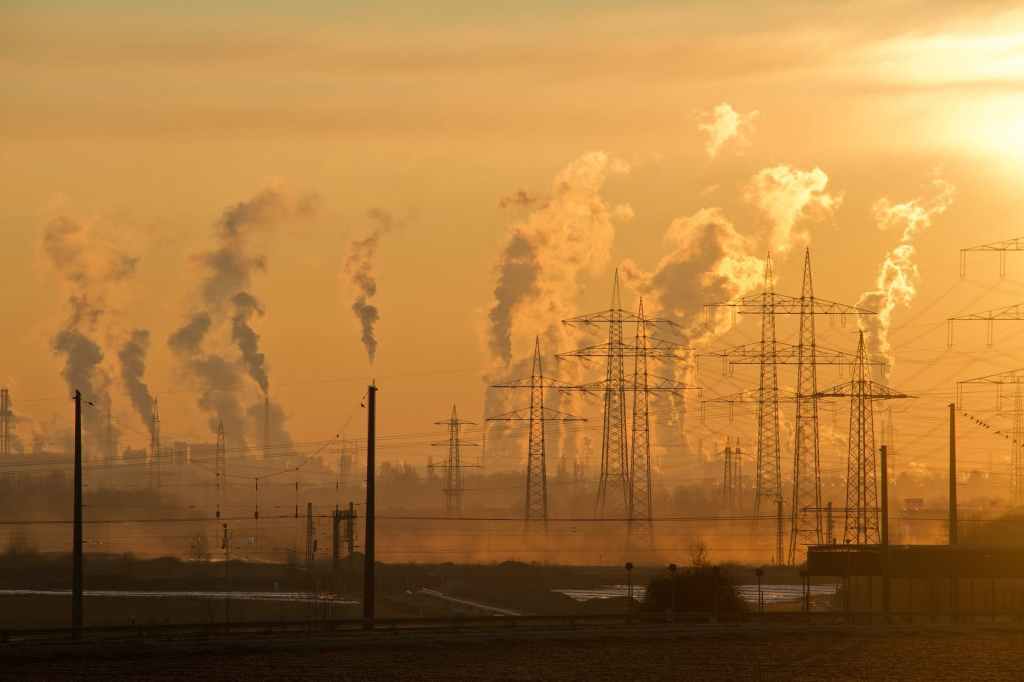
Climate change is a term used to refer to changes in the Earth’s climates, at local, regional, or global levels, and is most often used to describe changes in the Earth’s climate driven primarily by human activity, due to the burning of fossil fuels, removal of forests and air pollution, resulting in an appalling increase in the levels of carbon dioxide and other poisonous gases in the Earth’s atmosphere. Climate change has led to an adverse impact on the lives of the people reduced their quality of life and increased a variety of health issues. Global warming is a term often used interchangeably with climate change, as it is one of the most important measures of global change. Global warming refers to the rise in average global temperatures, which is linked to significant impacts on humans, wildlife, and ecosystems around the world. Because there are more factors and impacts than only rising surface temperatures, the term climate change is used to include these additional impacts. There is strong consensus among scientists, representing 97% of actively publishing climate scientists, that human influence has been the dominant cause of observed warming trends since the 20th century. [1]However, the environmental law litigation has protected the environment from the companies and corporations that are ready to destroy the environment to any extent just to make more profits. In the development process, the countries are emitting carbon at exorbitantly high rates, which is alarming for the entire world. There needs to be an awareness of the fact that the glaciers are melting, and sea levels are rising due to global climate temperature increase. Scientists suggest that the Earth’s temperature has risen by 0.26℃ for the last 10 years. Greta Thunberg, a Swedish environment activist also stated that humanity is facing an existential crisis due to climate change and she quotes, “The empty promises are the same and the inaction is the same”.[2] Thereby proving that due to the rapid rate of environmental deterioration life on Earth may come to an end.
Role of the legal system in addressing Climate Change-
The exploitation of nature and the environment can never stop unless there are serious laws on the same along with the strict enforcement of such laws. And climate litigation has come up as an important tool to curb this menace of global pollution and climate change. According to the IPCC[3], system change is required across all industrial sectors to substantially reduce greenhouse gas (GHG) emissions. Litigants and lawyers use such statements to support litigation and in recent years, individuals and communities have aligned their causes of social, human, and economic justice with environmental and climate justice. Indeed, the Paris Agreement notes the importance of the concept of climate justice, when taking action. Interestingly, eco-centric law is becoming a reimagination of the anthropocentric foundations of the international legal system. Eco-centric concepts are transforming human-centered legal systems, that historically undervalue non-human life. This is based on newly articulated eco-centric ideas that “to treat nature as just one of several competing (economic) interests results in a tendency to trump more qualitative public interest notions, such as ecosystem protection, intergenerational and intragenerational equity, and even cultural values”. This represents a profound departure from an anthropocentric framing of the environment as a mere resource-giving vehicle for human exploitation towards viewing the environment in Kantian terms, as “an end in itself”, as a legal entity with rights of protection.[4]
In the Future Generations v Ministry of the Environment[5] case, Youth plaintiffs seek to enforce fundamental rights to a healthy environment which they claim are threatened by climate change and deforestation. The Court decided that the Amazon has personhood in law thus giving rights to nature.
In the Urgenda Foundation v State of the Netherlands case, an appeal was made by the Urgenda Foundation for the Dutch government to reduce emissions by a minimum of 25% before 2020. The court ordered the Dutch government to adopt stringent policies to reduce emissions by 25% before 2020.[6]
In the US, which constitutes the majority of litigation cases, 70% of litigation based on federal statute is brought under the National Environmental Policy Act and Clean Air Act, which are more anthropocentric in their objectives. However, it is likely that the codification of eco-laws, in the US at the local level, will bring challenging cases before the courts on the issue of personhood for nature.
UN framework on climate change–
The United Nations Framework Convention on Climate Change (UNFCCC) was signed by 154 states in 1992 acknowledging “that the global nature of climate change calls for the widest possible cooperation by all countries and their participation in an effective and appropriate response”[7]. Both the Paris Agreement [8]adopted by the Conference of the Parties (COP21) and the “UN Sustainable Development Goals (SDGs)” have guided development in this field. Although health is not always specifically articulated in national laws and policies that address economic regulations on energy, electric utilities, construction, agriculture, and industry, it is commonly implicit that the objective of these policies is human and planetary ecosystem survival.
Current climate action is woefully inadequate to meet the temperature and adaptation goals of the Paris Agreement. While global average temperatures are already exceeding 1.1°C above pre-industrial levels, current plans reflected in the nationally determined contributions (NDCs) are putting us on a path towards 2.4°C–2.6°C by the end of the century. Even if the temperature rise eventually slows as a result of more ambitious collective climate change mitigation efforts, climate risks will accelerate with every fraction of a degree because of the compounding and cascading nature of climate-related impacts. In addition, the Intergovernmental Panel on Climate Change (IPCC) concludes that residual climate risks – that is risks remaining after ambitious adaptation efforts – will persist even if the Paris Agreement goals are reached. Residual climate risks, in turn, will inevitably lead to both economic and non-economic losses and damages. This demonstrates the importance of accelerating and scaling up both mitigation and adaptation action, to respectively avert catastrophic climate change and minimize the climate impacts that remain. In addition, more focus must be placed on anticipatory, just, and effective adaptation action and support.[9]
The United Nations Framework Convention on Climate Change (UNFCCC), the purpose of which was to stabilize emissions of greenhouse gases, was adopted in 1992 and entered into force in 1994. The Convention establishes several means through which developing and developed countries could cooperate to meet the Convention’s objectives. These means include financing arrangements and technology transfers.[10]
The Convention includes various important articles related to Climate Change.
They are as follows;
- Article 3(1) – This article mentions that the Parties should act in a way to protect the climate and combat its adverse effects based on ‘common but differentiated responsibilities’.
- Article 4 – This provision states that all parties must make a general commitment to address climate change.
- Article 4(1) – This provision relates to taking into account certain responsibilities to promote and cooperate in the development, application, diffusion, including transfer, of technologies, practices, and processes that control, reduce, or prevent anthropogenic emissions of greenhouse gases.
- Article 4(5) – This provision relates to the practical steps to promote, facilitate, and finance so that the developed countries and developed parties take necessary measures for the enhancement of endogenous capacities and technologies of developing country Parties.
- Article 4(7) – This provision ensures that commitments made under the convention are effectively implemented.[11]
The UN conventions have taken measures to practically regulate Global climate change, however, the milestone is yet to be achieved. The Sustainable Development Goals and Net Zero Carbon Emission is far a distant dream that requires proper and effective implementation of the United Nations Framework Convention on Climate Change(UNFCCC) by global participation and cooperation, for a better future.
Regulation on fossil fuel extraction and use
Fossil fuel extraction and use can be regulated through demand-side and supply-side policies. Demand-side policies target the consumption of fossil fuels. These include carbon taxes, subsidies for renewable energy, and policies to roll out low-carbon technologies and practices. Supply-side policies target the extraction of fossil fuels. These include taxes on fossil fuel production, cap-and-trade schemes on production, resource extraction taxes, fossil fuel subsidy removal, quotas on the extraction of certain fossil fuel resources, and a wind-down of extraction from public lands.
Despite the recent success of the Paris Agreement (PA) in terms of global participation, greenhouse gas (GHG) emissions continue to grow and ambitious climate action is becoming increasingly urgent because the remaining carbon budget to stay well below 2°C is fast depleting[12]. Stabilizing the global temperature increase to well below 2°C or to 1.5°C urgently requires the global phase-out of unabated fossil fuel use. The International Energy Agency (IEA) report on “Net Zero by 2050” recommends the immediate end of investments in new extraction fields and fossil power plants to meet the PA goals. However, investments in oil and gas continue to grow and the policies put into place by governments have so far proven insufficiently effective.[13] These policies can be classified as demand-side policies if they target the consumption of fossil fuels, such as carbon taxes and subsidies to renewable energy, or supply-side policies if they target the extraction of fossil fuels, such as placing taxes on fossil fuel production, cap-and-trade schemes on production rights, or extraction limits.[14]
Forcing scarcity on fossil fuel supply can cause energy and economic crisis, social turmoil, and geopolitical strain if the production is reduced unilaterally or too abruptly, as the oil crises of 1973 and 1979 or the current Russian crisis show: Fossil fuels are deeply rooted in the geopolitics of the contemporary world and ill-managed supply-side policies could hinder international cooperation. Therefore, for this instrument to be used effectively, it must be included in a recognized multilateral international framework.[15] These arguments support the view that the Paris Agreement can provide an opportunity to explore the fossil fuel supply-side measures and that the United Nations Framework Convention on Climate Change should foster the phase-out of both fossil fuel production and consumption[16]. Unlike carbon pricing, coalitions of countries banning fossil extraction can stimulate emission reductions outside the coalition, but we find that this holds only if the coalition contains a large enough share of the global hydrocarbon supply. The stronger the demand-side policies implemented alongside extraction bans, the larger the coalition must be to affect global fossil fuel prices because of the lower demand for fossil fuels. Otherwise, limiting hydrocarbon production may not have meaningful effects on energy prices and demand, which limits the effectiveness of unilateral supply-side action from small producers and calls for an international agreement. This reinforces the importance of multilateral international initiatives like the Fossil Fuel Non-Proliferation Treaty Initiative,[17] the Beyond Oil and Gas Alliance, and the Coal Elimination Treaty.
To regulate climate change not only does the extraction of fossil fuels need to be regulated but its use should also be judicious. This is high time for the world to significantly reduce its dependence on fossil fuels and increase its dependence on alternative cleaner, greener and efficient fuels. By reducing fuel demand and greenhouse gas emissions through improved fuel efficiency, India will achieve raised standards, optimized networks, improved technologies, and fleet modernization. There will be a continuation of a gradually increased blending of cleaner fuels while managing socio-economic and development of the skilling aspects required for the same. Hydrogen will be used as an energy carrier and alternate fuel in the transportation sector. India has adopted ambitious Renewable Energy targets. India in 2022 targets 50% cumulative non-fossil fuel electric power capacity by 2030. India has a clear identification of all non-fossil sources viz., hydro, solar, wind, nuclear, and biomass. This is key to supporting evidence-based and actionable policymaking. It helps to define the direction/pace of transition, thereby sending reinforcing policy signals to industry and investors, providing clarity regarding which actions are to be considered sustainable in the longer term. India announced the National Hydrogen Mission in 2021 to meet mitigation goals as well as make India an export hub for green hydrogen and green ammonia. India aims to achieve the production of 5 million tonnes of green hydrogen by 2030.[18] All these are major steps and objectives of India towards the regulation of fossil fuel use which can act as guiding values for the entire globe.
Conclusion
The damages related to climate change are a concerning issue for the international community, as no country will escape the impacts of climate change. Indeed, it is a preoccupation for the countries (mostly vulnerable) that will suffer those damages, but also for the States that emit greenhouse gases which fear to have to repair them. That’s why the international negotiation related to the climate regime uses the ambiguous term “loss and damage” to design the impacts related to climate change.[19] The Global Goal on Adaptation could also give new life and energy to the Sustainable Development Goals (SDGs) by complementing them with an additional set of goals to regulate climate change.
At this year’s COP 28, global leaders have the chance to create a bold new framework for building climate-safe communities, safeguarding ecosystems, and protecting the well-being of all people. It’s time to seize this opportunity and put the Global Goal of Adaptation at the top of the agenda before it’s too late. Changing weather patterns, disruption to natural resources, and distressed behavioural changes have a detrimental effect on not only human beings but the flora and fauna. The ever-increasing greed for wasting fossil fuels and energy consumption tries to force scientific impossibility to measure the abundant loss to the climate. The major outcome of COP 28 is the agreement on the operationalization of the Loss and Damage Fund and its funding arrangements. The Fund is accountable to and functions under the guidance of the Conference of Parties serving as the meeting of the Parties to the Paris Agreement. Since the decision, an amount of around USD 700 million to date has been pledged by several countries, including the United Arab Emirates, Germany, the United Kingdom, the European Union, and Japan. The purpose of the Fund is to assist developing countries that are particularly vulnerable to the adverse effects of climate change in responding to economic and non-economic loss and damage associated with the adverse effects of climate change, including extreme weather events and slow onset events.[20]
In the context of the global climate health emergency, decarbonisation of the environment is vital for protecting human existence. Litigation in this aspect offers a powerful tool to protect the human’s right to health. Multi-lateral bodies, with legally binding power, should be established to access breaches of existing law and sanctions should be imposed on the countries violating the norms of the Convention. Climate protection should no more be a moral responsibility but people and cooperation must be under legal obligation to protect the same. Countries should control their rate of carbon emission and any country violating such norms should be sanctioned as such an act will not only be subjected to that territory but affect the countries globally. Now the time has come to make the environment and climate our priority as there is no value in any amount of development if planet Earth ceases to support human existence. . The Sustainable Development Goals and Net Zero Carbon Emission are not only desired but are the need of the hour. The proper and effective implementation of the United Nations Framework Convention on Climate Change (UNFCCC) and other Climate-related laws nationally and internationally by global participation and cooperation, is the only hope left for a better and sustainable future.
[1] The 97% consensus on global warming,The Skeptical Science, (Dec.13,2023, 10:04 AM),https://skepticalscience.com/global-warming-scientific-consensus-intermediate.html
[2] United Nation Climate Action Summit, 2019
[3] The Intergovernmental Panel on Climate Change IPCC,2021, (Dec.15,2023, 11:00) https://www.ipcc.ch/
[4] Howe H. ,Making Wild Law Work—The Role of ‘Connection with Nature and Education in Developing an Ecocentric Property Law, 29(1) Journal of Environmental Law, 19–45 (2016)
[5] Future generation v Ministry of Environment (2018) 11001 22 03 000 2018 00319 00 Colombia Supreme court , (Dec.16,2023, 11:00) http://climatecasechart.com/non-us-case/future-generation-v-ministry-environment-others/?cn-reloaded=1
[6] Urgenda Foundation v. State of the Netherlands (2015) [2015] HAZA C/09/00456689 (The Hague Court of Appeals)
[7] United Nations. United Nations Framework Convention on Climate Change. 1992 (Dec.17,2023, 11:00 AM) https://unfccc.int/resource/docs/convkp/conveng.pdf
[8] Paris Agreement to the United Nations Framework Convention on Climate Change, Dec. 12, 2015, T.I.A.S. No. 16–1104.
[9] United Nations Environment Program, Adaptation Gap Report,2023.U.N.
[10] Technology Transfers Under the United Nations Framework Convention on Climate Change, 2006.
[11] United Nations Climate Change, 2020 (Dec.17,2023, 11:00) https:// unfccc.int/.
[12] IPCC, Summary for policymakers ,World Meteorological Organization, 2018
[13] Roelfsema M., Van Soest H.L., Harmsen M., Van Vuuren D.P., Bertram C., Den Elzen M, Krey V., Kriegler E., et al. ,Taking stock of national climate policies to evaluate implementation of the Paris Agreement,. 2020 doi: 10.1038/s41467-020-1541CC4-6.
[14] Lazarus M., Van Asselt H., Fossil fuel supply and climate policy: exploring the road less taken Climate Change, 2018;150:1–13. doi: 10.1007/s10584-018-2266-3.
[15] Van Asselt H., Newell P. ,Pathways to an international agreement to leave fossil fuels in the ground. Glob. Environ. Polit. 2022; 22:28–47. doi: 10.1162/glep_a_00674.
[16] Piggot G., Erickson P., Van Asselt H., Lazarus M., Swimming upstream: addressing fossil fuel supply under the UNFCCC. Clim. Policy. 2018; 18:1189–1202 doi: 10.1080/14693062.2018.1494535.
[17] Burke A., Fishel S. ,A coal elimination treaty 2030: fast tracking climate change mitigation. Earth System Governance, 2020; 3:100046. doi: 10.1016/j.esg.2020.100046
[18] India’s Long-Term Low-Carbon Development Strategy Ministry of Environment, Forest and Climate Change Government of India (Dec.24,2023,10:00 PM) chrome,extension://efaidnbmnnnibpcajpcglclefindmkaj/https://unfccc.int/sites/default/files/resource/India_LTLEDS.pdf
[19] UNEP Global Environmental Alert Service (2014, p. 1)
[20] Major outcomes from 28th Session of the UN Climate Change Conference (COP 28)
Posted On: 18 DEC 2023 5:02PM by PIB Delhi, Ministry of Environment, Forest and Climate Change
(Dec. 24,2023,8:00AM) https://pib.gov.in/PressReleaseIframePage.aspx?PRID=1987760
Author: Nilesh Kumar
 Juris Centre