
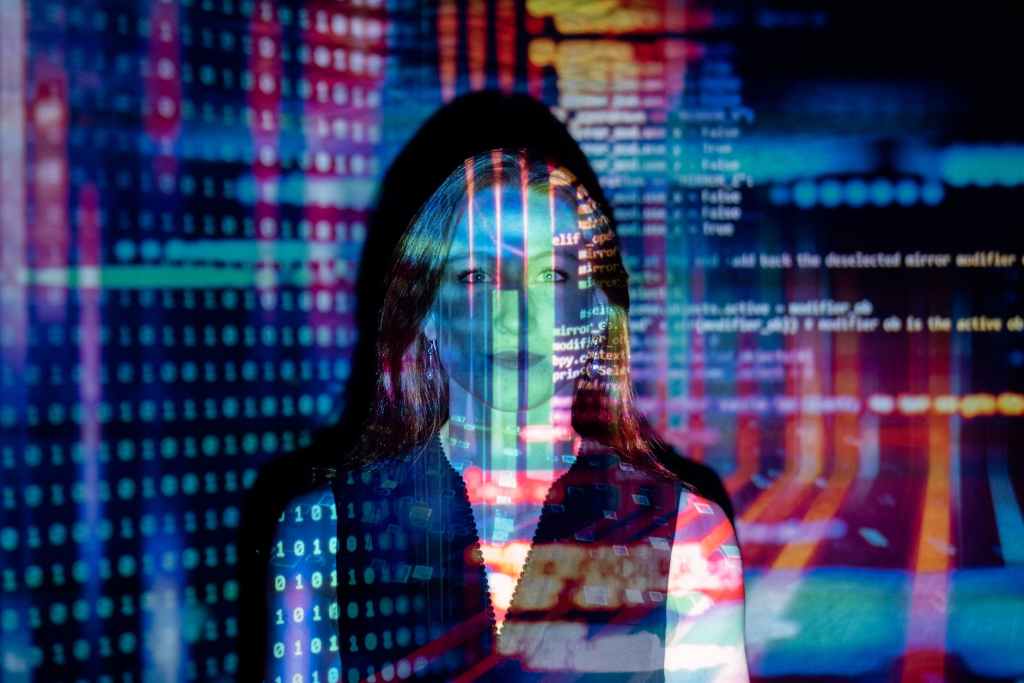
As the world we live in currently is becoming incredibly digital and interconnected and everything is at the tip of our hands. AI (Artificial Intelligence) is taking centre stage in shaping how we create, consume and protect the digital content. Then, there is a more complex intersection between AI and Copyright law, because of the relentless march of technological progresses and the new boundaries that need to be set that need to be set From AI generated hour something that earlier used to take us hours to achieve perfection to AI generated content creation in minutes or worse seconds that earlier used to be days of hard work the role of AI is something that needs our attention. The bigger question here is who will be and should be considered as the actual owner of the automated things generated by AI.
AI AND COPYRIGHT: REDEFINING CREATION
There is no denying the fact that ever since AI came into play the traditional concept of copyright has been redefined to a great extent. Nowadays, algorithms are capable of autonomously and with just a click producing works that deter and create and great competition for those crafted by human hands, the biggest question start to arise about the ownership of these AI-generated creations. Should the person who initiated the concept of AI be considered the author? Or does the AI itself, should be considered as the primary and foremost creator, here it blurs the lines of authorship and further the concept of copyright. The AI is not here as a conqueror but a creator riveling the humans.
AI AND COPYRIGHT ENFORCEMENT: THE DMCA CONNECTION
While AI is making waves and creating revolution as a content creator, its also one of the powerful tools which come into play when copyright enforcement is in talks. The DMCA (Digital Millenium Copyright’s Act)[1] comes into play when the question arises whether the AI can own copyright.
WHAT IS DMCA?
The digital millennium copyright’s act was enacted in 1998, the said act is a landmark piece of U.S. legislation designed to protect copyright in the new emerging digital age. It criminalizes production and dissemination of technology, devices, or services intended to circumvent measures that control access to copyrighted works (commonly known as digital rights management or DRM). It also criminalizes the act of circumventing an access control, whether or not there is actual infringement of copyright itself. In addition, the DMCA heightens the penalties for copyright infringement on the Internet.[2]
AI AND AUTOMATED TAKEDOWNS
AI-driven algorithms are now commonly used to scan vast digital landscapes, rapidly identifying potential copyright infringements. When these systems detect violations, online platforms must promptly and foremost remove the content to retain their safe harbour protections under the DMCA without infringing someone’s else’s rights.
Here’s where this process gets complex. The effectiveness of AI systems in making sure of the legitimate use from infringement isn’t foolproof there are a lot of scope of mistakes and sometimes AI can unknowingly infringe someone’s else’s rights. There can also be false positives such as instances where AI mistakenly identifies lawful content as infringing can further lead to unjustified takedowns. This spark concerns about fairness and freedom of expression.
Additionally, there’s an ethical dimension to consider as well that should AI systems be allowed to make determinations of copyright infringement without human oversight? This question makes the need for transparency and accountability in AI generated copyright enforcement, an issue that becomes even more pertinent and in light of the DMCA’s role.
Emphasizing this position, the USCO in September 2022 rejected a copyright application for a comic book generated using Midjourney, a text-to-image AI. While the application was initially approved, it’s notable that the registration didn’t go to the AI, but to the artist who created the work. Elaborating on the approval, the artist stated that the USCO asked her to provide evidence “that there was substantial human involvement” in the creative process.
So, the end result is that AI cannot own copyright under the DMCA – at least for now. But humans can; if they can somehow prove they had substantial input in creating the said work.[3] The next question that arises further keeping the present scenario in mind is what exactly amounts to the substantial input in creating the work to award the copyright under the DMCA to its creator. Ultimately, it results to how much of a role the creator plays in the process and the degree of effort that he put into the creation of the final work that decides the future of copyright with him.
FAIR USE IN THE AGE OF AI
The concept of “fair use” within copyright law becomes particularly interesting in an AI-driven world. Fair use further allows the use of copyrighted material without permission from or payment to the initial copyright holder, under certain specific conditions such as commentary, criticism, or parody. Yet, when AI enters the creative equation, generating transformative or derivative works that deviates or blurs the lines between original and reproduced content. Then making a decision on what qualifies as fair use becomes increasingly complex.
In some recent years many legal cases, particularly those involving AI-generated art, have sparked debates about the boundaries of fair use and the application of the DMCA in these contexts. These legal deliberations will undoubtedly shape the future landscape for creators and consumers of AI-generated content.
LEGAL FRAMEWORK IN INDIA
In India, the legal framework governing the intersection of artificial intelligence (AI), copyright, and intellectual property rights, including the Digital Millennium Copyright Act (DMCA), quite differs from that of the United States where the DMCA originated from and is in action. Let’s take a further look and see into the aspects of how the elements of AI and Copyright relate to one another in the Indian context.
COPYRIGHT LAW IN INDIA:
Copyright law in India is primarily and foremostly governed by the Copyright Act, 1957[4], and further subsequent amendments. The said act grants authors, creators, and copyright owners exclusive rights over their creative works, including literary, artistic, musical, and dramatic works.[5] Copyright law protects the expressions and inventions of the people and not the ideas hence it is quite different than patents.
AI AND COPYRIGHT:
AI’s role in content creation and it’s relationship with copyright is a hot-topic of ongoing debate and furthermore the evolving legal interpretation of the same and making sure it somehow doesn’t hamper the rights of our creators. Some key points to consider:
Authorship and Ownership: The Copyright Act in India of 1957, like in many different countries, typically attributes the authorship and copyright ownership to the human creators. This raises further important questions that have been raising quite a few heads about whether the AI-generated works can be considered for copyright protection, and if so, who should actually be recognized as the author.
Fair Use and Derivative Works: The concept of fair dealing, similar to fair use, exists in Indian copyright law as well same way it was in talks in the DMCA. The application of these provisions for the AI-generated content and derivative works is an area of legal ambiguity and leaves someplace to be fully defined through legislation or judicial decisions.
Public Domain and Open Source: Indian copyright law further recognizes the public domain and open-source licensing, which can influence how AI-generated content is used, shared, and protected.
DMCA EQUIVALENT IN INDIA:
India has its own set of laws and regulations governing copyright and intellectual property which are quite similar to the DMCA but not that similar. However, the principles of copyright protection, safe harbour for intermediaries, and the prohibition of circumventing technological protection measures have their counterparts in Indian law and have been in significance and use ever since.
Intermediary Liability: The Information Technology Act, 2000,[6] and its subsequent amendments address intermediary liability in India. These laws provide some protections for intermediaries, including ISPs and online platforms, similar to the safe harbour provisions under the DMCA. Intermediaries may not be held liable for third-party content posted on their platforms, provided they comply with certain obligations, such as responding to takedown notices.
Challenges and Evolving Jurisprudence: The legal framework for AI and copyright in India is evolving, and many legal challenges remain unaddressed. As AI continues to play a more significant role in content generation, dissemination, and copyright enforcement, there is a need for clarity and adaptation within Indian copyright law and related regulations.
INTERNATIONAL TREATIES:
India is a signatory to international copyright treaties, including the Berne Convention[7] and the TRIPS Agreement,[8] which provide guidelines for the protection and enforcement of copyright. These treaties influence the legal framework related to AI and copyright in India.
In conclusion, the legal framework for AI and copyright in India is primarily based on the Copyright Act, 1957[9], and the Information Technology Act, 2000,[10] with principles that bear similarities to those found in the DMCA. However, the application of these laws to emerging technologies like AI-generated content is an area of ongoing legal development and interpretation. Clarity and adaptation of the legal framework are necessary to address the unique challenges posed by AI in the realm of copyright and intellectual property rights in India.
JUDICIAL FRAMEWORK OF AI AND COPYRIGHT
In the ever-evolving landscape of technology and intellectual property, the intersection of Artificial Intelligence (AI) and copyright law has given rise to a host of complex and intriguing legal challenges. AI systems are now capable of generating creative works, including music, art, literature, and more, blurring the traditional lines of authorship and ownership. These developments have ushered in a new era of legal scrutiny and debate, leading to a growing body of landmark cases that seek to establish the legal framework governing AI-generated content within the realm of copyright.
Rupendra Kashyap v. Jiwan Publishing House Pvt. Ltd.:[11] A traditional approach was observed in the above mentioned case before the hon’ble High Court of Delhi, which dealt with the copyright claims of the CBSE over question papers. The Court determined that the CBSE cannot assert copyright without any evidence of individual involvement in creating the question papers, given its status as an artificial entity. Under the Indian Copyright Act, authorship can only be attributed to a natural person. This position was further supported in the case of Tech Plus Media Private Ltd. v. Jyoti Janda.
Tech Plus Media Private Ltd. v. Jyoti Janda:[12] In this case, the Court affirmed that authorship cannot be attributed to a juristic person, although it can be the copyright owner.This interpretation was reaffirmed by the High Court of Delhi in 2019 in the case of Navigators Logistics Ltd. v. Kashif Qureshi & Ors.
Navigators Logistics Ltd. v. Kashif Qureshi & Ors:[13] The case centered on a copyright claim for a computer-generated list, which was dismissed by the Court due to the lack of human intervention.This aligns with the position in the United States, where authorship cannot be solely attributed to AI.The Government of India has recognised the importance of AI in the developmental process .Indian Government has taken steps such as the ‘AI for All’ policy and the AI Task Force to use AI for social and economic changes.Given the rapid advancement in AI technology, it becomes crucial to re-evaluate the intellectual property framework to ensure that the law keeps pace with these developments.
The Indian Copyright Act may be updated to acknowledge AI as authors.However, it is important to clarify that the ownership of the work should still reside with a natural or juristic person.This is necessary to ensure that legal actions can be taken against responsible entities.Additionally, other considerations arise, such as situations where AI is developed by one person but generates output based on inputs from another person.In instances like these, it is necessary to establish copyright ownership among the parties involved.Any legal framework aiming to attribute authorship (either fully or partially) to AI must address these questions and provide comprehensive answers.
THE PATH FORWARD: AI, COPYRIGHT AND DMCA
In this dynamic and multifaceted landscape, there is a lot to think about and explore. Further, the intersection of AI, copyright, and the DMCA beckons for a more thoughtful navigation through this delicate field. However, the ultimate goal is striking a balance between fostering innovation and protecting intellectual property rights.
The DMCA, while it is instrumental and very important in providing a framework for digital copyright enforcement, and making sure no rights are hampered of any other individual while facing new challenges in the age of AI. Furthermore, questions about automated takedowns, false positives of AI’s in present and in future, and fair use of the technology provided to human beings are ripe for exploration and further reform as it’s still somewhat a new territory. As we continue to somewhat embrace AI as a more creative force we need to take steps for it being a copyright enforcer, as well. It’s crucial step that we adapt the legal frameworks required to ensure that innovation flourishes while simultaneously preserving the rights of the originals creators and consumers alike.
In the ongoing narrative of AI and copyright, the DMCA stands as a significant character, shaping the evolving story of how we safeguard intellectual property in this brave new digital world. Its evolution and adaptation in response to AI’s transformative potential will be a critical chapter in the ongoing saga of technology, creativity, and the law.
CONCLUSION:
The DMCA requires careful revaluation and potential reform to account for AI-generated content and its implications for copyright enforcement. While the DMCA has been instrumental in protecting copyright holders, it may need to adapt to address the unique issues raised by AI, such as automated content creation, infringement detection, and the definition of “fair use” in the context of AI-generated works.
As technology advances, it is essential that copyright laws, including the DMCA, strike a balance between protecting the rights of content creators and enabling innovation and creative expression facilitated by AI. Policymakers and legal experts must collaborate to ensure that copyright law remains relevant and effective in this ever-changing digital landscape, promoting both the protection of intellectual property and the advancement of AI technologies. Finding this equilibrium will be essential for fostering a dynamic and equitable digital creative ecosystem in the years to come.
[1] Digital Millennium Copyright Act (2023) Wikipedia. Available at: https://en.wikipedia.org/wiki/Digital_Millennium_Copyright_Act
[2] ibid
[3] How ai is affecting copyright in 2023 and beyond. Available at: https://www.dmca.com/articles/how-ai-is-affecting-copyright
[4] Copyright law of India (2023) Wikipedia. Available at: https://en.wikipedia.org/wiki/Copyright_law_of_India
[5] Hand book of copyright law. Available at: https://copyright.gov.in/documents/handbook.html#:~:text=The%20Copyright%20Act%2C%201957%20protects,apply%20to%20titles%20and%20names%20%
[6] Information technology act, 2000 (1970a) India Code. Available at: https://www.indiacode.nic.in/handle/123456789/1999
[7] Summary of the Berne Convention for the Protection of Literary and Artistic Works (1886) (no date) WIPO. Available at: https://www.wipo.int/treaties/en/ip/berne/summary_berne.html
[8] World Trade Organization (no date) WTO. Available at: https://www.wto.org/english/tratop_e/trips_e/intel2_e.htm
[9] ibid
[10] ibid
[11] (1986) 38 DRJ 81 Para 24
[12] (2014) SCC OnLine Del 1819
[13] 2018 SCC OnLine 11321
Author: Ananya Tiwari
 Juris Centre