
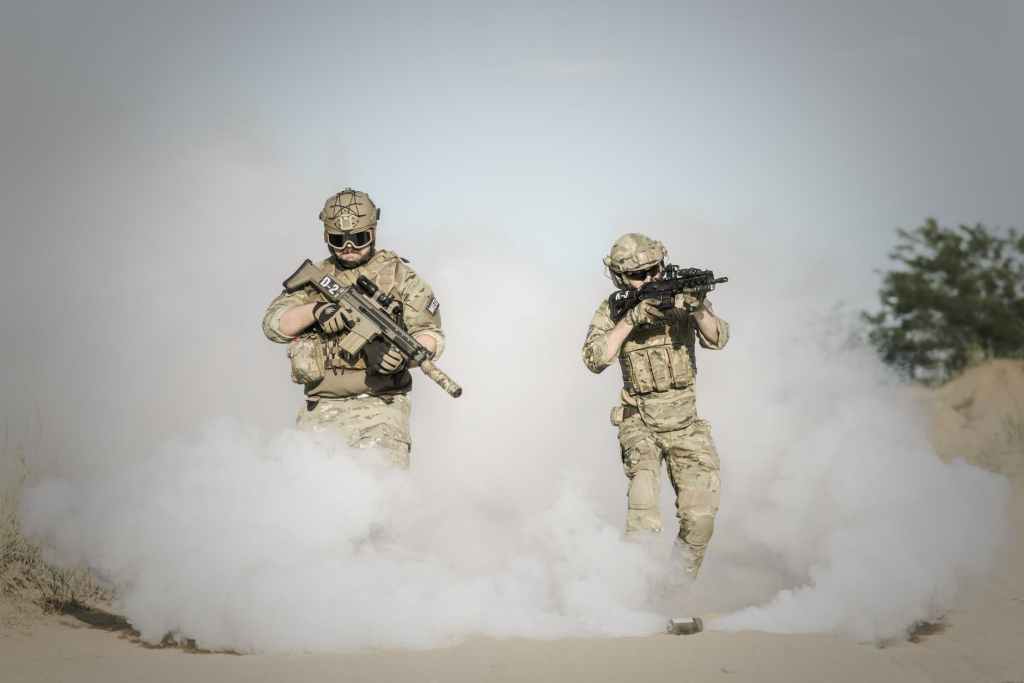
It has been well-documented that child soldiers have been used in armed conflicts throughout history. The use of child soldiers as a modern phenomenon goes back to the Napoleonic Wars of the early 19th century. According to historical accounts, the French and British forces recruited drummer boys and messengers from as young as 14. It was in the 20th century that the widespread employment of child soldiers occurred. Children were utilised as couriers, spies, and even warriors during World Wars I and II. To train future Nazi soldiers and paramilitary members, the Hitler Youth Programme enlisted boys as young as 10. During the war, the Japanese Kamikaze programme enlisted young men to fly suicide missions.[1] By the latter half of 20th century, particularly in Africa and Asia, the use of child soldiers skyrocketed. Afghanistan, Angola, Mozambique, and Nicaragua were just a few countries that saw conflicts in which children were enlisted and deployed as soldiers throughout the 1980s and ’90s. In Sierra Leone and Liberia’s conflicts in the 1990s and early 2000s, the use of child soldiers also became a prominent aspect.[2] Graca Machel, the UN Secretary-General’s Expert on Children in Armed Conflicts, has reported on numerous cultural, economic, social, and security factors that contribute to the widespread participation of children in war, which we will cover in the following research.[3]
DEFINING THE TERM ‘CHILD’ AS PER IHL
The term “child” in IHL extends from newly born babies, very small children, children below 5 years, young children, adolescents and children between 15 and 18.[4]
UNDERSTANDING THE DEFINITION OF THE TERM ‘CHILD SOLDIER’
It is used to refer to any “child associated with an armed force or armed group” and includes any girl or boy less than 18 years old “recruited or used by an armed force or armed group in any capacity,” as “fighters, cooks, porters, messengers, spies or for sexual purposes.”[5]
MINIMUM AGE OF RECRUITMENT AS PER IHL
Since the law recognizes children as adults before they turn 18, the minimum age for recruitment and participation is 15 years.[6] Hence, states stand no criticism for having lower standards as long as it does not go below the age of 15 since International Humanitarian Law also finds its sources in Customary International Law.[7] Such flexibility represents a compromised approach to child recruitment because States cannot agree due to varied cultural and social notions of childhood.
ANALYSIS OF THE LAWS REGULATING CHILD RECRUITMENT AND PARTICIPATION IN HOSTILITIES UNDER IHL
GENEVA CONVENTION IV
The Geneva Convention IV of 1949 tackles the protection of civilians directly amid war. The treaty’s objective is to ensure that civilians, as non-combatants, are not regarded as military targets and that all measures are implemented to ensure this. Convention IV mandates states parties to guarantee that children estranged from their families are “not left to their own resources”, and that means can be taken to ease their maintenance, religion, and education.[8]
Article 50 of Geneva Convention IV states that “institutions devoted to the care and education of children” must be retained during armed conflict. According to the Geneva Conventions, children are not acceptable targets for warfare and should not be engaged in hostilities, which explicitly safeguards them during armed conflict.[9]
A specific cause of concern in the Geneva Conventions is the age of children entitled to protection over participation in hostilities, which is under 15 years old. The concept that all persons under 18 are children and are therefore eligible for special protection was not yet established in 1949, as states believed that children’s participation in hostilities was a matter of internal concern.[10] In light of subsequent developments, it is now believed that children under 18 should not be recruited or compelled to participate in hostilities.
COMMON ARTICLE 3
Common Article 3 pertains to non-international or internal armed conflicts and establishes the minimum level of humanitarian protection for those not actively participating in the conflict. Nevertheless, this protection does not cover children who directly participate in hostilities and forfeit all protection under Common Article 3. At this time, it is possible to argue that Common Article 3 fails to address the issue of juvenile combatants explicitly.[11]
One of the issues with the Law of Geneva is that it does not regulate the recruitment of children into government and armed forces, nor do its provisions safeguard children directly participating in armed conflicts. Neither Common Article 3 nor the Geneva Conventions safeguard children who directly participate in hostilities; consequently, they slip between the cracks of IHL. Common Article 3 is further complicated because some states have rejected its application due to the absence of an unambiguous statement of what constitutes an armed conflict for the article to be applicable.
ADDITIONAL PROTOCOL I (1977)
Article 77(2) stipulates:
“The Parties to the conflict shall take all feasible measures in order that children who have not attained the age of fifteen years do not take a direct part in hostilities and, in particular, they shall refrain from recruiting them into their armed forces. In recruiting among those persons who have attained the age of fifteen years but who have not attained the age of eighteen years, the parties to the conflict shall endeavour to give priority to those who are oldest.” [12]
Article 77(2) implicitly defines “child” as a person under the age of 15 since “persons” from the ages of 15 to 17 may be recruited. Using “feasible measures” instead of “necessary measures” indicates that obliterating children from recruitment is indisputable. Another primary objective of the provision is to prevent children under 15 from playing “direct” roles in conflict, where “direct” refers to acts of war that are likely to cause actual harm to the opposing party. Furthermore, Article 77 does not address indirect roles performed by child soldiers; consequently, children participating in hostilities must forfeit this special protection. The adoption of the “priority rule” symbolises a compromise after state parties could not agree on a complete ban on child recruitment.
ADDITIONAL PROTOCOL II
It applies to international armed conflicts, but only those of a certain intensity, the armed groups must exercise control over territory, be under an organised command structure, be able to sustain military operations, be able to distinguish themselves.
Article 4 (3)(c) states:
“Children shall be provided with the care and aid they require, and in particular:
(c) Children who have not attained the age of fifteen years shall neither be recruited in the armed forces or groups nor allowed to take part in hostilities;”[13]
The word “shall” renders the provision obligatory. The absence of the word “direct” indicates that the rule outlined in Additional Protocol II applies to various uses of children in armed conflicts. Additionally, it forbids indirect participation and voluntary recruitment of children below 15 years.
Consequently, Additional Protocol II does not include a mechanism for monitoring and reporting. The Protocol does not apply to conflicts with a lower threshold and internal disturbances and tensions, as they are not armed conflicts. Additional Protocol II requires a higher threshold for application; consequently, this may complicate its applicability, as some state parties might object that their internal conflicts fall under its threshold, stating that their conflicts are merely internal disturbances.[14]
THE CONVENTION ON THE RIGHTS OF THE CHILD (CRC)
It went into effect in 1990 and discussed the issue of children in armed conflict. State parties are required by Article 38 of the CRC to “ensure respect for rules of international humanitarian law applicable to them in armed conflicts which are relevant to the child.” Despite the CRC’s expansion of protection to all individuals under 18, the Geneva Conventions govern a child’s eligibility to participate in armed conflict. States “must take all feasible measures to guarantee that persons who have not attained the age of 15 years do not take a direct part in hostilities.”[15] According to Article 77 of Additional Protocol 1, which is echoed in Article 38 of the CRC. This is an anomaly in the CRC, as it failed to protect children under 18.
OPTIONAL PROTOCOL
The Optional State Protocol was adopted in 2002 due to prompt action taken by non-governmental organizations, interested states, and the Committee on the Rights of the Child in response to the shortcomings of the CRC.
Article 1 calls on States Parties to take “all feasible measures to ensure that members of their armed forces who have not attained the age of 18 years do not take a direct part in hostilities.“[16]The term “all feasible measures“,places a lesser and imprecise obligation on the state. Moreover, such wording in the Optional Protocol has allowed states to enter declarations interpreting the word “feasible” to weaken their obligation to ensure that under 18-year-olds are not deployed.
Article 2 provides that no one under 18 will be “compulsorily recruited” into the military. This provision is positive but is also considerably weakened by the following provision, which permits voluntary recruitment below the age of 18 years, thus, providing a possibility for circumventing the age limits set for recruitment. As long as the statement states any age between 15 and 18, children’s right to protection from recruitment is not violated.
The prohibition on using children under 18 in conflict is extended to armed non-state actors by Articles 4(1) and (2) of the Optional Protocol. Rebel or non-government armed groups are prohibited from recruiting or utilizing under-18s in hostilities. Governments are urged to take “all feasible measures“including criminalizing the practice to stop such recruitment.[17] However, holding non-state actors accountable for their acts is difficult under this Protocol because they were not a party to the agreement. Moreover, the Optional Protocol has no judicial mechanism or individual complaints mechanism. Hence, this hinders child soldiers whose rights have been infringed from accessing justice[18].
FEW OTHER MECHANISMS TO END CHILD SOLDIERING
THE UNICEF PARIS PRINCIPLES AND COMMITMENTS
- Adopted in 2007 alongside the Paris Commitments to protect unlawful recruitment of children by armed forces or groups.
- The objectives of the Paris Principles and Commitments include:
- preventing the recruitment of children into armed forces,
- gaining the release of children who have been recruited into armed groups,
- trying to bring legal sanctions against those responsible for recruiting children into armed groups, and
- making efforts for effective reintegration programmes for children who have been participants in conflict.
- The Paris Principles recognise that “political and legal efforts are not enough on their own to end recruitment. They also need to be accompanied by effective social programmes that tackle the root causes of recruitment.[19]
SAFE SCHOOLS DECLARATION
- Adopted in 2015 as result of the Oslo Conference.
- Specific recognition of the importance of protecting education during armed conflict.
- The emphasis is on ensuring that educational facilities are not used for military operations, that the facilities are not destroyed, or viewed as legitimate military targets.[20]
VANCOUVER PRINCIPLES ON PEACEKEEPING AND PREVENTING THE RECRUITMENT AND USE OF CHILD SOLDIERS
- Adopted in 2017 through an initiative organised by the government of Canada.
- Preventing the recruitment of children by ensuring that UN peacekeeping operations are able to address the use and recruitment of children in armed conflicts.
- The Principles call for the creation and utilisation of child protection provisions in peacekeeping operations and to ensure peacekeepers receive appropriate training in this regard.
- The extent of protection for children extends to prevention, ensuring international legal standards are respected, disarmament, demobilisation, reintegration and action to work on identifying the impact on the mental health of children due to conflict.[21]
CONCLUSION & SUGGESTIONS: DOMINIC ONGWEN’S CASE
The case of Dominic Ongwen poses a challenging situation for international humanitarian law. At age 10, Ongwen was kidnapped by the Lord’s Resistance Army (LRA) and compelled to become a child soldier. After ascending through the Lord’s Resistance Army (LRA) ranks, he received accusations of numerous war crimes and crimes against humanity. This poses complex concerns regarding the culpability of individuals who have been victims of war crimes and crimes against humanity and the application of international law in such circumstances.[22]
According to the International Humanitarian Law (IHL), child soldiers are considered victims of armed conflict, not combatants. They have the right to special protection and assistance, such as access to education, healthcare, and psychological support. International law forbids the use of child soldiers, and those responsible for their recruitment or use may be prosecuted for war crimes.[23]
Regardless of the circumstances or motivations, individuals who commit war crimes and crimes against humanity can be held criminally accountable under international law. The fact that Ongwen was compelled to become a child soldier may be considered a mitigating circumstance in his case. However, it does not absolve him of culpability for his crimes as LRA Commander.
In 2015, Ongwen voluntarily surrendered to the International Criminal Court (ICC), demonstrating his agency and autonomy in decision-making. This may be considered when determining his culpability for his crimes while commanding the LRA and despite the complexity of his alleged crimes, the ICC ultimately resolved to prosecute him and convicted him guilty of 61 war crimes and crimes against humanity in March 2021. Ongwen was given a 25-year prison sentence but had the right to appeal. On the one hand, the decision ushers in a new era in which the International Criminal Court can adopt a more victim-oriented strategy in its sessions. On the contrary, it demonstrates the restrictions of International Criminal Law when confronted with intricate societal and political facts such as those involving child soldiers.[24] The case of Dominic Ongwen illustrates the complexities and limitations of international humanitarian law when facing the issue of child soldiers and holding those liable for war crimes and crimes against humanity. It poses challenging questions regarding the responsibility of individuals who have been victims of war crimes and crimes against humanity. However, the fact that Ongwen turned himself to the ICC shows that he had some control over his decisions, which may be considered when considering his culpability level for his crimes so while this case marks an effort towards equality and accountability, it also demonstrates the inability of legal systems to safeguard children in armed conflict and avert tragedies. It strains our comprehension of consent and free will in the face of violence and duress. It raises complex concerns about the accountability of such victims. Regardless of legal safeguards, the recruitment and use of child soldiers in conflicts throughout the globe remain an ubiquitous issue. The Geneva Conventions, Additional Protocols I and II, and Optional Protocol lay out the legal regulations for carrying out hostilities and protecting civilians in armed conflicts. Ongwen’s case exemplifies the failure of the Geneva Conventions, Additional Protocols I and II, and the Optional Protocol to avoid the recruitment and utilisation of child soldiers and render the perpetrators liable. The ineffectiveness of such legal systems in the case of Ongwen highlights the importance of addressing the root causes of such recruitment and use of children, the need for more robust initiatives to avoid the recruitment, utilisation of child soldiers to handle the fundamental causes of conflict, bolster international laws and regulations, and offer aid to hampered children and communities in order to guarantee that crimes carried out against them are not left unchallenged.
[1] J. A. Robinson, Children in Armed Conflict: An Overview of Relevant Humanitarian Law and Human Rights Law, 2002 J. S. AFR. L. 697 (2002).
[2] S. Singer “The Protection Of Children During Armed Conflict Situations”, 252 IRRC 141(1986).
[3] CHILDREN AND ARMED CONFLICT, https://childrenandarmedconflict.un.org/1996/08/1996-graca-machel-report-impact-armed-conflict-children/ (last visited 25 June 2023).
[4] UNITED NATIONS, https://www.ohchr.org/en/instruments-mechanisms/instruments/convention-rights-child (last visited 25 June 2023).
[5] CHILDREN AND ARMED CONFLICT, https://childrenandarmedconflict.un.org/six-grave-violations/child-soldiers/#:~:text=%E2%80%9CA%20child%20associated%20with%20an,spies%20or%20for%20sexual%20purposes. (last visited 25 June 2023).
[6] CHILDREN AND ARMED CONFLICT, https://childrenandarmedconflict.un.org/six-grave-violations/child-soldiers/#:~:text=%E2%80%9CA%20child%20associated%20with%20an,spies%20or%20for%20sexual%20purposes. (last visited 25 June 2023).
[7] Alison Des Forges, ‘Burundi: Children Abducted for Military’, available at http://hrw.org/english/docs/2001/11/14/burund3355.html (last visited 25 June 2023)..
[8] Matthew Happold, Children Participating in Armed Conflict and International Criminal Law, 5 HUM. Rts. & INT’l LEGAL Discourse 82 (2011).
[9] Maria Teresa Dutli & Antoine Bouvier, Protection of Children in Armed Conflict: The Rules of International Law and the Role of the International Committee of the Red Cross, 4 INT’l J. CHILD. Rts. 181 (1996).
[10] Amy Beth Abbott, Child Soldiers-The Use of Children as Instruments of War, 23 Suffolk Transnat’l L. REV. 499 (2000).
[11] Sylvain Vite, Protecting Children during Armed Conflict: International Humanitarian Law, 5 HUM. Rts. & INT’l LEGAL Discourse 14 (2011).
[12] Art. 77(2), Additional Protocol I, 1977.
[13] ART. 4 (3)(c), Additional Protocol II, 1977.
[14] Nancy Morisseau, Seen but Not Heard: Child Soldiers Suing Gun Manufacturers under the Alien Tort Claims Act, 89 Cornell L. Rev. 1263 (2004).
[15] Art. 38, Convention On The Rights Of The Child, 1990.
[16] Art. 1, Optional Protocol, 2002.
[17] Alison Dundes Renteln, The Child Soldier: The Challenge of Enforcing International Standards, 21 WHITTIER L. REV. 191 (1999).
[18] Ibid.
[19] UNICEF, https://www.unicef.org/media/113631/file/UNI-Paris-Principles-and-Commitments-FAQ-21.pdf (last visited 25 June 2023).
[20] RIGHT TO EDUCATION, https://www.right-to-education.org/resource/safe-schools-declaration#:~:text=The%20Safe%20Schools%20Declaration%20is,during%20armed%20conflict%3B%20and%20the (last visited 25 June 2023).
[21] GOVERNMENT OF CANADA, https://www.international.gc.ca/world-monde/issues_development-enjeux_developpement/human_rights-droits_homme/principles-vancouver-principes.aspx?lang=eng (last visited 25 June 2023).
[22] The Prosecutor v. Dominic Ongwen, ICC-02/04-01/15.
[23] Rose Mukhar, Child Soldiers and Peace Agreements, 20 ANN. Surv. INT’l & COMP. L. 73 (2014).
[24] HUMAN RIGHTS PULSE, https://www.humanrightspulse.com/mastercontentblog/the-prosecutor-v-dominic-ongwen-a-judgment-of-many-firsts (last visited 25 June 2023).
Author: Nikunsh Das
 Juris Centre