
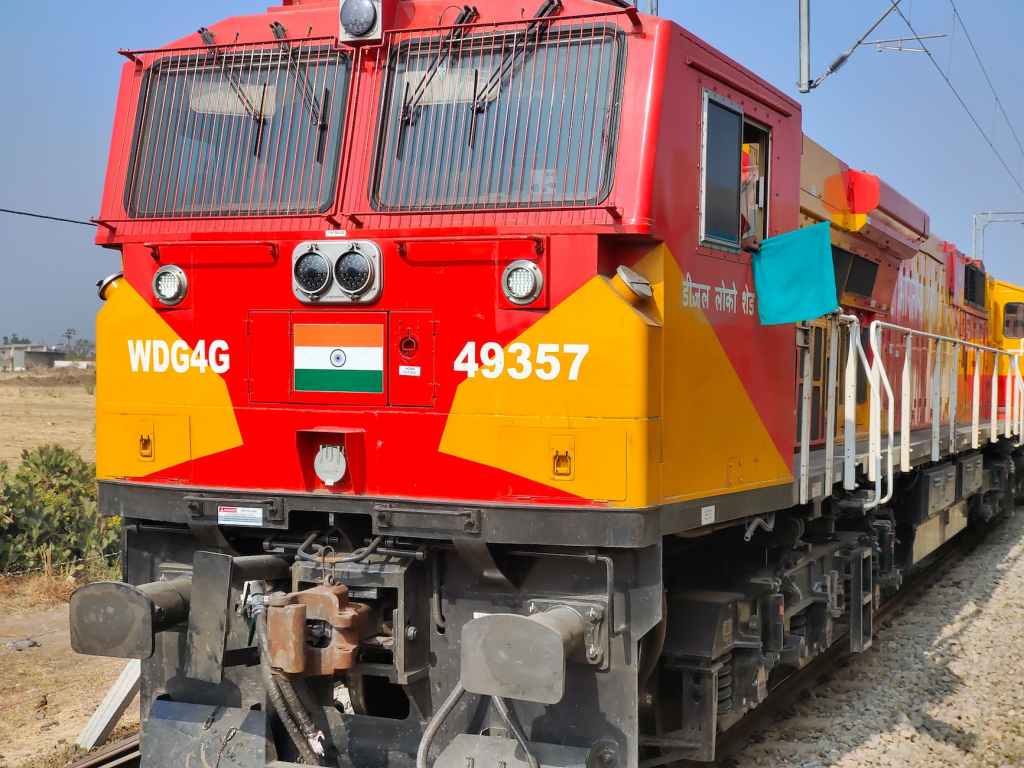
This article tries to understand the impact of train derailments concerning railway infrastructure and legal frameworks. Indian railways is considered one of the cheapest and most convenient modes of transportation; however, with the recent news of the Balasore train derailment accident with over 300 casualties and 900 people injured, the reliability of Indian railways is declining. Train derailments not only cause economic and environmental losses but also leads to fatalities and serious injuries, causing immense human suffering, and witnessing such a horrifying accident in the 21st century, where we boast of technological advancement, is a cause for concern. In the aftermath of these tragic incidents, several remedies in the form of liabilities and compensation are sought to address the impact and ensure accountability.
- What is the issue here?
On the fateful and horrific night of 2 June 2023, three trains, wherein two were carrying passengers while the third one was carrying goods, collided with each other due to a fault in the interlocking signal system because of which one of the trains went off its intended track leading to their subsequent crashes however more information will be available only once inquiry by a commissioner who is obligated to do so under Section 114 of Railways Act, 1989 is complete.[1]
- Major Train Accidents around the world
Unfortunately, train derailments are not unique in our history; these accidents have occurred in almost every nook and corner of the world. Unfortunately, in 2004 Sri Lanka witnessed the biggest train accident because of a collision that occurred because of a tsunami, which washed away a section of the coastal railway track and claimed almost 1700 lives.[2] However, the prevalence of these accidents was primarily observed during the 20th century due to the limited advancements in tools and technology, especially tracks and signalling systems.In 1917 Romania witnessed the most significant train accident of its time, which killed more than 1,000 people.[3] In India, the biggest train accident occurred in Bihar in 1981, wherein more than 800 people were killed; as per the official statistics, now Balasore train accident is among the top 20 list of deadliest train accidents, but having an accident of this magnitude because of a mere failure in signalling system in these advanced times is a cause for concern and requires strict accountability.[4]
- Problems with Indian Railways
Indian Railways’ current technological and infrastructural development can be understood by looking into other countries’ progress. Countries like China, Japan, and the USA rarely witness train accidents involving passengers despite their trains running at an average speed of 150-250 km/h. These countries have undertaken long-term infrastructural schemes allowing them to develop a faster and more secure transport system.
Railways are considered as a symbol of economic power and crucial for the growth of any country and the transportation of raw materials, finished goods, Etc. Countries that are most developed have a very advanced rail system as it is one of the cheapest and most reliable modes of transportation of goods. For instance, the United States of America is the largest economy in the world, and it has the largest rail network spanning over 2,50,000 km, the biggest in the world. Chinese railways expanded their network in a very short period of time; in 1950, the length of their rail system was less than half of India’s rail system. However, today they have a rail network of over 155,000 km, which is more than double of India’s current rail network, which is almost around 68,000 km. It is, therefore, crucial for the government to expand its network for better connectivity and provide convenience for commercial purposes. [5]
Further, there is a shortage of rail staff which leads to poor maintenance of tracks. Although safety measures like the Kavach anti-collision system have been introduced, but their deployment is very slow; currently, it covers less than 2,000 km out of 68,000 km of the Indian rail network, which is a very meagre portion.[6] Furthermore, dual tracks as a project were envisaged by the government to increase the average speed of the railways (currently, it is only 50 km/h), but this project is also delayed and not implemented at the rate expected by the policymakers. Therefore, greater emphasis has to be placed on the faster implementation of policies.
The problem with the current rail system is not restricted to humans only; rather, it extends to animals as well. For instance, I remember heading back to my home after my semester exams were over through the Shatabdi train, wherein a cow came in the way of the train and was subsequently killed. When I asked the employees about the frequency of these animal-train encounters, they told me that it happens almost daily.
Although, the number of derailments has also decreased, as have accidents at level crossings. In its performance audit on derailment in Indian Railways, the comptroller and Auditor General of India noted that around 75 per cent of the 217 consequential train accidents between 2017-18 and 2020-21 were due to derailments which means that derailments cover a major chunk of accidents. Therefore, the authorities concerned must pay greater emphasis on track infrastructure.[7]
- LEGAL ASPECTS
Coming to our main segment, what are the remedies that victims of rail accidents can avail (particularly victims of Balasore accident)?Although,In the face of loss of life, no sum of money can ever truly make up for the irreplaceable loss of a precious life, but still financial compensation does offer practical support for those who were dependent on the deceased.
Now, these accidents have given rise to two types of claims; the first type of claim is related to the claim of compensation by legal heirs of the victims who have lost their lives in the accident and people who have been injured, leading to their physical disablement, either permanent or partial. The second type of claim is related to economic damages that passengers have suffered due to the destruction or loss of their property, usually luggage; this also includes loss of goods in the freight train. However, before dwelling on this, we will talk about other major train accidents around the world.
The first claim is covered under various remedies. For instance, Prime Minister Narendra Modi and the Chief Minister of Odisha both announced ex-gratia compensation to the people who sustained serious injuries and relatives of people who lost their lives. However, to our dismay, several instances have emerged where people falsely claim that their spouse, parent, or child has died for such ex-gratia compensation, which shows how cruel this world can become. Yet, the government should stay vigilant on such claims approving compensation on the basis of DNA if possible.[8] Nevertheless, it is to be noted that these are special compensation solely dependent on the discretion of PM and CM. Now as a basic remedy, the victims can claim compensation under Section 124A of the Railways Act of 1989, which provides that:
“When in the course of working a railway an untoward incident occurs, then whether or not there has been any wrongful act, neglect or default on the part of the railway administration such as would entitle a passenger who has been injured or the dependent of a passenger who has been killed to maintain an action and recover damages in respect thereof, the railway administration shall, notwithstanding anything contained in any other law, be liable to pay compensation to such extent as may be prescribed, and to that extent only for loss occasioned by the death of, or injury to, a passenger as a result of such untoward incident.”[9]
It is clear from reading the section that the railway administration is liable to pay the passengers who have been injured in the accident. It is to be noted that the above definition of passengers also includes railway servants or employees on duty, such as ticket examiners, pantry staff, Etc, but this definition excludes passengers who do not have a valid ticket or travelling illegally on the train.
Now the next question would be on the amount of compensation. So, for this, again, Section 124A of the Railways Act,1989 (RA,1989) has to be referred under which ₹10,00,000 is given to heirs of those passengers who have lost their life due to such accidents and ₹2,00,000 is given to those passengers who have been injured grievously and ₹50,000 to those passengers who sustained for minor injuries. The application for such compensation has to be made under Section 125 of RA, 1989,[10] but if the concerned party feels that he requires interim relief, then Section 126 of RA,1989[11] can be used for such purposes.
Further, suppose a party is not satisfied with the amount of compensation granted by the railway administration. In that case, he/she can approach the Railway Claims Tribunals, which are specifically established for speedy adjudication of such claims to reduce the burden of civil courts.[12] For instance, in the case of Union of India v. Addl. Registrar, Railway Claims Tribunal,[13] the plaintiff’s son was travelling in a train as a bona fide passenger, but unfortunately, he fell from the moving train compartment, but the railways administration denied liability citing the passenger’s own fault. In this case, the High Court of Madras held that the rule of strict liability applies here, and the railways administration is liable to pay.
Coming to the second type of claim which are economic damages. Broadly, these economic damages are claimed by two parties first one being the passenger who is travelling from one place to another having luggage and the second being the traders or any other person who is not necessarily physically travelling in the train but his/her goods are being transported, and railways is acting as a carrier of such goods.
Section 100 of the Railways Act provides that the railway administration will be liable for any loss or destruction to the property which it is carrying as a carrier of the goods acting as a bailee under section 148 of Indian Contract Act, 1872; however, there must be a receipt of such goods provided by a railway servant, and in case of luggage, the railway will be liable if it is proved that damage is due to the negligence of the railways which is clearly the case in Balasore accident.[14] The claim of damages by the first party is easy to receive because these parties usually have a receipt that gives the description of the goods being transported, but passengers do not have such a receipt, but still, they are entitled to receive compensation on the basis of the amount decided in the railway tribunal as per Section 127 of the Railways act, 1989.
For instance, in the case of Divisional Railway Manager v. Abhishankar Adhikari (2005),[15] a passenger found that his luggage was missing from his train coach when he returned from the washroom. Subsequently, he sued railway authorities for theft of his belongings, and the court held the railways authority liable but awarded compensation much lower than the amount contended because of having no proof of description of his luggage.
- CONCLUSION
All the above remedies were crucial to understand to take action and seek accountability. All those victims who have been affected in the accident should get justice in the form of compensation or any other way but apart from this, special emphasis should be paid on improving the overall infrastructure of the railway because, in the end, precaution is better than cure. However, this accident cannot be reversed, but a lesson can be learned from this that our railway infrastructure is not up to the mark. Our approach should not be like that we will wake up only when some mishap occurs; rather, it should be proper policy planning with a strict emphasis on effective implementation.
[1] Railways Act, 1989, § 114, NO. 24, Acts of Parliament, 1989 (India).
[2] Anawat Suppasri., Kazuhisa Goto., Abdul Muhari. et al. A Decade After the 2004 Indian Ocean Tsunami: The Progress in Disaster Preparedness and Future Challenges in Indonesia, Sri Lanka, Thailand and the Maldives. Pure Appl. Geophys. 172, 3313–3341 (2015). https://doi.org/10.1007/s00024-015-1134-6
[3] A list of the deadliest train tragedies that the world has witnessed, The Federal, (accessed 10 June,2023)
https://thefederal.com/news/a-list-of-the-deadliest-train-tragedies-that-the-world-has-witnessed/.
[4] Id.
[5] CEIC, https://www.ceicdata.com/en/china/railway-length-in-operation/cn-railway-length-in-operation, accessed 10June, 2023.
[6] Kavach, Press Information Bureau, page 3, 2022, https://static.pib.gov.in/WriteReadData/specificdocs/documents/2022/mar/doc202231424701.pdf
[7] PRS Legislative Research, https://prsindia.org/policy/report-summaries/cag-report-summary-on-finances-of-indian-railways, accessed 17 June, 2023.
[8] Press Trust of India, https://www.ptinews.com/news/national/woman-in-trouble-for-faking-husband%E2%80%99s-death-in-train-accident/584927.html, (accessed 18 June, 2023)
[9] Railways Act, 1989, § 124A, NO. 24, Acts of Parliament, 1989 (India).
[10] Railways Act, 1989, § 125, NO. 24, Acts of Parliament, 1989 (India).
[11] Railways Act, 1989, § 126, NO. 24, Acts of Parliament, 1989 (India).
[12] Railway Claims Tribunal Act, 1987, NO. 54, Acts of Parliament, 1987 (India)
[13] Union of India v. Addl. Registrar, Railway Claims Tribunal, Chennai Bench, 2012 SCC OnLine Mad 2529
[14] Railways Act, 1989, § 100, NO. 24, Acts of Parliament, 1989 (India).
[15] Divisional Railway Manager v. Abhishankar Adhikari, 2005 SCC OnLine NCDRC 228
Author: Nikhil Kumar Jha
 Juris Centre