
“The sole aim of journalism should be service. The newspaper press is a great power, but just as an unchained torrent of water submerges the whole country-side and devastates crops, even so an uncontrolled pen serves but to destroy.”
– Mahatma Gandhi
- INTRODUCTION
The media holds significant power in a democratic society and is commonly referred to as the Fourth Estate. Despite being the youngest estate, it is considered the most influential due to its control over information, widespread reach, and ability to shape public opinion. The expansion of electronic media, especially satellite television and the internet, along with increasing literacy rates and the global spread of print media through computer technology, have strengthened the media’s hold on society. People from all walks of life now rely on the media for knowledge, perspectives, and opinions, further solidifying its influence.[1] However, if not properly regulated, it can be a catalyst for disorder and chaos.[2] Just like any other institution, the media has the potential to be abused when left unchecked. It is not only a platform for expression but also a business[3] driven by the need for competitiveness and high ratings, known as Target Rating Points (TRP).[4] This often leads media houses to sensationalise news items that would otherwise hold little value, purely to attract more viewers and readers.[5] In their pursuit of profit, ethical standards in reporting are often compromised, undermining the integrity of journalism.
One of the alarming consequences of the profit-oriented media approach is the encroachment of the justice system through the phenomenon of “trial by media.”[6] This practice runs counter to the principles of the rule of law[7] and can result in a miscarriage of justice, causing even more harm than the original offence. When media outlets present a one-sided perspective and create a widespread perception of guilt, irrespective of any court verdict, it puts tremendous pressure on judges and can cloud their judgement. The media’s influence can sway public opinion to such an extent that it becomes difficult for the judicial system to function independently and fairly. The Fatty Arbuckle case[8] in 1921 exemplifies the impact of media trials that sensationalized coverage of Arbuckle, a highly paid actor accused of murdering an actress, Virginia Rappe. Newspapers nationwide exaggerated the case, spreading salacious rumours and tarnishing the reputations of both Arbuckle and Rappe. The media’s relentless coverage not only severely damaged Arbuckle’s public image but also effectively ended his career. This case set a precedent, popularizing the concept of media trials, highlighting their negative consequences on the individuals involved.
Similarly, in the Aarushi-Hemraj murder case,[9] the media’s speculation and prejudice shifted the focus from seeking justice to accusing the parents. The media made every effort to sensationalize and disseminate the details of this intense case to the public, despite the lack of witnesses to support the incident’s facts. The law enforcement authorities also mishandled the case, leading to an improper investigation and an unanswered question of who was responsible for the murder.[10]
Regardless of the actual verdict in a court of law, the damage caused by a media trial can be irreparable.[11] The accused are stigmatised by society, leading to social ostracization and an erosion of their rights and dignity. This not only violates the principle of “innocent until proven guilty” but also hampers the overall functioning of the justice system.
- ARTICLE 21 V. ARTICLE 19
Trial by media creates a significant clash between two fundamental constitutional rights: the right to a fair trial and the freedom of the press, protected under Article 21 and Article 19 of the Constitution, respectively. While the media argues that it has a responsibility to provide the public with timely information, this sometimes interferes with the accused’s right to a fair trial. The right to a fair trial encompasses the constitutional right to be heard by an impartial tribunal, free from the influence of propaganda, newspaper dictation or popular clamour.[12] Various international legislations have also recognized this right.[13]
In line with the democratic ideals enshrined in Article 19(1)(a), the Supreme Court, in the case of Sakal Newspaper v. Union of India,[14] interpreted the right to freedom of speech and expression to include the freedom of the press. This freedom extends to the publication of accurate reports on courtroom proceedings witnessed and heard by journalists.[15] However, Article 19(1)(a) does not grant the press an unrestricted access to information sources.[16]
Additionally, in extreme cases, the media has been known to pressure even lawyers not to represent accused individuals, labelling them as the “devil’s advocate.”[17] This coerces the accused into facing trial without any defence, thus violating the aforementioned provision. Consider the case of the Mumbai 26/11 Terror Attacks,[18] where Ajmal Kasab stood trial as the terrorist responsible for the massacre of 164 people. Initially, many lawyers refused to represent him, influenced by public outrage and media condemnation. However, the then Chief Justice Balakrishnan, upholding the principles enshrined in Article 22 of the Constitution, emphasized that Kasab had the right to legal representation for a fair trial. It is essential to recognize that a lawyer’s role is not to defend the crime itself, but rather to ensure the proper implementation of due process. Unfortunately, the power of the media has fueled misconceptions that greatly affect public perception and undermine an individual’s right to fair representation.
- RIGHT TO PRIVACY AND THE MEDIA
The media may be given legal permission to publish the sensational details of a case, but it also has an ethical and moral responsibility to respect the victims and the suffering they are going through. Although the victim’s desire for protection is not based on the same concerns as the accused person’s, victims nevertheless need to have this right. Why should the victim endure further misery just because the media wants to increase paper sales or viewership?
Section 228A was introduced by the Criminal Law (Amendment) Act 1983 to safeguard the anonymity of rape victims. In our society, rape victims face more stigma than those accused of rape. Many instances of sensationalized reporting have harmed the victims.[19] Media trials have detrimental effects on victims, including invasion of privacy, re-traumatization, stigmatization, and loss of control over their narrative. The emotional distress caused can lead to long-term consequences, while interference with legal proceedings compromises the right to a fair trial.
Despite Section 228 of the Indian Penal Code prohibiting the disclosure of a survivor’s identity, the media often violates this provision. An example of this was seen in the 2013 Delhi Gangrape case,[20] where the real name and photograph of the victim, known as ‘Nirbhaya,’ were widely circulated.
The judgement, delivered by Justices Madan B. Lokur and Deepak Gupta in Nipun Saxena & Anr. v. Union of India & Ors.,[21] addressed the circumstances under which a survivor’s identity can be revealed. The court emphasized that no person should disclose any information that could lead to the identification of the victim, even remotely, through any medium such as print, electronic, or social media. The victim endures societal stigma, which cannot be replaced by monetary compensation. No amount of apology can ever bring back the individual’s original reputation. The legal system should discourage victims and accused persons from being photographed or filmed outside of the courtroom because doing so could undermine the authority of the judiciary.
Despite legal provisions and court judgments, instances continue to arise where the names and photographs of victims are circulated on public platforms, indicating a failure to effectively enforce the safeguarding of their identities.
Additionally, Media trials primarily target high-profile cases, exploiting public curiosity and fascination, particularly when celebrities are involved. By sensationalizing these cases, the media captures viewers’ attention, often at the expense of disregarding crucial aspects such as facts, evidence, fair trial procedures, and the authority of the judiciary. Media outlets frequently broadcast content that invades privacy, defames individuals, and presents false evidence, demonstrating a lack of ethical consideration and fairness.
A prominent example is the Sushant Singh Rajput case,[22] where the media’s sensationalised reporting and unfounded conspiracy theories influenced public opinion, leading to hostility towards the accused and the judicial system.[23] Cases like this highlight the issue of media trials, where the court of public opinion supersedes the pursuit of justice, undermining the credibility of the justice system.
- NEW AGE MEDIA
In this day and age, social media has developed into a potent instrument that can instantly convert a story into a viral sensation that reaches millions of people. However, this extensive reach comes at the expense of people’s right to privacy and dignity. Regardless of whether the accused is guilty, using social media to prosecute them is against the law. Social media has changed from being a forum for constructive discussions to becoming a haven for bullying, hate speech, and libellous content.
The death of Bollywood actor Sushant Singh Rajput prompted widespread grief and raised awareness about mental health concerns. Some blamed Sushant’s premature death on abuse within the Bollywood industry, alleging nepotism and large studios had a part in his ostracization. Netizens took to social media to vent their rage and displeasure at Bollywood’s dubious behaviour.[24] The case even spiralled down a drug trafficking path and labyrinth of conspiracy theories.
In the Jasleen Kaur case,[25] a similar approach was employed against Sarvjeet Singh, where a bogus Facebook post accused him of sexual misbehaviour, resulting in a destructive campaign against him. Sarvjeet Singh’s mental health suffered as a result of losing many jobs and his reputation in society.[26] However, because to the lack of reliability and evidence in the Facebook post, the court acquitted him, and the woman involved was investigated. This instance demonstrates how outrage culture and herd mentality can have a negative impact on a person’s mental health, potentially leading to depression, anxiety, self-harm, or even suicide.
The rise of new-generation mass media platforms such as podcasts, YouTube channels, true crime books, and unsolved mystery documentaries have given crime enthusiasts a platform to discuss and engage with true crime content. With their interactive and contemplative nature, these forms of mass media encourage the inner investigator within us, as we spend hours delving into the facts and evidence of various crimes in hopes of aiding in their resolution.[27] Remarkably, some of these podcasts have even led to the reopening and reinvestigation of certain cases. A notable example is the 2014 podcast Serial, which examined the murder of Hae Min Lee and raised doubts about the evidence used to convict her boyfriend, Adnan Syed, of first-degree murder.[28] This renewed attention sparked a public movement advocating for a fair re-trial, demonstrating the significant impact that new-generation mass media can have on the criminal justice system.
The influence of social media on judicial processes can be beneficial for accountability but often leads to neglect of fact-checking and acceptance of sensationalized news. It can fuel moral panic, manipulate public emotions, and divert attention from root causes. Public outcry driven by extensively covered incidents can shape social and political changes. The internet’s communication revolution allows for widespread dissemination of information but is prone to misuse, blurring the distinction between celebrities and ordinary individuals in terms of speech reach.[29]
- BALANCING THE MEDIA AND THE JUDICIARY
The judiciary and media have a symbiotic relationship. While the media uncovers human achievements and flaws, the judiciary addresses the legal issues arising from them. Both institutions share the objective of seeking truth, ensuring justice, and serving democratic values. However, conflicts arise when the media overpowers the judiciary, leading to hate crimes and false allegations that undermine the country’s cultural and intellectual fabric. The media’s trial-like approach creates a presumption of guilt before legal proceedings commence, compromising the fairness of the trial process. The freedom of speech and expression, while important, has reasonable limitations to protect national interests and public order. The media should exercise its power responsibly, respecting the principles of a fair trial and a decent life.
Multiple regulatory bodies monitor the media and entertainment sector in India. The Press Council of India safeguards press freedom and maintains standards in newspapers and news agencies. The News Broadcasting Standards Authority (NBSA), created by the News Broadcasters Association (NBA), promotes ethical practices in news broadcasting. The Broadcasting Content Complaints Council (BCCC) handles complaints regarding television programs in the entertainment and general segments. It ensures adherence to appropriate standards. The News Broadcasters Federation (NBF), addresses specific concerns and interests within the industry. These regulatory bodies collectively oversee and improve the media landscape, ensuring ethical boundaries and journalistic integrity are upheld.
Contempt of Court Act, 1971 under Section 2(c)(i) defines ‘criminal contempt’ as the publication of anything, whether through words, signs, visible representation, or other acts, that scandalizes or tends to scandalize, or lowers or tends to lower the authority of any court. Section 3(1) of the Contempt of Court Act, 1971 provides an exemption for the publication or distribution of certain materials, as it may potentially disrupt the judicial process.
The 200th Law Commission report[30] proposed amendments to the Contempt of Courts Act. It recommends expanding the definition of contempt to include publications from the time of arrest, rather than waiting for the filing of a charge sheet in a criminal case. Additionally, it suggests empowering high courts to order the postponement of publication or telecast related to a criminal case. Former Chief Justice of India, Y. K. Sabharwal, expressed concern over the media’s practice of conducting trials before court verdicts. He cautioned, “According to law an accused is presumed to be innocent till proved guilty in a court of law, and is entitled to a fair trial. So, it is legitimate to demand that nobody can be allowed to prejudge or prejudice one’s case? Why should judges be swayed by public opinion?”
Judges, like any other citizens, have the freedom to use social media. However, they must exercise caution and be mindful of the legal and ethical implications given the nature of their profession. While social media can promote closeness and openness in society, judges’ posts can be misrepresented, misinterpreted, and even lead to cyberbullying and threats to privacy and safety. A global survey conducted by the International Bar Association revealed that judge use of social media raised concerns, with 40% of respondents stating it negatively affected public confidence in the justice system and undermined judicial independence.[31]
- CONCLUSION
The influence of the media in today’s tech-savvy and globalized world was aptly expressed by Justice Learned Hand of the United States Supreme Court when he said, “The hand that rules the press, the radio, the screen and the far spread magazine, rules the country”[32]
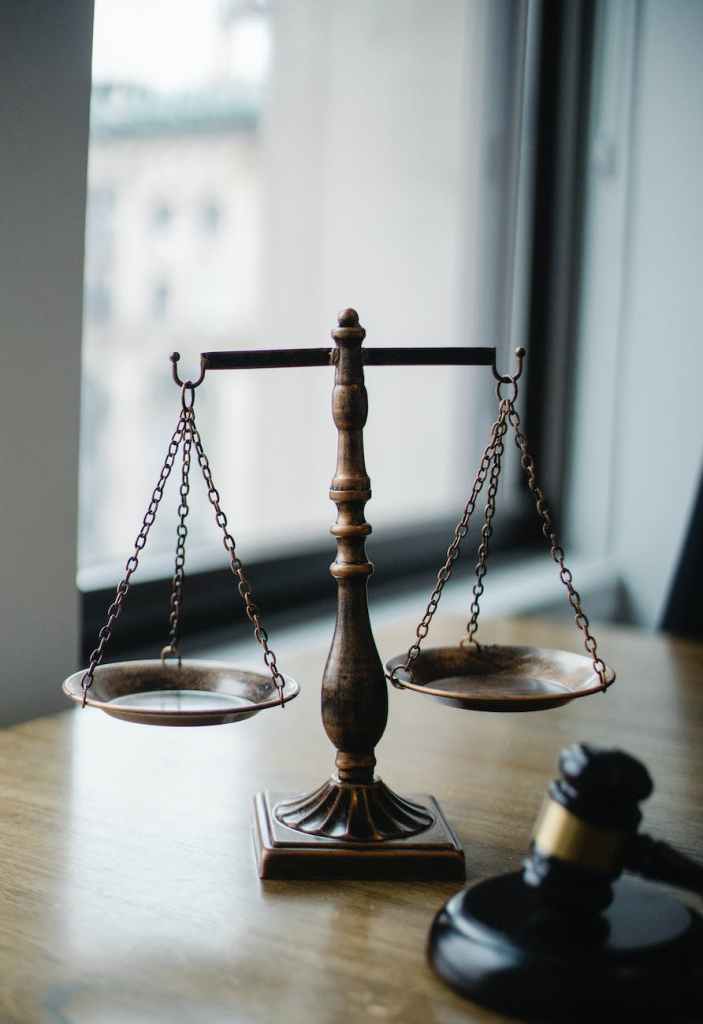
In a nation where the scales of justice hang delicately, the media wields a mighty pen that can either uphold the sanctity of truth or cast shadows of bias and prejudice. Journalists have a responsibility to uphold moral standards and not let sensationalism overshadow the pursuit of truth and justice. We have witnessed many cases where media sensationalism has dominated the verdict of the judiciary, eroding its credibility. As consumers of news, we must be vigilant and not let ourselves be swayed by unreliable sources or fall victim to the influence of digitalized media. It is our duty to discern where the boundaries between freedom of speech and the right to a fair trial lie, ensuring that we do not blindly follow an unreliable source of information.
The media plays a crucial role in addressing the issues faced by the public, acting as a voice for those who may not have the platform to speak up. However, it is vital for the media to recognize that its role is not to don the robes of a judge. In India, we have a robust judiciary system specifically entrusted with the responsibility of delivering justice. Any unwarranted interference from the media in the judicial process would undermine the very foundation of our democratic nation. Therefore, the principles of democracy must be upheld by allowing the judiciary to fulfil its rightful duty, while the media plays its crucial role as an unbiased conduit of information and as a catalyst for positive change.
[1] Media Regulation in Contemporary India: Whether its need of time 2014 2 MLJ 21
[2] Express Newspapers v. Union of India (1997) 1 SCC 133 , See also, In re: Vijayakumar, AIR 1997 SC 73 wherein the Supreme Court of India has observed that the freedom of press is regarded as “the mother of all liberties in a democratic society”
[3] Hamdard Dawakhana v. Union of India, (1960) 2 SCR 671
[4] Marcy Wheeler, “How Noninstitutionalized Media Change the Relationship between the Public and Media Coverage of Trials”, (Duke University School of Law- JSTOR, 2008)
[5] For example, Swamy Nityananda’s sex scandal & Shashi Tharoor’s link in Kochi IPL issue.
[6] Trial By Media – Transgressing the Lakshmanrekha 2010 5 MLJ 36 Madras Law Journal – Civil (Journal Article)
[7] State of Maharastra v. Rajendra Jawarhalal Gandhi (1997) SCC 386
[8] Oakland Tribune “Fatty Arbuckle charged with actress murder” (11 September 1921)
< http://melbourneblogger.blogspot.com/2016/09/fatty-arbuckles-three-murder-trials.html > accessed 2 February 2021
[9] Rajesh Talwar vs. CBI, (2014) 1 SCC 628
[10] Pragya Jain & Taniya Roy, Critical analysis of Arushi Talwar murder case, Indian Legal Solution Journal of Criminal and Constitutional Law (Oct. 15, 2019)
[11] Pradyuman Thakur Murder Case 2018 (12) SCC 119: Pradyum, a class II student, was found dead in a school lavatory. The media trial initially accused the bus driver of sexual assault and murder, but it was later revealed that a class XI student committed the crime. The media’s interference damaged the bus driver’s reputation, and they should have waited for the court’s verdict before forming opinions.
[12] Cooper v. People (1889) 6 Lawyers Report Annotated 430(B).
[13] Article 10 of Universal Declaration of Human Rights (UDHR), Articles 9 & 14 of International Covenant on Civil and Political Rights (ICCPR), Article 17 of the African Convention on Rights and Welfare of the Child (ACRWC) 1966, Article 37 and 40 of The Convention on the Rights of the Child, 1989 (CRC), Article 5 and 6 of the European Convention on Human Rights and Fundamental Freedoms, 1950 (ECHRFF).
[14] AIR 1962 SC 305; Bennett Coleman & Co v. Union of India AIR 1986 SC 515. In addition to the above cases, Article 3 read with Article 19 of the Universal Declaration of Human Rights & Article 19 of the International Covenant on Civil and Political Rights, 1966 confers the same.
[15] Jagadish Swarup, “Constitution of India” (2006) p. 684.
[16] Smt Prabha Dutt v. Union of India AIR 1982 SC 6.
[17] For example, in the Jessica Lal case the advocate who appeared on the behalf of accused was portrayed as the Devil’s advocate. IBN News Live reported on 20.11.2006.
[18] Mohd. Ajmal Kasab v. State of Maharashtra (2012) 9 SCC 1
[19]Santosh Kumar Singh v. State through CBI [2010] 9 SCC 747 [Priyadarshini Matto Case] marks a crucial point wherein the media became explicitly invasive and blatantly conducted its own trial. In this case, a law student was raped and murdered.
[20] Mukesh v. State for NCT of Delhi [Nirbhaya case]
[21] (2019) 2 SCC 703
[22] Rhea Chakraborty v. State of Bihar, 2020 (Sushant Singh Rajput Death Case)
[23] Bhasin, Swati, ed. (15 June 2020). “Delete: Cops’ Warning for Social Media Users on Sushant Singh Rajput Pics”. NDTV. Archived from the original on 24 July 2020. Retrieved 31 July 2020.
[24] Khushboo Garg, “The problem of Outrage Culture & Social Media Trials: Sushant Singh’s Case,” 2 July 2021, https://legalreadings.com/problem-of-outrage-and-social-media-trials-sushant-singhs-case/
[25] Sarvjeet Singh v. State (Nct Of Delhi) & Anr W.P. (Crl.) NO. 1598/2022
[26] Jasleen v/s Sarvjeet: What’s wrong with pseudo feminism, and media, NewsBytes, www.newsbytesapp.com/news/india/jasleen-kaur-case-sarvjeet-bedi-acquitted-by-court/story, (Oct. 26, 2019).
[27] Kelli Boling, True crime podcasting: Journalism, justice, or entertainment? October 2019, The Radio Journal International Studies in Broadcast and Audio Media 17(2):161-178. DOI:10.1386/rjao_00003_1
[28] Research, E. (2016, June 29). The Podcast Consumer 2016. Retrieved April 09, 2017, from http://www.edisonresearch.com/the-podcastconsumer-2016/
[29] Kaushal Kishor v. State of Uttar Pradesh and Others, 2023 SCC OnLine SC 6
[30] Law Commission of India, 200th Report on Trial by Media: Free Speech and Fair Trial Under Criminal Procedure Code, 1973, August 2006
[31]The Impact of Online Social Networking on the Legal Profession and Practice: february 2012
[32] Justice Learned Hand, “Proceedings in Memory of Justice Brandeis” (1942). Extra-judicial writings.
Author: Eugenia Melo e Granjo
 Juris Centre